The global telecommunications landscape is undergoing a radical transformation as major carriers abandon their dreams of vast international empires to seek safety within the familiar confines of their domestic borders. This era of the “Mega-Telco” reached a definitive conclusion as
The global telecommunications landscape is undergoing a radical transformation as major carriers abandon their dreams of vast international empires to seek safety within the familiar confines of their domestic borders. This era of the “Mega-Telco” reached a definitive conclusion as

Reliable wireless coverage is now as essential as traditional utilities, playing a vital role in storm preparedness, emergency call services, and the growing field of remote health monitoring. As the current football season progresses through 2026, the density of fans
Deeper Sections Await

The global telecommunications market is currently undergoing a structural transformation that shifts the focus from mere data transmission toward a decentralized framework of distributed intelligence capable of powering autonomous systems. This evolution marks the birth of Physical AI, a paradigm

By prioritizing network phase coordination, the Archer 8 Ultra maintains low latency even when multiple high-bandwidth applications are running simultaneously. This strategic shift in engineering marks a departure from the industry’s obsession with peak theoretical speeds, focusing instead on the
Browse Different Divisions
The global telecommunications market is currently undergoing a structural transformation that shifts the focus from mere data transmission toward a decentralized framework of distributed intelligence capable of powering autonomous systems. This evolution marks the birth of Physical AI, a paradigm

The promise of millimeter-wave technology has long been shadowed by its frustrating inability to navigate the physical complexities of the modern urban environment, where a single pane of glass or a stray tree branch can terminate a multi-gigabit connection. For

The global telecommunications industry is currently witnessing a paradigm shift where the radio access network is no longer just a passive pipe but has become a living, breathing digital organism capable of autonomous decision-making. This intelligence evolution represents the transition

Wireless channel measurements in 6G are characterized by deep temporal correlations that invalidate the independent and identically distributed data assumptions used in classical artificial intelligence. While 5G was largely a refinement of spectral efficiency and massive MIMO techniques, 6G represents
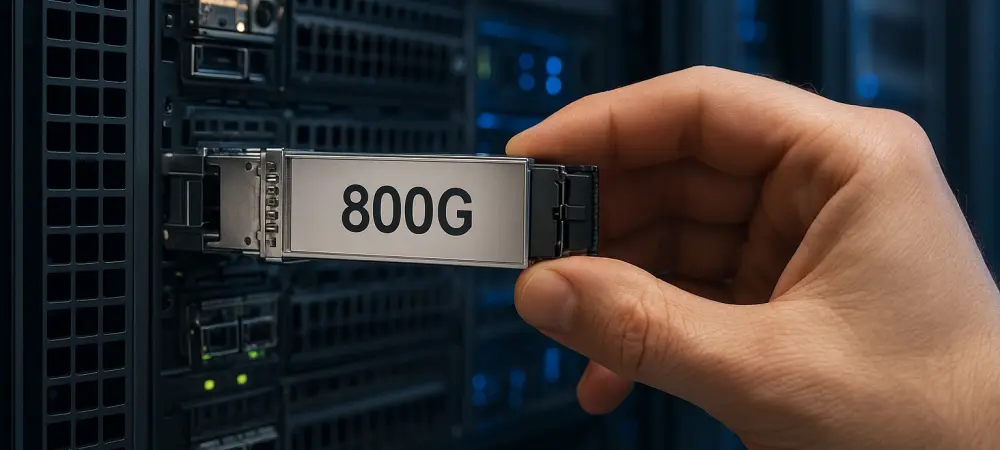
Relying on breakout configurations to bridge the speed gap between 400G ports and 100G legacy systems requires total alignment of switch logic, transceivers, and management software. In the high-stakes environment of 2026, where a single millisecond of latency can derail
By prioritizing network phase coordination, the Archer 8 Ultra maintains low latency even when multiple high-bandwidth applications are running simultaneously. This strategic shift in engineering marks a departure from the industry’s obsession with peak theoretical speeds, focusing instead on the
Browse Different Divisions
Uncover What’s Next
B2BDaily uses cookies to personalize your experience on our website. By continuing to use this site, you agree to our Cookie Policy