

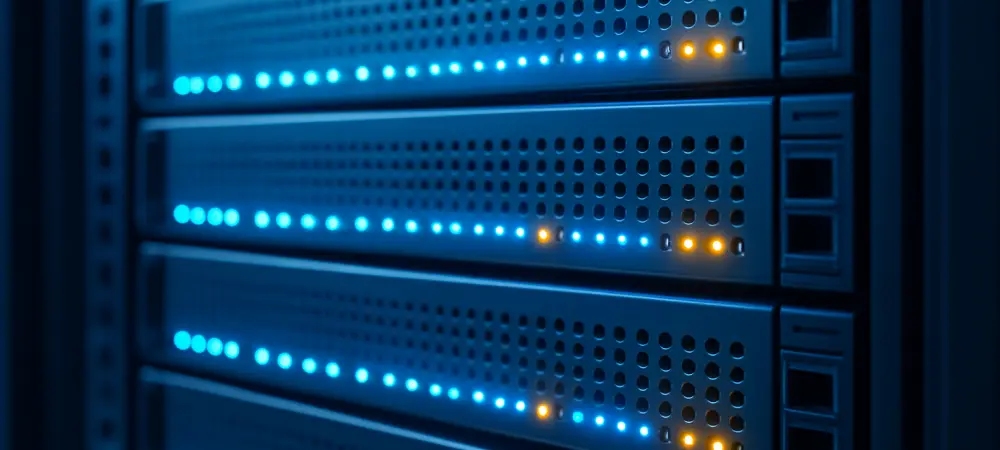
The emergence of the QSN Hub and Spoke system enables a single central unit to secure hundreds of remote sites, significantly reducing the physical footprint required in modern data centers. This foundational technology anchors the newly unveiled Quantum-Safe Networking (QSN) Platform from Toshiba, marking a decisive shift from laboratory-based quantum experiments to a production-ready, industrial-grade security framework. By providing a unified architecture for government agencies, telecommunications providers, and major enterprises, the platform addresses the mounting concern over cryptographic vulnerabilities inherent in traditional encryption methods. The implementation of this system allows for a seamless integration into existing data infrastructures, ensuring that the transition to quantum-safe protocols does not require a complete overhaul of current hardware. As organizations navigate the complexities of digital sovereignty, this platform serves as a critical bridge toward a more secure and technologically advanced networking environment.
Addressing the Evolving Threat Landscape: The Hybrid Defense Strategy
The primary motivation behind the deployment of the QSN Platform remains the pervasive risk of “harvest now, decrypt later” tactics, where malicious entities capture encrypted data today with the intent of decrypting it once quantum processing capabilities reach maturity. While the most advanced quantum systems are still maturing, the immediate threat to long-lived data—such as medical records, national security documents, and intellectual property—is already present. International regulatory bodies have responded by issuing new mandates that require a swift migration to post-quantum protocols to mitigate these risks. Toshiba has addressed this requirement by offering a robust hybrid defense strategy that utilizes the strengths of multiple cryptographic disciplines. By layering these technologies, the platform ensures that sensitive information remains protected against both classical computational attacks and the eventual breakthroughs in quantum-aided decryption. This dual-layered shield combines the mathematical resilience of Post-Quantum Cryptography (PQC) with the physical certainties provided by Quantum Key Distribution (QKD). While PQC relies on complex mathematical algorithms that are specifically designed to be difficult for quantum computers to solve, QKD uses the fundamental principles of physics to ensure the absolute security of the key exchange process. This approach is particularly effective because it provides redundancy; if future advancements in artificial intelligence or mathematical analysis reveal a flaw in a PQC algorithm, the physical laws governing the quantum keys remain an unbreakable line of defense. By implementing both methods simultaneously, the QSN Platform provides a level of security that mathematical solutions alone cannot guarantee. This synergy is essential for organizations that handle high-value data and must maintain the highest possible standards of confidentiality and integrity over decades of operation.
Engineering Scalability Through Hardware Innovation
One of the most significant advancements within the QSN Platform is its modular and interoperable design, which departs from the rigid point-to-point configurations that characterized earlier quantum security implementations. The platform supports a wide array of network topologies, including ring, mesh, and long-distance spans, through a suite of specialized hardware components like the QSN Transceivers. These units are engineered to combine transmitters and receivers into a single, compact chassis, operating at standard quantum wavelengths to provide high-performance key relaying across core networks. This flexibility allows network architects to design security layouts that match the specific physical geography and traffic patterns of their existing infrastructure. By moving away from proprietary or isolated systems, Toshiba has ensured that quantum security can be integrated into the diverse and complex environments typical of modern telecommunications and enterprise data centers. To make quantum-safe networking economically viable for mainstream use, the platform introduces the QSN Multiplexer, a component that allows quantum signals to coexist with standard high-capacity data traffic on the same fiber optic cable. Historically, quantum security often required the use of “dark fiber”—dedicated and expensive unused cables—which created a significant barrier to entry for many organizations. The new multiplexing technology enables quantum channels to share space with Dense Wavelength Division Multiplexing (DWDM) traffic, effectively eliminating the need for separate physical lines. This breakthrough significantly lowers the total cost of ownership and simplifies the logistics of deployment across large metropolitan or regional networks. Furthermore, the ability to utilize existing fiber assets ensures that the transition to quantum-safe communication can be scaled rapidly without the need for extensive new construction or disruptive infrastructure upgrades.
Intelligent Management and Crypto-Agility
The software architecture of the QSN Platform is as critical as its hardware, introducing a sophisticated layer designed to manage the distribution and lifecycle of quantum-safe keys. At the heart of this system are the Key Management System (Q-KMS) and the Key Delivery System, which work in tandem to provide what industry experts call “crypto-agility.” This capability allows the network to automatically re-route keys and adapt to different exchange mechanisms in real-time as security standards evolve or threat levels fluctuate. Instead of relying on a static security posture, administrators can now deploy a dynamic framework that responds to the shifting landscape of digital threats. This flexibility is vital for maintaining long-term security in a world where cryptographic standards are frequently updated by international bodies. The software ensures that the underlying network remains resilient and adaptable without requiring manual intervention. Acting as the centralized “brain” of the entire operation, the QSN Controller provides a comprehensive interface for network-wide visualization and configuration. By leveraging Software Defined Networking (SDN) interfaces, the platform can be seamlessly integrated into standard IT management workflows, allowing security teams to manage quantum links as easily as they do traditional network components. This centralized dashboard enables administrators to monitor the health of quantum links, manage key distribution across thousands of distinct nodes, and perform automated troubleshooting from a single location. Such high-level visibility is essential for large-scale deployments where manual management would be prohibitively complex and prone to human error. By streamlining these operations, Toshiba has removed one of the primary technical hurdles to adopting quantum-safe technology, making it accessible to standard IT departments without specialized training.
Strategic Economic and Operational Benefits
Toshiba has positioned the QSN Platform not merely as a technical upgrade but as a strategic business advantage for forward-thinking organizations. For telecommunications providers, the platform opens up new revenue streams by enabling the creation of high-margin “quantum-safe-as-a-service” offerings for their corporate and government clients. This allows service providers to differentiate themselves in a competitive market by providing the highest level of data protection available. For the enterprises themselves, the primary benefit lies in the efficiency of the deployment process. By reducing the physical hardware footprint and utilizing existing fiber infrastructure, the platform significantly improves the overall economics of the transition. This focus on cost-effectiveness ensures that advanced security is no longer restricted to organizations with unlimited budgets but can be effectively implemented by a broader range of commercial entities. The platform is specifically designed for incremental expansion, supporting a “pay-as-you-grow” strategy that allows organizations to mitigate high upfront costs. Companies can begin their journey by protecting their most sensitive data paths—such as the links connecting primary data centers or financial hubs—and then gradually expand coverage as their operational requirements and budgets allow. This phased approach is particularly beneficial for large institutions that must balance the need for immediate security improvements with long-term fiscal responsibility. Furthermore, the platform’s adherence to global standards, supported by Toshiba’s leadership in the ETSI Industry Specification Group, ensures that any investment made today will remain compliant with future international certifications. This long-term viability is a cornerstone of the platform’s value proposition, providing peace of mind for executives and security officers tasked with future-proofing their networks.
Establishing a Resilient Framework: Future Operational Insights
The successful launch and initial deployment of the QSN Platform provided a definitive roadmap for securing the global digital economy against the specific challenges of the quantum era. It demonstrated that the integration of physics-based security and mathematical algorithms offered the most comprehensive defense for modern infrastructure. Organizations that prioritized this transition early gained a significant advantage in maintaining data integrity and regulatory compliance. Moving forward, the focus shifted toward the systematic inventorying of high-value data and the establishment of pilot programs to test quantum-safe links in real-world scenarios. The platform proved that the path to a secure future required a balance of innovative hardware, intelligent management, and a commitment to international standards. By following these established best practices, leaders ensured that their networks remained resilient against even the most sophisticated computational threats.