

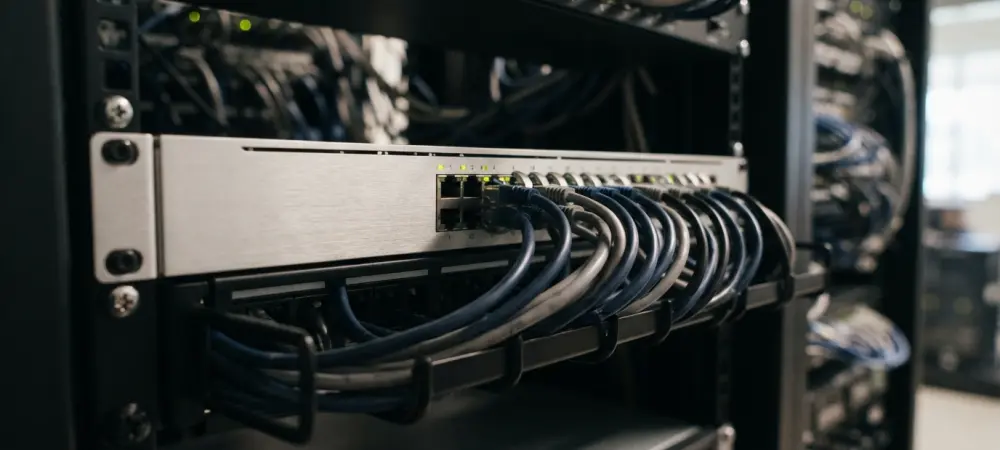
Corporate next-generation firewalls use the same behavioral analysis as national governments to identify shadow IT and enforce strict acceptable-use policies on campus networks. Modern firewalls do not necessarily need to crack complex encryption algorithms to render a VPN useless; instead, they focus on identifying the metadata and behavioral signals that characterize encrypted tunnels. This battle centers on visibility versus confidentiality, where even mathematically unbreakable protocols like WireGuard remain vulnerable because they leave a distinct footprint on the network. Security systems act as observers who monitor the data moving across the internet, recognizing its shape even without seeing inside.
The Mechanics: IP and Port Filtering
The most straightforward method firewalls use to neutralize tunneling services involves IP reputation and database filtering. Because commercial VPN providers host their services in well-known datacenters such as AWS, Google Cloud, or Linode, their IP addresses are largely public knowledge. Organizations maintain extensive, frequently updated blacklists of these address ranges, allowing a firewall to simply drop any connection attempt directed at a known provider. This approach is computationally inexpensive and highly effective for blocking the majority of consumer-grade privacy tools that rely on centralized server clusters for their traffic routing.
Beyond simple address blacklisting, modern security appliances monitor port and protocol constraints to identify tunneling activity. A firewall observing a long-lived, high-bandwidth connection on port 443 that does not follow the bursty, request-response pattern of a standard website will quickly flag the connection as a potential tunnel. Consequently, port hopping has become less effective as a standalone evasion technique.
Advanced Analysis: Deep Packet Inspection and TLS Fingerprinting
Deep Packet Inspection represents a more aggressive layer of detection where the firewall examines the actual structure and header information of individual data packets. For instance, recent cryptographic research has demonstrated that the fixed message sizes in a WireGuard handshake—exactly 148 bytes for initiation and 92 bytes for a response—allow firewalls to identify the protocol with near-perfect accuracy. By analyzing the shape of the communication at the sub-packet level, DPI systems turn the very efficiency of modern protocols against them, creating a scenario where predictability becomes a significant liability for those seeking network anonymity.
To counter these packet-level inspections, many providers wrap their traffic in Transport Layer Security, the same encryption utilized by standard websites. Advanced firewalls utilize JA3 or JA4 hashes to compare these handshake parameters against a library of known software signatures. If a connection claims to be a standard web browser but its handshake parameters do not match the behavior of known, legitimate browsers, the firewall flags it as suspicious. This methodology relies on the fact that mimicking a modern browser’s unique cryptographic accent is exceptionally difficult, as any slight deviation in the handshake sequence reveals the presence of a non-standard tool.
Active Interrogation: Probing and the Entropy Rule
When a firewall suspects a server is acting as a hidden proxy or a gateway for unauthorized traffic, it may utilize active probing to confirm its suspicions. In this scenario, the security appliance initiates its own connection to the suspect destination, sending specific data to see how the remote server reacts. This has led to a shift in VPN development toward cloaked servers that only respond to authenticated clients, effectively staying silent when scanned by a firewall’s automated probing system.
Historically, VPNs attempted to evade detection by making their traffic look like random noise through pure obfuscation techniques. However, modern firewalls have inverted this logic using what is known as the entropy rule. In advanced filtering environments, if a connection displays high entropy without being preceded by a valid, known handshake like TLS, the firewall discards the traffic immediately. This represents a paradigm shift where tools are now being targeted not for what they are, but for what they are not. If the data does not look like a standard, sanctioned protocol, it is treated as suspicious by default.
Mimicry: Evolutionary Shifts in Stealth and Wrapping
In response to the shift toward entropy-based blocking, VPN developers have moved away from simple randomization in favor of sophisticated mimicry. Stealth protocols now aim to perfectly emulate the behavior and timing of a standard HTTPS session. The goal is no longer to hide the data, but to make it look so much like a common activity—such as a video call or a file download—that blocking it would cause unacceptable collateral damage to the network’s primary functions.
Furthermore, providers are increasingly adopting protocol wrapping, where an efficient protocol like WireGuard is hidden inside another transport layer such as QUIC or HTTP/3. This sophisticated countermeasure highlights a shift in the digital arms race: success no longer depends on being invisible, but on being indistinguishable from sanctioned, everyday internet traffic. As long as the wrapper looks authentic, the internal traffic remains protected from the scrutiny of automated behavioral analysis engines.
Security Posture: Institutional Impacts and Technical Risk
The use of these detection technologies is not limited to national governments; it is also standard practice in corporate and academic environments. Next-generation firewalls use DPI and IP reputation to enforce acceptable-use policies and prevent the proliferation of shadow IT. This means that even if a VPN successfully establishes a connection, network administrators are often aware of its presence through automated alerting systems. In a managed network environment, the metadata of the connection is often more important to administrators than the data itself.
Beyond technical blocking, the failure of an obfuscation method carries significant legal and operational risks in certain jurisdictions. As detection heuristics become more efficient, the stakes for privacy tool developers and users alike continue to rise, making the ability to blend into normal traffic the ultimate goal of modern digital privacy. The evolution of firewalls has transformed digital privacy from a mathematical problem into a behavioral one, where the primary objective is to avoid being singled out from the crowd.
Next Steps: Strategies for Enhancing Connection Resilience
The battle over network visibility reached a turning point as administrators moved toward behavioral heuristics. To navigate this landscape, users and organizations adopted a multi-layered approach to connection resilience. It was found that rotating IP addresses and utilizing residential proxy networks significantly reduced the effectiveness of database-level filtering. The focus shifted from universal solutions toward context-aware privacy tools that adjusted their signatures based on the network’s behavior.
For those looking to maintain secure access in restrictive environments, the next logical steps involve the deployment of self-hosted bridges and the use of protocols that leverage the QUIC standard. Transitioning away from legacy UDP-based VPNs toward those that encapsulate traffic within standard HTTPS/3 flows provides a much higher degree of background noise for the connection to hide within. Future developments in this field will likely focus on AI-driven traffic shaping, where the VPN client dynamically adjusts its packet cadence to match the user’s actual browsing habits. By prioritizing indistinguishability over mere encryption, users can maintain a lower profile on scrutinized networks while ensuring their data remains protected from both interception and discovery.