

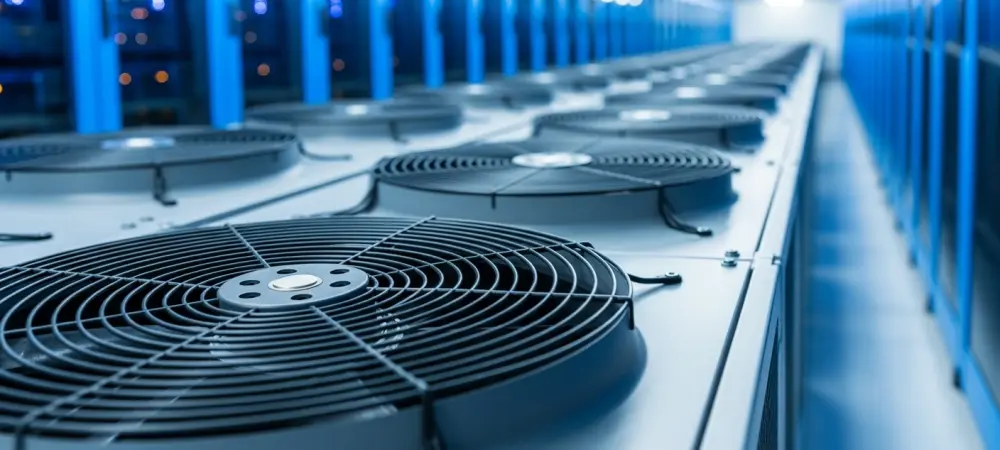
The suburban quiet of once-peaceful American neighborhoods is increasingly shattered by the low-frequency hum of massive cooling fans as artificial intelligence moves from the digital cloud into physical backyards. While the technology sector presents these facilities as the essential heart of a new digital age, a growing segment of the population perceives them as industrial intruders. This tension has transformed from a localized nuisance into a significant roadblock for the tech industry’s ambitious growth plans.
The Neighborhood Guest Nobody Invited
A recent Gallup survey has uncovered a startling shift in American sentiment: a typical citizen is now more comfortable living next to a nuclear power plant than an AI data center. While the tech industry views these massive server farms as the engines of the future, local communities increasingly see them as intrusive neighbors that take much and give back little. The architectural presence of these windowless monoliths often clashes with the aesthetic values of residential areas, leading to immediate pushback from homeowners. This friction has moved beyond mere skepticism into a full-scale grassroots movement that is currently stalling the physical expansion of artificial intelligence across the country. Residents who previously ignored local zoning boards are now filling town halls to protest the arrival of cavernous structures that threaten to redefine their local landscapes. The transition from remote industrial parks to suburban peripheries has forced a confrontation between global tech ambitions and the fundamental desire for neighborhood preservation.
The Infrastructure Paradox: Why the AI Boom Is Hitting a Wall
The rapid advancement of generative AI has created an insatiable demand for physical infrastructure, but the industry is discovering that digital growth cannot exist without local consent. For decades, tech companies enjoyed a reputation for bringing progress; however, the sheer scale of modern AI data centers has triggered a “Not In My Backyard” sentiment that transcends political and social divides. The perception of these firms has shifted from innovative pioneers to heavy industrial developers.
As these facilities move closer to population centers to reduce latency, the clash between the Silicon Valley “move fast” ethos and the practical concerns of local residents has reached a breaking point. Developers are finding that the “cloud” is an expensive, power-hungry reality that requires miles of fiber and massive electrical substations. Without a clear social license to operate, the physical layer of the internet is becoming increasingly difficult to build, threatening the pace of global technological advancement.
Beyond Fear: The Tangible Costs Driving Grassroots Resistance
The opposition to AI expansion is rarely rooted in a philosophical fear of the technology itself, but rather in the heavy toll these facilities take on local environments. Unlike traditional manufacturing hubs, data centers are notorious for their extreme consumption of electricity and water, often straining municipal grids to the point of driving up utility costs for surrounding households. In regions prone to drought, the diversion of millions of gallons of water for server cooling has become a flashpoint for intense community anger.
Furthermore, the economic promise of these projects is frequently scrutinized; while the initial construction phase provides a temporary boost in manual labor, the finished facilities require remarkably few permanent employees. This lack of sustained job creation, combined with concerns over noise and thermal pollution, makes it difficult for developers to argue that the community receives a fair return on its investment. Consequently, the fiscal benefits to the local tax base are often overshadowed by the immediate degradation of local resources.
Public Sentiment by the Numbers: The 2026 Gallup Shift
Recent data paints a grim picture for the tech sector, with 71% of Americans expressing opposition to local data center construction and nearly half describing their stance as “strongly opposed.” Research shows this hostility is remarkably uniform across age groups, education levels, and the political spectrum, though women are statistically more likely to voice intense concern than men. This widespread disapproval indicates that the issue has moved past niche environmentalism into the American mainstream. These findings have turned the AI industry into a political liability; local and state representatives are increasingly siding with their constituents to block permits. Supporting data center expansion has become a reliable way to lose a re-election campaign, leading to a sudden drought in the legislative support that the tech sector once took for granted. The sheer volume of opposition has forced a re-evaluation of how digital infrastructure projects are pitched to the public, as traditional economic arguments no longer carry sufficient weight.
Navigating the Stalemate: Strategies for Sustainable Expansion
To overcome the stalemate, the industry moved away from generic promises of innovation and toward concrete, localized benefits. Companies prioritized the development of “Good Neighbor Agreements” that included direct subsidies for local utility bills and the implementation of closed-loop cooling systems to minimize water waste. This shift allowed developers to demonstrate a tangible commitment to the well-being of the surrounding community rather than just the efficiency of their servers.
Rather than focusing on short-term construction jobs, developers invested in local STEM education and long-term infrastructure improvements that benefited the community independently of the data center. By shifting from an extractive model to a collaborative one, the industry found a path forward that respected local resources while still powering the next generation of technology. These initiatives ultimately proved that sustainable expansion required a fundamental change in how tech giants interacted with the physical world and the people living within it.