

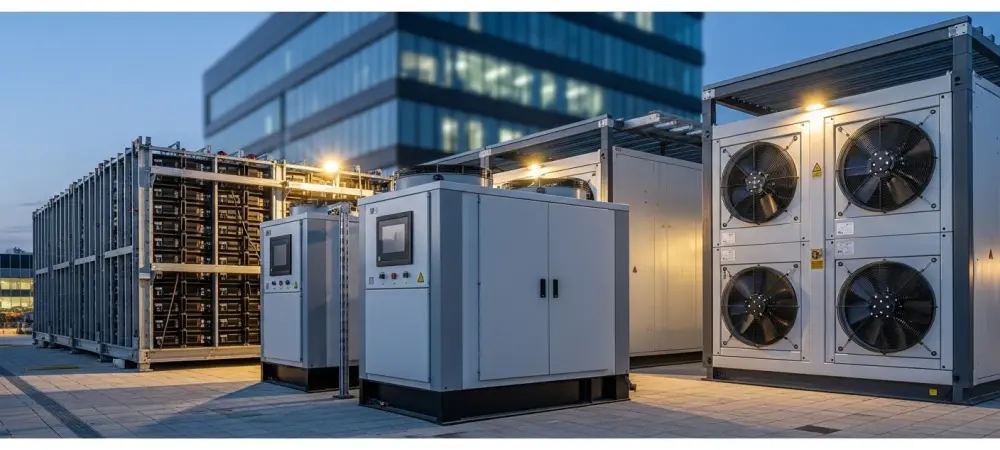
Dominic Jainy has spent his career at the intersection of emerging technology and critical infrastructure, witnessing firsthand how the rapid rise of artificial intelligence is fundamentally altering the global energy landscape. As an expert in AI, machine learning, and blockchain, he understands that the digital future is only as stable as the power feeding it. In an era where regional grids are increasingly strained and cyber threats can paralyze entire cities, Jainy advocates for a radical shift toward energy independence. This discussion explores the transition of data centers from passive consumers to self-sufficient “energy islands,” examining the logistical, financial, and strategic hurdles of building localized microgrids. We delve into the technical nuances of battery storage, the economic justification of multi-million dollar investments, and how smaller enterprises can navigate the complexities of managing their own mini-power utilities.
The March 2026 cyberattack in Foster City, California, proved that even when the grid stays on, localized infrastructure failures can paralyze connectivity for over 30,000 people. How can a microgrid effectively bridge this gap during a cyber-driven disruption, and what technical steps must a facility take to ensure its “island” mode activates without risking data loss?
A microgrid serves as a vital firewall against the unpredictability of regional infrastructure, allowing a facility to essentially sever its ties with a compromised network and operate as a self-contained entity. When a cyberattack disrupts the broader connectivity or power management systems, a microgrid’s central controller must instantly detect the anomaly and initiate “islanding,” a process that can be as seamless as a heartbeat if properly configured. To ensure there is zero data loss, the facility must integrate high-speed switching gear that can transition the load from the main grid to localized sources, such as natural gas or diesel generators, in milliseconds. In the Foster City scenario, while 30,000 residents lost access, a data center equipped with a sophisticated microgrid would have remained an oasis of uptime by relying on its own internal power generation and pre-stored battery energy. The key is the orchestration between the utility service entrance equipment and the internal metering; if these systems aren’t perfectly synchronized, you risk a “brownout” during the handoff that can corrupt active AI training sets or database records.
AI processing requires massive and often unpredictable bursts of power that can overwhelm public infrastructure. How do localized generation systems like those seen in Dublin help companies scale these workloads, and what logic should leadership follow to balance independent energy consumption?
The surge in AI demand has created a “power panic” because traditional grids were never designed to handle the volatile, high-density loads that modern GPU clusters require. By implementing localized generation—much like the Pure Data Centre Group did in Dublin—companies can bypass the red tape and physical limitations of the city’s main grid, essentially creating their own supply on-demand. The logic for leadership starts with quantifying the “uncertainty buffer”; since we don’t yet have a clear picture of how much energy future AI models will consume, building a microgrid provides a scalable foundation that grows with the hardware. Executives should monitor the “Energy Independence Ratio,” which tracks the percentage of workloads powered by on-site generation versus the grid, ensuring they aren’t vulnerable to price spikes or public backlash during peak usage. It is a step-by-step transition from being a customer of the utility to becoming a partner, where you use the grid for baseline needs but fire up your local natural gas or renewable sources to handle the heavy lifting of AI processing.
Modern microgrids are moving beyond simple diesel backups to include complex components like zinc bromide flow batteries and PV inverters. What are the logistical challenges of integrating these diverse sources into a unified control system, and how does this improve long-term reliability?
The logistical challenge lies in the “symphony of sources,” where you are trying to make a solar array, a flow battery, and a traditional generator speak the same electrical language through a single central controller. Systems like the one at the Marine Corps Air Station in Miramar demonstrate that you need advanced PV inverters to manage the variable input from solar power while simultaneously balancing the long-duration discharge of a zinc bromide battery. This setup is far superior to traditional diesel backups because it eliminates the “single point of failure” risk; if the sun isn’t shining, the flow battery kicks in, and if the battery is depleted, the gas generator provides the final layer of defense. It creates a multi-layered resilience profile that can sustain operations for days or even weeks, rather than the few hours typical of standard UPS systems. Integrating these requires specialized labor and deep technical training, but the result is a ruggedized energy posture that can withstand both natural disasters and long-term grid instability.
With capital expenditures reaching between $2 million and $5 million per megawatt, the financial barrier to entry is daunting. How do you quantify the risk of inaction against this cost, and what hidden budgetary factors like permits or specialized labor should be prioritized?
The justification for a microgrid isn’t found in the immediate savings on a monthly utility bill, but rather in the catastrophic cost of a “dark” data center. If you are a high-stakes enterprise, the loss of operations for even a few hours can eclipse the six-figure or even seven-figure investment required to build an energy island. Beyond the $2 to $5 million per megawatt for hardware, CIOs must budget for the “soft costs,” which include the labyrinth of regulatory permits and the specialized electrical engineering labor required for a custom installation. In many jurisdictions, the inspection fees and environmental compliance for on-site gas or diesel storage can add a surprising 15% to 20% to the initial budget. However, when you weigh these costs against the rising insurance premiums and the potential for lost revenue during a regional outage, the microgrid transitions from a “luxury” to a “critical insurance policy” for the digital age.
Large tech giants are already building their own “energy islands” to bypass utility constraints. For a CIO at a smaller enterprise, what are the first milestones in shifting from a disaster recovery mindset to managing a mini-power utility?
The shift begins with a mental pivot: you are no longer just protecting data; you are now in the business of generating and storing electrons. The first milestone is conducting a “power audit” to identify which specific edge locations or mission-critical racks need to be decoupled from the grid to maintain business continuity. From there, the transition involves moving beyond the “failover” mentality—where you only think about power when it goes out—to a “continuous generation” model where you are actively managing battery storage and renewable inputs. Smaller enterprises should look at successful precedents like the microgrids in Nepal or American Samoa, which prove that you don’t need the billions of Google or Amazon to achieve self-sufficiency if you right-size the solution to your specific load. It’s about building a modular system that starts with a robust battery and a few renewable sources, slowly layering in more capacity as the AI workload grows.
What is your forecast for microgrid adoption in the data center industry over the next decade?
Over the next ten years, I expect microgrids to move from a niche redundancy feature to the standard architectural blueprint for any high-tier data center. As the central grid continues to age and AI demands potentially double or triple our current energy consumption, the “utility-first” model will become a liability that most boards of directors are no longer willing to accept. We will see a massive surge in “energy-as-a-service” models, where third parties build and manage these micro-utilities for companies, allowing even mid-sized firms to enjoy the resilience of a $5 million-per-megawatt system without the massive upfront hit to their balance sheets. Ultimately, the data centers that thrive will be those that view energy not as a commodity to be purchased, but as a strategic asset to be generated, stored, and controlled on their own terms. The era of the “energy island” is just beginning, and it will be the defining factor in who survives the next wave of digital disruption.