

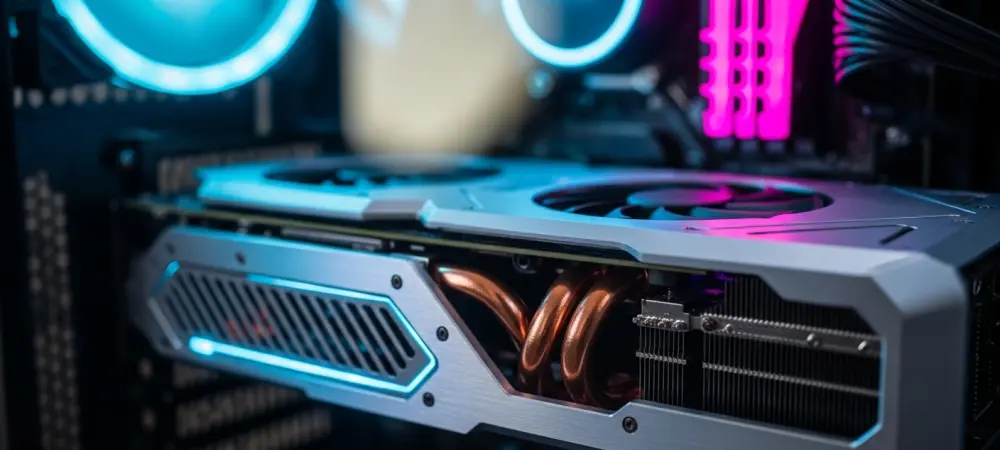
The satisfying click of a high-end graphics card seating into a motherboard remains a rite of passage for many enthusiasts, but that physical milestone is rapidly losing its status as the only way to achieve a significant performance leap. In the current era of hardware development, the most profound changes to a gaming experience no longer arrive exclusively in cardboard boxes packed with anti-static foam and silica gel. Instead, the modern “upgrade” is often delivered through a simple fiber-optic connection, manifesting as a driver update that fundamentally rewrites the capabilities of the silicon already residing in a user’s chassis. Advanced Micro Devices has embraced this shift toward software-defined longevity, signaling to the global gaming community that the value of a graphics card is no longer fixed at the point of purchase.
This transition from physical replacement toward iterative software enhancement has reached a fever pitch with the rollout of FidelityFX Super Resolution 4.1. For owners of the Radeon RX 7000 series, this update represents more than just a minor incremental patch; it is a profound technical pivot that unlocks previously dormant architectural features. As the industry moves away from the raw brute force of traditional rasterization and toward the sophisticated nuances of neural reconstruction, the RX 7000 series has found a second life. This strategic move by AMD effectively democratizes high-tier performance, ensuring that mid-range builds remain competitive against increasingly expensive flagship hardware while simultaneously challenging the established norms of product life cycles.
The significance of FSR 4.1 lies in its ability to bridge the widening gap between aging RDNA 3 architecture and the exorbitant demands of modern, AI-integrated gaming titles. By utilizing the dedicated AI accelerators that were built into the RX 7000 series but left largely underused for years, AMD has managed to deliver a “free” hardware upgrade that rivals the gains once seen between physical generations. This approach addresses the economic reality of a market where consumers are holding onto their hardware longer than ever before. Rather than forcing a costly replacement, AMD is optimizing the existing ecosystem, reinforcing the idea that a graphics card is a living product that evolves alongside technological breakthroughs.
Why Your Next Graphics Upgrade Might Not Require a Screwdriver
The traditional cycle of PC gaming has long been defined by a predictable and often expensive rhythm of hardware turnover. For decades, the pursuit of higher frame rates and more complex visual effects required a manual intervention—unscrewing the side panel of a tower, navigating the labyrinth of power cables, and swapping out a perfectly functional card for a newer, more power-hungry successor. However, as we navigate the complexities of the current hardware market, this physical paradigm is being challenged by a more efficient alternative. The industry has entered a phase where the most impactful performance gains are extracted through sophisticated algorithms rather than just adding more transistors to a die. This shift toward software-driven performance means that the longevity of a system is now tied more closely to the ingenuity of a manufacturer’s software team than the initial throughput of its manufacturing foundries. In a high-inflation economy where the price of high-end graphics cards has climbed to levels that rival entire budget PC builds, the ability of a manufacturer to provide meaningful, transformative updates to older products has become a vital competitive advantage. Consumers are no longer satisfied with hardware that remains static throughout its lifespan; they expect their initial investment to appreciate in utility over time. AMD’s strategic pivot with the RX 7000 series recognizes this change in consumer behavior by providing a software stack that keeps pace with the latest industry standards. This creations a scenario where a user might realize a 30% or 40% increase in effective performance simply by clicking an “Install” button on a driver notification, effectively bypassing the need for a retail purchase and the mechanical labor associated with it.
The psychological impact of this change cannot be overstated, as it fundamentally alters the relationship between the gamer and their machine. When a graphics card can be “reborn” through a software update, the fear of immediate obsolescence begins to fade. This software-centric philosophy allows users to focus on the experience of gaming rather than the anxiety of hardware benchmarks. By extending the peak performance window of the RX 7000 series, AMD is proving that the age of the physical hardware cycle is being replaced by a new era of software-driven longevity. This not only preserves the value of the consumer’s purchase but also reduces the environmental footprint of the industry by slowing the rate at which functional silicon is discarded in favor of marginally better alternatives.
From Raw Silicon to Neural Links: The Shifting GPU Landscape
The global graphics market has reached a critical turning point where raw hardware specifications like teraflops, memory bandwidth, and clock speeds are no longer the sole measures of a card’s value. In the current technological environment, the focus has shifted toward the “neural” capabilities of a GPU—its ability to use machine learning and artificial intelligence to intelligently reconstruct images. This evolution is a response to the fact that native resolution gaming is becoming increasingly inefficient at the 4K and 8K levels. Instead of asking a GPU to calculate the color of every single pixel on every frame, manufacturers are now using AI to fill in the gaps, allowing the card to work at a lower internal resolution while delivering a final image that often surpasses native quality in terms of stability and detail.
AMD’s strategic pivot focuses heavily on the RDNA 3 architecture, which served as a bridge between the classic rasterization-focused designs of the past and the AI-heavy demands of modern titles. While the RX 7000 series was initially marketed on its rasterization prowess and generous VRAM capacities, its true potential remained locked behind a software stack that had not yet fully matured to utilize its specialized AI accelerators. As the market landscape evolved, it became clear that purely hardware-driven gains were hitting a wall of diminishing returns and escalating heat production. The move toward neural links and AI-driven upscaling allows AMD to extract more efficiency from existing silicon, bridging the gap between aging RDNA 3 hardware and the cutting-edge RX 9000 series without requiring a change in the physical architecture.
This shift has also been influenced by a broader market demand for feature parity across different price points. In the past, high-end rendering techniques were often locked behind the most expensive flagship cards, creating a tiered experience that left mid-range users behind. However, the current trend favors a more democratic distribution of technology. By bringing FSR 4.1 to the RX 7000 series, AMD is ensuring that mid-range builds remain relevant against the increasingly expensive flagships from competitors. This strategy not only fosters brand loyalty but also stabilizes the second-hand market, as older cards retain their utility and performance through continuous software support. The landscape is no longer a race of brute force, but a competition of architectural intelligence and software optimization.
Tapping Into Dormant Power: How FSR 4.1 Transforms the RX 7000 Series
The introduction of FSR 4.1 marks a radical departure from traditional upscaling methods by finally utilizing the dedicated AI accelerators found within the RX 7000 series. When RDNA 3 was first launched, these hardware blocks were included as a forward-looking feature, but they sat largely underused as the industry relied on more basic spatial and temporal algorithms. FSR 4.1 changes the fundamental way the GPU handles image reconstruction by shifting toward a more sophisticated, AI-driven model. This new approach allows the GPU to analyze motion vectors and previous frame data with a level of precision that was previously impossible. The result is a significant boost in image stability, particularly in fast-moving scenes where traditional upscalers often struggle with “shimmering” or “ghosting” artifacts.
By tapping into this dormant silicon, FSR 4.1 provides a performance leap that mimics a higher-tier hardware upgrade. For an RX 7800 XT or RX 7900 GRE owner, the update can feel like moving up an entire generation in terms of visual clarity and frame rate consistency. The AI-driven reconstruction is designed to identify and correct errors in real-time, allowing the card to render at a lower base resolution without the blurriness that plagued earlier upscaling technologies. This “software-as-silicon” approach democratizes high-end rendering techniques, making them available to the average gamer who might not have the budget for the absolute latest hardware. It transforms the RX 7000 series into a living platform that grows in capability, proving that the hardware’s initial launch state was just the beginning of its performance journey.
Moreover, the integration of AI-based frame generation within FSR 4.1 allows the RX 7000 series to maintain feature parity with the latest RX 9000 series. This is a crucial development for maintaining a cohesive ecosystem where games can be optimized for a single software standard that works across multiple generations of hardware. The AI accelerators on the RDNA 3 cards are now being used to interpolate frames with greater accuracy, reducing the input lag that was a common criticism of earlier software-based frame generation attempts. By optimizing the interaction between the GPU’s compute units and its AI blocks, AMD has managed to unlock a level of smoothness that was once thought to be the exclusive domain of much more expensive, specialized hardware. This update proves that intelligent software can often compensate for the physical limitations of a specific architectural generation.
Neutralizing the Walled Garden: A Tactical Response to Nvidia’s Legacy Support
Industry analysts note that AMD’s move is a necessary defensive maneuver against Nvidia’s DLSS ecosystem, which has historically offered robust support for older generations through its proprietary AI cores. For years, Nvidia used its “walled garden” approach as a primary marketing tool, convincing users that the only way to access cutting-edge AI upscaling was to remain within the RTX family. By bringing FSR 4.1 to the RX 7000 series and promising continued support for older architectures, AMD is directly challenging this narrative. The goal is to provide a compelling alternative that offers similar visual quality and performance gains without the restrictive hardware requirements. This move addresses long-standing frustrations within the gaming community regarding hardware abandonment and the perceived “planned obsolescence” of older GPU models.
This shift was further accelerated by the enthusiast community, who often took matters into their own hands before official support was announced. Third-party tools like OptiScaler became popular among Radeon users, providing a way to inject sophisticated upscaling techniques into games that lacked official AMD support. This grassroots movement signaled to manufacturers that consumer loyalty is now tied directly to long-term software support rather than just initial hardware sales. AMD’s decision to officially integrate AI-driven FSR into the RX 7000 series serves as a legitimization of this community demand. It shows that the company is listening to its user base and understands that the best way to compete with a dominant rival is to offer a more open, inclusive, and enduring software platform.
In contrast to the closed-source nature of many competing technologies, AMD’s commitment to a broader support model helps neutralize the competitive advantage that Nvidia once held over the legacy market. By ensuring that an RX 7000 series card can perform at a level comparable to an RTX 40-series card in modern AI-supported titles, AMD is effectively removing the “feature gap” that often drove users to switch brands. This tactical response is not just about matching frame rates; it is about matching the entire software experience. As more developers adopt FSR 4.1 as a standard, the ecosystem grows stronger, creating a virtuous cycle where older hardware becomes more valuable over time. This approach undermines the necessity of the “walled garden,” proving that high-quality AI reconstruction can be achieved through clever optimization of existing hardware.
A Framework for Maximizing Your Current Hardware Investment
To take full advantage of this new software-driven era, users should move away from the “buy and replace” mentality and focus on optimizing their current ecosystem. Owners of RX 7000 cards can prepare for the widespread rollout of AI-enhanced features by ensuring their systems are primed for the latest software environments. This involves more than just a simple driver update; it requires a holistic approach to system maintenance. Updating to the latest RDNA 3 firmware and ensuring that the operating system is optimized for AI workloads are essential steps. By prioritizing cards with strong VRAM capacities and documented software roadmaps, gamers can effectively double the usable lifespan of their GPUs, turning a one-time purchase into a living product that evolves alongside the latest technological breakthroughs in the industry.
The focus should also remain on the specific titles that support these advanced features. Monitoring performance gains in AI-supported titles allows users to understand where their hardware is excelling and where further optimization might be needed. As the industry moves toward a “service-based” hardware model, the value of a GPU is increasingly defined by its software compatibility. Gamers who invest time in learning how to tune their settings to work in harmony with FSR 4.1 will find that their hardware remains at the cutting edge far longer than previous generations did. This requires a shift in consumer education, where understanding the nuances of upscaling and frame generation becomes just as important as knowing the clock speed of the processor.
The industry transitioned away from a hardware-only focus toward a model where architectural longevity was defined by intelligent software updates. Users realized the value of their existing investments as the RX 7000 series experienced a performance renaissance that defied traditional expectations. This shift allowed the community to prioritize sustainability and cost-effectiveness over the constant pursuit of the next retail release. By embracing the power of AI-driven reconstruction, the market moved toward a future where a graphics card was no longer a static component, but a dynamic asset that improved with every update. This evolution proved that the most powerful tool in a gamer’s arsenal was not a screwdriver, but a commitment to a software ecosystem that valued the past as much as it looked toward the future.