

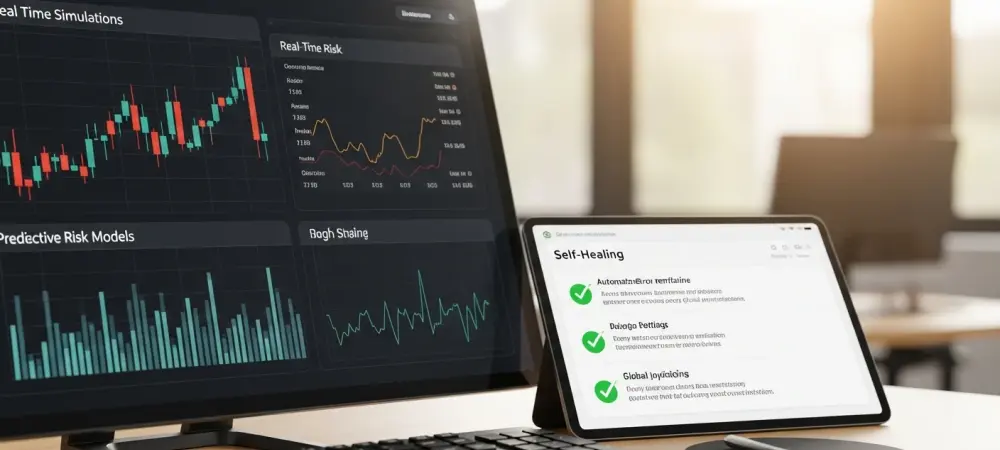
The traditional architecture of the global banking system is currently dissolving under the weight of a monumental technological shift that places artificial intelligence at the very center of every capital movement. Finance departments are no longer the quiet record-keeping back offices of the past; they have evolved into command centers where data serves as high-octane fuel for real-time strategic maneuvers. As institutions dismantle fragmented legacy systems, they are constructing integrated ecosystems that prioritize data as the most valuable asset on the balance sheet. This change represents a fundamental shift in how power is distributed within a firm, moving decision-making away from intuition toward algorithmic precision and high-frequency oversight.
The necessity of this structural change is evident in how modern chief financial officers view their role within the executive suite. Rather than merely reporting on what happened during the previous quarter, these leaders are utilizing predictive engines to simulate various market scenarios before they occur. This transition from a reactive posture to a proactive flight deck model allows for a more nuanced understanding of risk and opportunity. By treating every transaction as a data point for a larger intelligence model, organizations are creating a self-reinforcing loop where the business grows smarter with every dollar moved across the global network.
This evolution is energized by a growing recognition among finance leaders that the true potential of advanced automation can only be realized if it is supported by a robust, modernized data backbone. In the current landscape of 2026, the industry is witnessing the sunset of the “engine room” era, where humans spent the majority of their time on manual reconciliation and data entry. Instead, the focus has shifted to maintaining the integrity of the sophisticated algorithms that now handle the heavy lifting of global finance. This transition is not merely a technical upgrade; it is a profound reimagining of what it means to manage capital in an age of total digital immersion.
The Structural Metamorphosis of Global Data and Technology
Traditional monolithic data warehouses, once considered the gold standard of financial stability, have become significant bottlenecks in an era defined by extreme market volatility and instant liquidity. Modern finance leaders recognize that the rigid, siloed structures of the past cannot accommodate the speed of contemporary global markets, necessitating a complete modernization of the technical infrastructure. This technical overhaul is essential because the effectiveness of any generative or predictive model is inherently limited by the integrity and accessibility of the information feeding it. When data remains trapped in legacy databases, the resulting insights are often outdated by the moment they reach a human supervisor.
Today’s global markets demand a level of speed and flexibility that older, centralized systems simply cannot provide, forcing a shift toward more distributed and resilient architectures. The structural metamorphosis involves moving away from “black box” systems where data was difficult to extract and even harder to analyze in real time. This modernization of the data backbone is the prerequisite for any institution hoping to utilize automated compliance monitoring or real-time risk mitigation strategies. Organizations are now favoring platforms that allow for the seamless flow of information across different geographical jurisdictions while maintaining strict adherence to local regulatory requirements.
The underlying technology must now support a state of constant flux, where data is ingested, cleaned, and analyzed simultaneously rather than in discrete, sequential batches. This evolution matters because the agility of the financial infrastructure directly correlates to a firm’s ability to maintain capital adequacy during a crisis. By building a foundation that is native to the cloud and optimized for high-capacity computing, banks are ensuring that they can process petabytes of transactional data without the latency that previously plagued the sector. This transformation ensures that the technological skeleton of the firm is just as responsive as the artificial intelligence systems that sit on top of it.
Transitioning to Agile Ecosystems and Self-Healing Data Architectures
The current trend in architectural design favors decentralized models like Data Lakehouses and Data Mesh, where business domains such as Treasury or Risk take direct ownership of their specific data products. By leveraging cloud elasticity, these organizations can now build and deploy complex capital models in a fraction of the time previously required, effectively removing the historical burden of constant, manual data reconciliation. This architectural agility allows firms to scale their operations horizontally, meeting the demands of global trade without increasing the administrative headcount or slowing down the pace of innovation. Beyond mere storage and access, the introduction of self-healing data pipelines marks a significant leap in operational reliability by using agentic workflows to automatically remediate errors. These systems are designed to monitor data quality in near real-time, identifying anomalies and fixing formatting discrepancies the moment they appear in the ledger. For example, if a currency conversion error occurs in a remote branch, the AI-driven pipeline can flag the inconsistency and apply the correct historical rate without human intervention. This shift toward “continuous data readiness” eliminates the need for the long, manual cleaning phases that traditionally preceded the monthly close.
By utilizing these advanced frameworks, financial institutions are creating an environment where the integrity of financial figures is maintained through automated governance rather than human auditing. Parallel to this shift is the advent of intelligent integration layers that weave together various data sources across the organization into a unified fabric. This ensures that every department is working from the same “version of the truth,” even if the raw data is stored in different formats or locations. The ultimate goal of these self-healing architectures is to provide a state of absolute confidence in the numbers, allowing executive leadership to make high-stakes decisions based on data that is verified in real time.
Industry Insights: The Merger of Financial Nuance and Technical Science
Recent market observations indicate a profound convergence between the Finance and Information Technology functions, effectively ending the decades-old silos that once hindered organizational speed. Success in this new landscape is increasingly measured by “cultural hybridization,” where data science expertise is deeply embedded within every financial squad rather than being treated as an external, auxiliary service. Market research suggests that organizations utilizing AI-embedded systems are on track to close their financial books up to 30% faster from 2026 to 2028 compared to those still relying on fragmented legacy processes.
This transition in ownership, where financial domains manage their own data while IT provides the necessary platform infrastructure, is a prerequisite for democratizing insights across the entire enterprise. It empowers individual analysts to generate complex, multi-variable reports without waiting for centralized processing, fostering a culture of immediate accountability and precision. Expert consensus suggests that the most successful firms are those that have successfully merged the skeptical, risk-averse nature of traditional accounting with the innovative, iterative mindset of data science. This merger ensures that AI models are not just technically proficient but are also deeply rooted in the specific nuances of financial regulations and market behavior.
The breakdown of traditional boundaries has also led to the rise of new professional archetypes, such as the Finance Data Steward, who acts as a bridge between the ledger and the algorithm. These individuals are expected to be fluent in both the language of capital markets and the logic of machine learning, ensuring that the outputs of the technology remain grounded in fiscal reality. As this cultural shift matures, the divide between “business people” and “tech people” continues to vanish, replaced by a unified workforce that views technical fluency as a core competency for any financial career. This democratization of technical skill is what ultimately allows for the rapid scaling of intelligent systems across a global footprint.
A Practical Framework for Achieving Autonomous Financial Operations
To navigate this transition effectively, organizations prioritized a strategy of strategic decentralization that shifted data ownership away from central control and toward the specific business units. Leaders moved data ownership to those closest to the transactions, ensuring that domain experts were responsible for the quality and governance of their own information. This decentralized approach increased accountability and significantly reduced the time wasted on cross-departmental finger-pointing when data errors occurred. By establishing clear protocols for data as a product, firms enabled a faster flow of information that supported high-speed algorithmic trading and automated risk management.
Firms also invested heavily in reskilling programs that bridged the gap between accounting and engineering, ensuring that every automated model possessed the necessary financial nuance to operate safely in volatile markets. They established new training modules that taught auditors how to interpret machine learning outputs and taught developers the fundamental principles of double-entry bookkeeping. This shared language allowed teams to build “self-driving” ledgers that maintained constant compliance and provided real-time visibility into global liquidity. By automating the high-volume execution of transactions through straight-through processing, firms successfully liberated their staff from administrative drudgery and redirected human talent toward complex problem-solving. The final phase of this evolution successfully repositioned the finance professional into a high-value supervisory role, where human judgment focused on corporate strategy rather than data entry. These organizations recognized that while the machine could process the numbers, only a human could provide the ethical oversight and long-term vision required for sustainable growth. They implemented frameworks that allowed for a “human-in-the-loop” approach, where AI handled the routine processing but flagged unusual patterns for senior intervention. Ultimately, the successful institutions were those that recognized the necessity of a unified technical and financial language, ensuring that the strategic foundations of the industry were rebuilt for a post-manual era.