

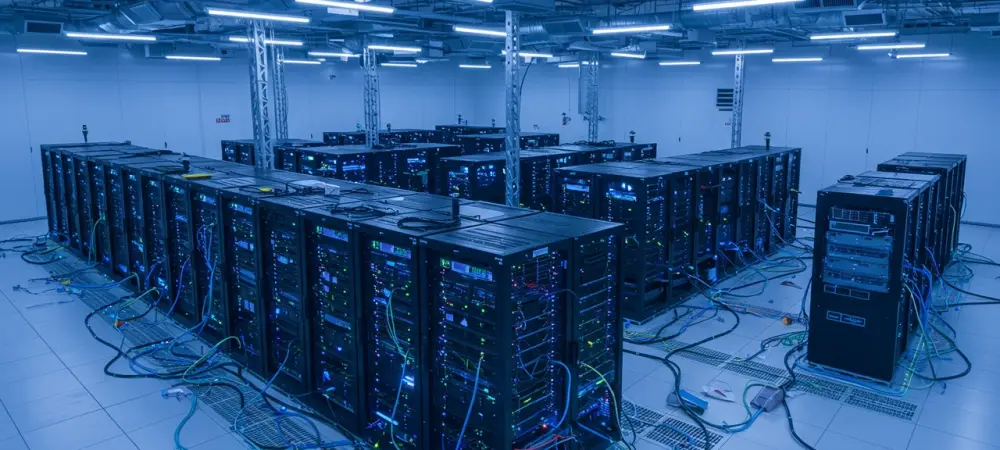
China’s ambitious effort to spearhead advancements in artificial intelligence has taken a significant leap forward as it prepares to establish data centers equipped with 115,000 Nvidia AI chips in the expansive Xinjiang desert. This strategic initiative, unveiled by an exhaustive analysis of investment approvals, tender documents, and company filings from various Chinese firms, underscores Beijing’s determination to overcome AI hurdles and ramp up its technological capabilities. These fervent endeavors emerge amid geopolitical tensions and restrictive measures imposed by the United States, specifically aimed at barring the export of Nvidia’s advanced #00 and ##00 GPUs to curtail China’s AI development. With the Xinjiang region boasting abundant resources like wind, solar, and coal energy reserves, these local conditions provide a unique opportunity to power large-scale computing infrastructures required for the evolving AI landscape.
Strategic Data Center Development
This initiative marks an influential moment in China’s journey to bolster its artificial intelligence prowess, showcasing its resolve to expand computing capacity at a national level. Xinjiang’s plan revolves around concentrating approximately 70% of intended computing power within a singular compound under governmental command, which previously revealed visions of a converged computing center in Urumqi. This ambitious facility is designed to meet national computing power demands, positioning the region as a central hub amidst intentions to accelerate technological progress. Despite expressed aspirations and infrastructural potential, China’s path remains complicated by intensified geopolitical tensions stemming from U.S.-China trade constraints, the acquisition feasibility of restricted GPUs, and growing ethical debates surrounding Xinjiang, particularly in light of allegations of human rights violations against Uyghur Muslims. The meticulous analysis by Bloomberg speaks to local government endorsements of 39 data center projects in Xinjiang and Qinghai provinces, coupled with tangible steps in construction or service tender victories for seven such projects. This progress as of June 2025 attests to a calculated approach by Chinese authorities aiming to seize strategic opportunities in AI development while navigating complex geopolitical barriers. The certainty of gaining access to the necessary Nvidia GPUs remains in question amid export restrictions. However, no evidence has surfaced indicating illicit procurement tactics or mass accumulation of these restricted chips, reflecting a closely surveilled environment wherein technological ambitions intertwine with broader geopolitical narratives.
Geopolitical Implications and Ethical Concerns
The geopolitical complexities encapsulated within this strategy unveil narratives tied not only to technological advancement but also to ethical conundrums inherent to the region’s history. Allegations surrounding human rights abuses against Uyghur Muslims persist, casting shadows over Xinjiang’s developmental ambitions and drawing international scrutiny. The United States remains unwavering in its watch against potential violations of export regulations, maintaining vigilance over China’s strategic undertakings. Nvidia, given its prominent role, expressed reservations about the feasibility of smuggling chipsets sufficient to support these data centers, especially when alternative Huawei chips are extensively accessible throughout China, minimizing incentives for unlawful sourcing.
Compounding the geopolitical intricacies is the opaque operational atmosphere encompassing these developments; attempts to interview Xinjiang operators encountered silence, casting an air of mystery over state-managed regional projects. These silent corridors hint at the possibility of governmental oversight while portraying a drive for AI enhancement within a closely monitored milieu. Against this backdrop, considerations of Uyghur rights violations surface with urgency, adding ethical layers to China’s aggressive pursuit of AI prominence. This context underscores the complexities interwoven between national technological ambitions and the broader international landscape, demanding nuanced examination of how mega-scale projects evolve amid ongoing ethical debates.
Future Considerations for AI and International Relations
This initiative represents a crucial step in China’s quest to enhance its artificial intelligence capabilities, highlighting its determination to boost computing power on a national scale. Central to Xinjiang’s strategy is the focus on consolidating about 70% of the planned computing power within a single, government-controlled facility. This builds on earlier plans for a unified computing center in Urumqi, aiming to satisfy national computing needs and establish the region as a pivotal tech hub. Despite technological ambitions, China’s path is complicated by growing U.S.-China trade tensions, difficulties obtaining restricted GPUs, and ethical concerns regarding Xinjiang, particularly due to human rights allegations against Uyghur Muslims. According to Bloomberg, local governments have backed 39 data center projects in Xinjiang and Qinghai, with seven having achieved construction milestones or service tender successes by mid-2025. China’s strategic efforts in AI development must navigate these complex geopolitical challenges. While Nvidia GPU access remains uncertain due to export limits, no evidence suggests illegal acquisition tactics or stockpiling of the restricted chips, indicating a tightly monitored environment where technological goals and global political dynamics intersect.