

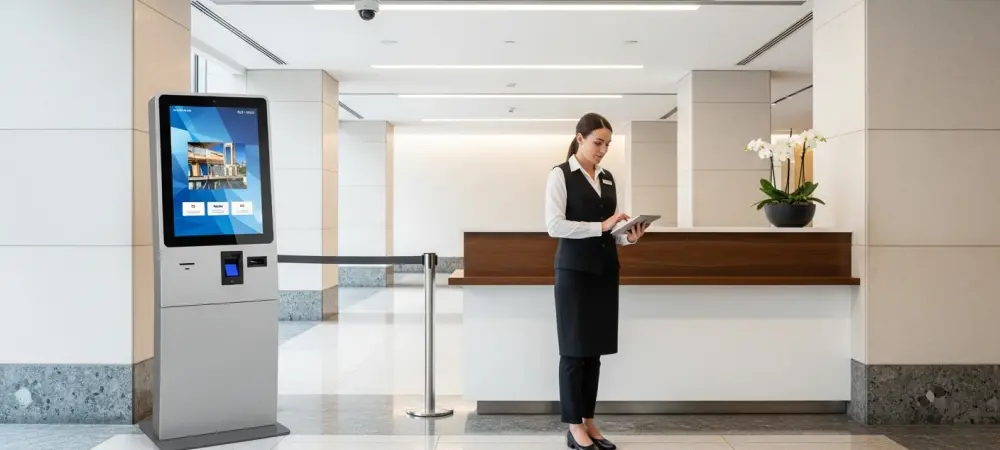
As sophisticated digital defenses become increasingly difficult for hackers to bypass, the physical reception area has emerged as a surprisingly effective entry point for those seeking unauthorized access to corporate networks. While cybersecurity teams spend millions on firewalls and advanced encryption, a visitor with a simple clipboard and a plausible back story can often walk past the most expensive security protocols by exploiting human psychology at the main entrance. This specific vulnerability is deeply rooted in the inherent nature of hospitality, where front-desk personnel are hired and trained to be helpful, welcoming, and accommodating to anyone who walks through the door. Threat actors understand that a friendly smile and a professional demeanor often serve as a skeleton key, granting them access to internal hallways where physical hardware remains largely unprotected by the digital wall. By shifting the focus from purely digital perimeters to the physical environment, organizations have begun to address a significant blind spot that has allowed numerous data breaches to occur through simple social engineering tactics that bypass high-tech defenses entirely and provide direct access to the local network.
Vulnerabilities within the Modern Reception Environment
The physical hardware frequently located at a front desk often presents a buffet of opportunities for a motivated intruder who manages to secure even a brief moment of privacy while the receptionist is occupied with other tasks. Unattended computer terminals, which are sometimes left unlocked for convenience during quick errands or visitor assistance, provide direct access to internal employee directories, sensitive executive schedules, and internal messaging platforms. Furthermore, public-facing USB ports on monitors or desktop towers allow for the rapid deployment of hardware keystroke loggers or malware-injecting devices that resemble standard thumb drives or charging cables. Even the modern digital tablets used for visitor check-ins can serve as a pivot point for a cyberattack if they are connected to the main corporate Wi-Fi instead of a strictly segregated guest network. Without robust physical hardware controls, a single connection to an exposed port can bypass months of software-based security hardening. Security audits continue to reveal that these devices are rarely monitored with the same level of scrutiny as data center equipment, making them the path of least resistance for an operative. Beyond the technical risks associated with hardware, the traditional paper-based or poorly managed digital visitor logs represent a significant intelligence goldmine for anyone performing preliminary reconnaissance on a target organization. These logs often contain the full names, company affiliations, and contact information of legitimate business partners, which an attacker can easily use to craft highly convincing phishing emails or impersonate executives in subsequent interactions. When a receptionist feels pressured by a high volume of visitors or a seemingly urgent delivery, the standard identity verification protocols are frequently the first items to be discarded in order to maintain operational efficiency and customer satisfaction. Social engineers rely heavily on this environmental pressure, using manufactured urgency or emotional manipulation to convince staff to hold a secure door open or provide a temporary access badge without the required documentation. This breakdown in established protocol turns a professional greeter into an unwitting accomplice in a security breach, highlighting the reality that no amount of digital encryption can compensate for a lack of situational awareness.
Implementing a Fortified Physical Perimeter
The strategic overhaul of the front desk successfully transformed the reception area into a proactive layer of defense that functioned in seamless tandem with modern cybersecurity software. Security leaders implemented a comprehensive Zero Trust philosophy across the physical workspace, ensuring that every individual was verified through multi-factor authentication before gaining access to the inner office. Physical security was further strengthened by installing port blockers on all publicly accessible hardware and ensuring that reception workstations utilized privacy screens and automatic timed lockouts to prevent unauthorized viewing. Employee training programs evolved from generic webinars to interactive social engineering simulations that helped staff recognize the subtle signs of manipulation and deceptive behavior. These programs empowered receptionists to prioritize security over polite compliance, providing them with clear authority to deny access when a visitor failed to meet established security credentials. By the time these protocols were fully operational, the reliance on mere social etiquette was replaced by a culture of vigilant hospitality that successfully closed the gap between digital and physical safety. Management teams also prioritized the total segregation of guest and corporate networks, effectively neutralizing any malware that might have been introduced through public terminals or unauthorized visitor devices. By integrating physical access logs with real-time network monitoring tools, security departments achieved the ability to detect suspicious patterns where a physical building entry matched unusual account activity across the server. This unified approach ensured that every individual who entered the facility was strictly accounted for, utilizing a combination of digital badges and biometric verification to prevent credential theft. Organizations that adopted these holistic measures found themselves far better equipped to withstand the evolving landscape of hybrid threats that targeted both the person and the machine. The final transformation involved establishing regular physical security audits that treated the lobby with the same rigor as the server room, ensuring that no hardware remained vulnerable to quick-access exploits. These advancements moved the front desk from being a potential liability to becoming the strongest link in the corporate security chain.