

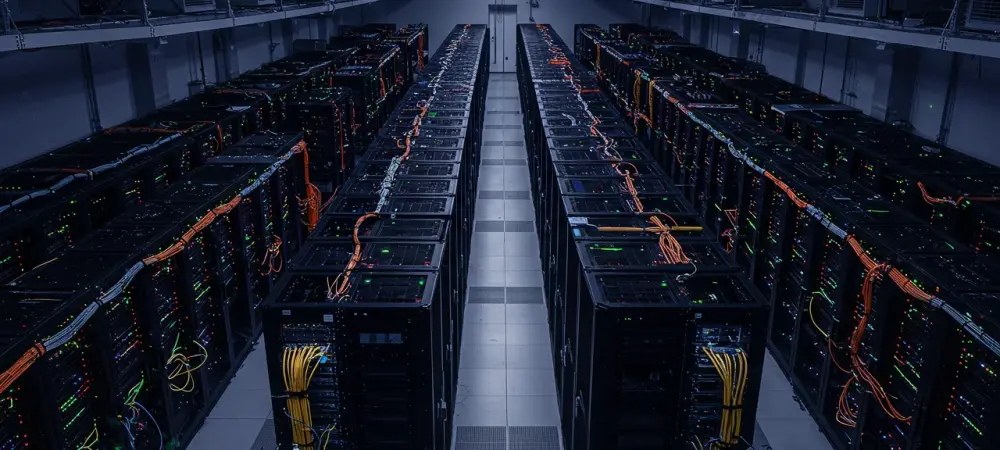
As educational institutions increasingly seek technological advancements to maintain competitive edges in academia, Oakland University in Rochester, Michigan, is making waves with its announcement of a new data center proposal. Scheduled for development on a strategically chosen five-acre plot at 253 Pioneer Drive, the center is poised to transform the educational landscape, further energizing Michigan’s robust data center market. With roots tied deeply to both technological advancement and the diverse demands of academia, this initiative signals a powerful stride toward future-ready infrastructure that promises to redefine data management within educational spheres.
Contextualizing Oakland University’s Trailblazing Project
Oakland University’s latest proposal to establish a colocation Edge data center focuses on fostering not just academic but economic growth within the region. The urgency at OU comes amidst a growing demand for enhanced data capabilities in educational contexts, combined with an ambition to lead in artificial intelligence research and smart campus technologies. By allowing third-party management of operations and tenant acquisition, OU signals an innovative approach to collaboration, ensuring operational expertise while maintaining an academic focus. Overcoming infrastructural challenges while prioritizing sustainability through initiatives like heat recapture underscores the project’s comprehensive vision.
Unveiling Michigan’s Expanding Data Infrastructure
Catalysts for Technological Advancement
The proposed data center stands as a beacon for strengthening technological infrastructure not only for OU but for myriad stakeholders in the region. With an impressive potential power capacity of 26MW, the data center can significantly enhance computational prowess and research capabilities. Adding essential facilities like those for OU’s AI Institute further illustrates the comprehensive scope of this development. Analysts in the field perceive such endeavors as critical to staying aligned with the evolving demands for data infrastructure—an alignment pivotal for elevating institutional competitiveness and fostering cutting-edge analytics.
Navigating Competitive Risks and Emerging Opportunities
The complex nature of the project necessitates insight into how Oakland University is mitigating risks, such as tenant acquisition and operational management, by outsourcing these aspects to experienced third-party teams. Challenges in security and regulatory compliance abound but are addressed through strategic foresight and parallel assessment of similar projects. By grounding practices in successful precedents, OU positions itself to harness considerable opportunities—ranging from economic incentives to strengthened partnerships—thereby setting actionable benchmarks for academic peers embarking on analogous endeavors.
Michigan’s Regional Dynamics and Potential Misconceptions
Reflecting on the increasingly significant role of data centers within Michigan, the new OU project rides on the wave of a burgeoning market whose emblematic figures include EdgeConneX and US Signal. However, misconceptions persist that data centers exclusively cater to corporate interests, neglecting educational implications. By dispelling such myths, OU’s proposal posits a dual-purpose facility, merging academic and industrial benefits. This strategy not only enables broader community engagement but also exemplifies how educational spheres can lead regional technological innovation, offering lessons in adeptly aligning institutional objectives with market trends.
Vision for the Future: Transformative Trends in Education
Envisioning the future role of educational data centers, technological trends such as AI integration and intensified connectivity are already reshaping strategic blueprints. Economic shifts and regulatory evolutions invoke additional layers of complexity, demanding agile adaptation. Predictions place emphasis on the power of collaboration between educational institutions and the tech industry, capable of spawning fertile environments for extensive research and innovation. As Oakland University’s data center forges ahead, institutions seeking to marshal transformative changes may turn to these strategies, positioning themselves at the forefront of technological progress.
Insights for Stakeholders: Strategies and Practical Applications
Insights from Oakland University’s pioneering endeavor serve as valuable inroads for understanding how high-tech infrastructure can be leveraged for educational advancements. Emphasizing concepts like optimal infrastructure design, robust maintenance routines, and effective tenant relationship management enables pragmatic applications in educational contexts. For professionals and businesses, this translates into frameworks that guide the harnessing of partnerships, underscored by pivotal learnings from OU’s planning and execution. Such strategic insights hold the potential to shape future partnerships, offering a roadmap for similarly ambitious initiatives across the educational landscape.
Reflecting on Strategic Advancements and Long-Term Impact
Oakland University’s groundbreaking data center initiative demonstrated how a strategic technological investment can propel both educational and economic growth. By situating itself at the intersection of technology and academia, the university embraced trends in smart campus technology and AI research. The project’s implications highlighted the importance of embracing transformative infrastructure as a means to advance innovation. Looking back, this venture underscored future opportunities for stakeholders to reimagine educational experiences, fostering environments ripe for discovery and forward-thinking developments. As a testament to this commitment, stakeholders were encouraged to pursue thoughtful, impactful advancements in the dynamic sphere of education and technology.