

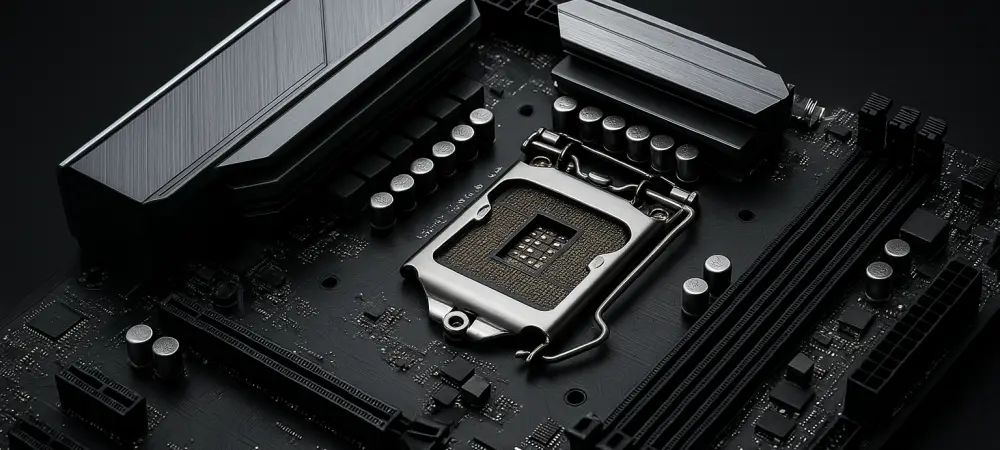
The digital foundations of global computing infrastructure have reached a point where the ghosts of the nineteen-eighties can no longer be allowed to haunt the performance of modern silicon. For decades, the Linux kernel stood as the ultimate champion of backward compatibility, offering a lifeline to hardware that many had long forgotten. However, the maintainers of the most critical piece of software on the planet have finally made a definitive choice to prioritize the efficiency of the present over the nostalgia of the past. By making the Time Stamp Counter, or TSC, an unconditional requirement for the x86 architecture, the community has closed a chapter on nearly forty years of computing history.
This decision serves as a pivotal moment in the kernel’s development, marking a transition toward a more streamlined and specialized operating system. While the ability to run on ancient chips was once a badge of honor, the technical debt required to sustain that compatibility has become a burden that active developers are no longer willing to carry. The move reflects a broader realization that the vast majority of current Linux installations reside in high-performance data centers, cloud environments, and sophisticated personal devices that require the utmost precision and speed.
Retiring the Silicon Relics of the Twentieth Century
The Linux kernel has long been celebrated for its near-miraculous ability to breathe life into aging hardware, but even the most versatile operating system eventually has to settle its debts with the past. By removing the “CONFIG_X86_TSC” configuration option, kernel developers have effectively signaled the end of the line for 1980s and 1990s-era processors that lacked high-resolution timing capabilities. This decision is not just about housekeeping; it represents a fundamental shift in priority, where the lean performance of modern data centers finally outweighs the niche preservation of ancient silicon. This move marks the final departure from the Intel 486 architecture, which has slowly been phased out of main support over recent years. As the development cycle progresses from 2026 to 2028, the focus remains squarely on ensuring that the kernel can leverage every ounce of power available in contemporary processors. Maintaining the logic for processors that do not support a basic timing counter required thousands of lines of conditional code that complicated the boot process and slowed down system initialization for everyone else.
The High Stakes of High-Resolution Timing
In the world of modern computing, a microsecond is an eternity. Operating systems rely on constant, precise time measurements to manage everything from thread scheduling to network packet timestamps. Traditionally, Linux maintained a complex web of fallback mechanisms for processors that could not keep time accurately on their own, often relying on sluggish motherboard-based components. As the industry moves toward lightning-fast workloads, the overhead required to support these “timer-less” legacy chips has become a significant bottleneck that hampers the development of a more efficient kernel. Without a reliable and fast internal clock, the system must constantly reach out to external hardware, a process that introduces latency into almost every fundamental operation. For high-frequency trading platforms or real-time media processing, these delays are unacceptable. By mandating a local timing source, the kernel ensures that the most frequent operations—those that happen billions of times per second—are executed with the minimal possible path through the silicon.
Understanding the Technical Superiority of the Time Stamp Counter
The transition to a mandatory Time Stamp Counter is rooted in the physical architecture of the CPU. As a 64-bit register located directly on the processor, the TSC allows the kernel to read elapsed cycles in a fraction of the time required by external alternatives. Accessing the TSC takes only tens of cycles, whereas falling back to the High Precision Event Timer or ACPI Power Management timer can take nearly a thousand cycles and necessitate a heavy kernel transition.
By assuming the TSC is always present, developers can strip away decades of compatibility baggage—the complex detection and calibration logic once needed for chips like the Intel 486. This change follows the official removal of support for the 486 processor in recent kernel versions, allowing the x86 architecture to evolve without being anchored to the limitations of thirty-year-old hardware. The removal of these checks simplifies the instruction pipeline and reduces the memory footprint of the core kernel.
Parallel Evolutions: Aligning Linux with Industry Performance Standards
Linux is not alone in its pursuit of TSC-centric optimization; it is actually following a trajectory established by Microsoft over a decade ago. Starting with Windows 8, the QueryPerformanceCounter API began prioritizing the TSC to provide the high-resolution timing necessary for modern software. Industry experts note that while virtualization and multi-core synchronization once made the TSC unreliable, modern hardware has largely solved these jitter issues through invariant TSC features that keep the counter steady regardless of power states. By making the TSC a hard requirement, Linux is finally synchronizing its architectural requirements with the reality of contemporary computing environments. This alignment ensures that software developers can write code targeting a single, high-performance timing standard rather than building multiple paths for different hardware tiers. The uniformity provided by this requirement allows for more aggressive compiler optimizations and more predictable behavior across diverse server fleets.
Strategies for a Leaner and Faster x86 Ecosystem
The shift toward mandatory TSC support provided a clear framework for how the Linux kernel handled hardware abstraction as the industry moved deeper into the decade. This strategy prioritized a fast-path for the vast majority of users while shedding the maintenance burden of obsolete edge cases. By favoring CPU-local registers over motherboard-based peripherals, the development community reduced latency across the board and simplified the build process for custom kernels.
Removing legacy configuration logic allowed for a more maintainable codebase, which effectively reduced the surface area for bugs in the timing subsystem. For users in cloud environments and high-performance computing, this change ensured that the kernel remained natively tuned for the low-latency demands of modern x86-64 silicon. Moving forward, the focus shifted toward optimizing the TSC for even more granular power-saving modes, ensuring that the next generation of processors from 2026 to 2030 would benefit from a kernel that was no longer anchored to the twentieth century.