

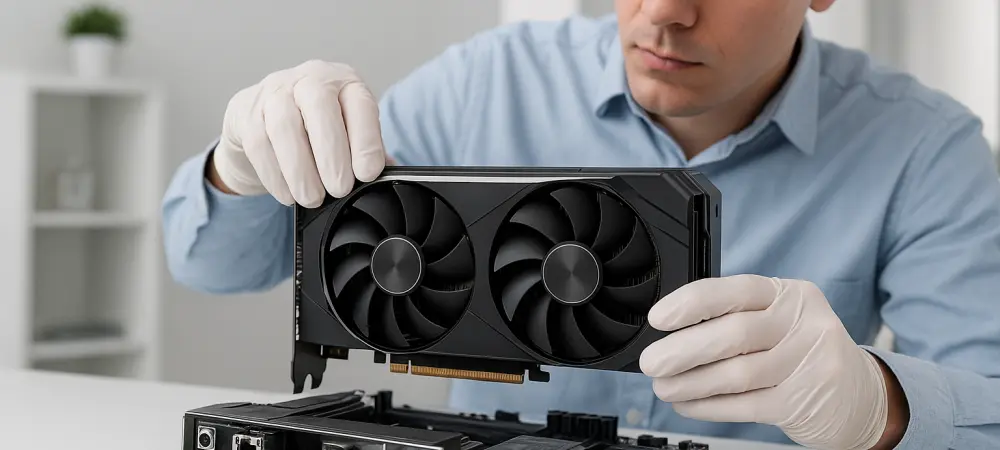
The ASUS Radeon RX 9060 XT is currently positioned as a premier mid-range option that utilizes high-end physical construction to provide a stable, long-lasting experience for daily PC users. Hardware enthusiasts are currently navigating a market where the terms budget and high-end often feel like contradictory concepts, yet the intersection of these two categories defines the most competitive segment of the current tech landscape. This card serves as a vital bridge, offering advanced features previously reserved for flagship models while maintaining a price point accessible to the average custom builder. This specific model represents a significant shift in manufacturing philosophy, where ASUS has prioritized internal cooling efficiency and electrical stability over mere aesthetic flair. As software demands continue to increase from 2026 into 2028, the necessity for robust hardware that can withstand sustained thermal loads becomes more paramount. It is not just about raw frame rates, but the consistency of those frames. By integrating premium materials into a mid-tier card, the manufacturer has set a new benchmark for quality.
Architectural Efficiency and Processing Power
Power Delivery: Stability and Precision
The internal architecture of this GPU focuses heavily on the RDNA 4.5 framework, which optimizes how electricity is distributed across the silicon. By utilizing high-grade capacitors and a reinforced power phase design, the card ensures that voltage fluctuations do not impact the core clock stability during intense gaming sessions. This electrical precision is essential for maintaining the longevity of the component, as it prevents the micro-stuttering often associated with cheaper power delivery systems.
Furthermore, the efficiency gains realized in this generation allow the card to operate with a lower total board power than its predecessors. This makes it an ideal choice for users who do not want to upgrade their existing power supplies yet still desire a performance boost. The integration of smart power monitoring allows the system to throttle energy consumption during idle periods, reducing the heat output of the PC. This balance between raw power and intelligent distribution remains a cornerstone of the design.
Visual Fidelity: Ray Tracing and Resolution Scaling
Native performance at 1440p resolution has become the standard expectation for mid-range hardware, and this card meets that demand with surprising ease. Through the implementation of dedicated ray-tracing accelerators, lighting effects and shadows are rendered with a level of realism that was previously unattainable in this price bracket. The hardware handles complex reflections and global illumination without the massive performance penalties that plagued earlier iterations of the technology.
Complementing this raw power is the latest iteration of resolution scaling technology, which uses artificial intelligence to reconstruct images from lower base resolutions. This allows players to maintain high refresh rates even in the most demanding titles released between 2026 and 2028. By offloading these tasks to specialized AI cores, the primary graphics engine remains free to focus on geometry and textures. This synergy between software and hardware ensures that the visual experience remains sharp.
Thermal Design and Physical Engineering
Cooling Technology: Heat Dissipation and Airflow
A significant portion of the value found in this model resides in its sophisticated thermal solution, which utilizes Axial-tech fans to provide superior airflow. These fans feature smaller hubs that facilitate longer blades and a barrier ring to increase downward air pressure toward the massive heat sink. This design allows the card to maintain optimal operating temperatures while remaining significantly quieter than its competitors. The inclusion of a protective backplate further assists in structural integrity.
Beyond the fans, the internal copper heat pipes are precision-engineered to maximize the contact surface area with the GPU die. This ensures that heat is moved away from the sensitive core as quickly as possible, preventing thermal throttling during prolonged use. The dual-BIOS feature also provides users with the choice between a performance mode for maximum cooling and a quiet mode for a more subdued acoustic profile. Such versatility ensures that the hardware can adapt to different conditions without sacrificing reliability.
Strategic Value: Future Utility and Procurement
The current landscape of PC gaming requires a forward-thinking approach to hardware selection, emphasizing components that offer a clear path for future software updates. This GPU provides that security through extensive driver support and a hardware set that aligns with upcoming industry standards for rendering and memory management. While the initial investment might seem slightly higher than entry-level alternatives, the extended lifecycle of the card offers a much better cost-per-frame ratio over several years.
Potential buyers investigated the specifications and determined that the balance of power and efficiency suited the evolving needs of modern digital workspaces. Builders prioritized the installation of these units into systems designed for both high-end recreation and professional content creation. By selecting a card with such a robust build quality, the community avoided the pitfalls of frequent hardware failure or rapid obsolescence. Moving forward, the industry considered this model a template for engineering graphics cards.