

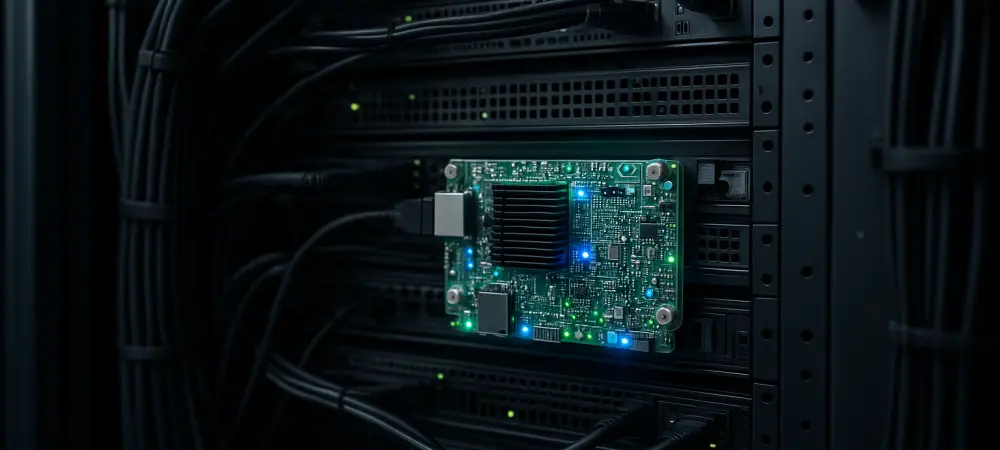
The combination of an Intel N150 processor and 32GB of DDR5 memory provides a powerful yet low-power platform for sophisticated facial recognition software. In the rapidly evolving technological landscape of 2026, the demand for localized intelligence at the industrial edge has significantly surpassed the capabilities of traditional legacy hardware. High-resolution imaging and real-time data processing now require a physical footprint that can reside comfortably within a compact security kiosk or a dense manufacturing line without sacrificing thermal efficiency. The Jetway PIC-TWL1 emerges as a pivotal solution in this space, effectively bridging the gap between extreme portability and robust computational throughput. By integrating the Intel N-series architecture, this Pico-ITX motherboard addresses the critical need for deterministic performance in environments where cloud latency is unacceptable. Designers are turning to such specialized boards to handle autonomous decision-making tasks, ensuring that vital operations remain functional even when external networks fail.
Integrating Advanced Performance With Industrial Durability
Physical constraints of modern industrial installations necessitate a departure from standard computer architectures toward more specialized, miniature form factors. Measuring a mere 100 by 72 millimeters, the PIC-TWL1 utilizes the Pico-ITX standard to fit into enclosures that were previously considered too small for full-featured computing. This compact size does not come at the expense of durability; rather, the board is engineered to withstand the rigorous vibrations and temperature swings common in automated warehouses or outdoor monitoring stations. Because the Intel N150 processor operates with a thermal design power that is exceptionally low, engineers can implement fanless cooling solutions that eliminate a primary point of mechanical failure. Such a design choice significantly extends the mean time between failures for equipment deployed in dusty or remote areas. This focus on physical resilience ensures that hardware remains operational across diverse scenarios without requiring frequent manual maintenance.
Beyond its physical dimensions, the board provides a sophisticated array of connectivity options that are essential for integrating diverse peripheral sensors and actuators. Dual 2.5 Gigabit Ethernet ports enable high-speed data transfer between the edge device and local area networks, supporting the heavy bandwidth requirements of modern industrial internet of things deployments. Furthermore, the inclusion of multiple USB 3.2 ports and specialized serial headers allows for the seamless connection of legacy industrial equipment alongside contemporary high-definition cameras. This versatility makes the platform an ideal candidate for retrofitting existing infrastructure with modern AI capabilities without requiring a total overhaul of cabling systems. By supporting triple independent displays through its HDMI and DisplayPort interfaces, the system also facilitates complex human-machine interaction. Consequently, operators gain access to real-time visual analytics directly on the floor, enhancing situational awareness and operational efficiency.
The transition to DDR5 memory marks a significant leap in data throughput for edge computing, particularly when handling the large datasets associated with machine learning inference. With support for up to 32GB of high-speed memory, the PIC-TWL1 ensures that complex algorithms have the necessary headroom to execute without the bottlenecks typically seen in entry-level industrial boards. This memory capacity is particularly beneficial for running containerized applications or multiple virtual machines, allowing a single hardware unit to perform several distinct roles simultaneously. For instance, a device could manage security protocols, monitor environmental sensors, and run predictive maintenance software all on a single compact board. As software requirements expand throughout 2026 and 2027, having this surplus of memory capacity provides a crucial buffer against obsolescence. This approach allows organizations to deploy long-term solutions that can adapt to future firmware updates and more demanding AI models.
Implementing such advanced edge hardware required a strategic shift in how system architects approached localized data management and security. The adoption of the PIC-TWL1 effectively addressed the challenges of data privacy by allowing sensitive information to be processed on-site rather than transmitted to central servers. Looking ahead, the focus moved toward refining software-hardware synergy to maximize the power-per-watt efficiency of these systems. Stakeholders who prioritized these compact, efficient platforms realized a significant reduction in operational overhead and energy consumption across their facilities. To fully capitalize on these technological gains, it became essential for firms to audit their current sensor networks and identify bottlenecks where high-speed localized processing could drive the most value. Future considerations involved the integration of specialized neural units to augment the processors. This forward-thinking strategy ensured that industrial edge deployments remained resilient and scalable.