

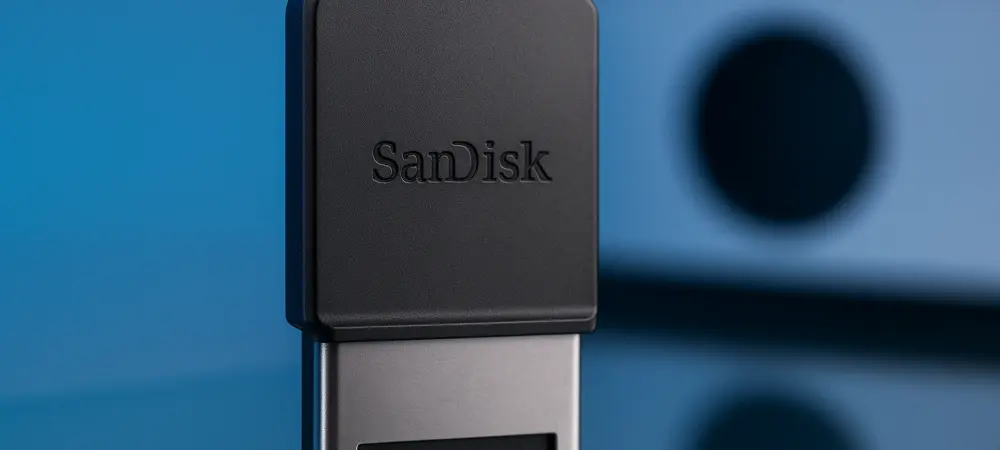
Gamers seeking to expand their library today are finding that the 512GB SanDisk card carries a regular retail price of nearly one hundred forty dollars due to the global memory shortage. This introduction of the SanDisk Optimus GX C50 on August 10, 2026, marks a pivotal, albeit expensive, expansion of the Xbox Series X and Series S storage ecosystem. For several years, players have navigated a restricted market that began with Seagate’s absolute exclusivity and was only slightly broadened by the eventual arrival of Western Digital. SanDisk’s entry as the third authorized manufacturer was widely anticipated to be the catalyst for a price correction, yet the current economic climate has dictated a much harsher reality. Instead of the competitive discounts many hoped for, the launch has highlighted how deeply the global semiconductor crisis has penetrated the gaming industry, turning a standard hardware expansion into a significant financial undertaking for the average consumer. This shift represents a broader trend in high-performance electronics where brand competition is currently being overshadowed by the sheer cost of raw materials and manufacturing overhead in a volatile market.
Technical Integration: The Role of Velocity Architecture
The SanDisk Optimus GX C50 is engineered as a proprietary solution rather than a standard external drive, plugging directly into the dedicated port on the back of the Xbox Series X and Series S consoles. This connection links to the console’s PCIe 4.0 x2 NVMe interface, which is a fundamental requirement for maintaining the performance standards of modern gaming. Because the card is integrated so deeply into the hardware, it functions as a literal extension of the internal SSD rather than a peripheral storage device. This level of technical synergy ensures that the transition between internal and external storage is entirely invisible to the user, providing the same high-speed throughput necessary for asset-heavy games. By adhering to these strict hardware specifications, SanDisk has ensured that their product meets the rigorous demands of the Xbox Velocity Architecture, which remains the cornerstone of the current console generation’s performance profile.
This seamless integration is vital for the Xbox Velocity Architecture, which powers modern gaming features such as Quick Resume and instantaneous asset streaming across vast open worlds. Because the SanDisk card maintains parity with the internal SSD, users can play Series X|S optimized games directly from the expansion card without any degradation in load times or visual fidelity. This removes the tedious need to move large files back and forth between the internal storage and a slower USB drive, preserving the fast-loading experience that defines the current generation of gaming. For enthusiasts who manage dozens of titles simultaneously, the ability to jump between games in seconds is a transformative feature that would be impossible without this specific type of high-bandwidth expansion. The Optimus GX C50 effectively eliminates the storage bottleneck, allowing the console’s processor and graphics chip to access data at the speeds required for high-refresh-rate gaming and complex simulation.
Capacity Requirements: Meeting the Demands of AAA Gaming
The Optimus GX C50 line is available in three sizes, including 512GB, 1TB, and 2TB, providing a range of options for different types of users. While marketing materials suggest the 2TB version can hold hundreds of games, the reality of modern AAA file sizes—which often exceed 100GB—makes the higher-capacity models essential for serious players. As game developers push the boundaries of texture resolution and audio quality, the average size of a premiere title has ballooned, quickly filling the base storage provided with the console. For those who want to keep a diverse library of high-fidelity games ready to play at a moment’s notice, these cards represent the only viable path for expansion that does not compromise on the user experience. The 512GB model may suffice for those who focus on indie titles or smaller multiplayer games, but the larger capacities are becoming the standard requirement for anyone following the latest blockbuster releases.
The decision to invest in higher capacity is often driven by the increasing complexity of live-service games, which receive frequent updates that add gigabytes of data over time. A single title that launched at 80GB can easily grow to 150GB within a year of seasonal content updates, making storage management a constant struggle for those without expanded memory. SanDisk has positioned its 2TB model as the premium solution for this problem, catering to the enthusiast market that refuses to delete and re-download titles frequently. This trend of increasing file sizes shows no signs of slowing down, as the 2026 gaming landscape is defined by hyper-realistic environments that require immense amounts of storage space. Consequently, the value of an expansion card is measured not just in its speed, but in its ability to provide a long-term solution to the persistent problem of shrinking available space on the console’s internal drive.
Market Dynamics: The Divergence Between MSRP and Retail Reality
Pricing for the new SanDisk cards has been a point of significant contention among the gaming community since the announcement of the product line. While SanDisk promoted introductory pricing on its own website to lure early adopters, these figures often failed to match the reality of the broader retail market. Discrepancies between the manufacturer’s suggested retail price and the listings on major platforms like Amazon have led to widespread consumer confusion and frustration. Many buyers who were expecting to find a bargain as a third competitor entered the space were instead met with prices that fluctuated wildly based on daily stock levels. This volatility is a direct result of the strained supply chain, where the overhead costs of logistics and component acquisition are being passed directly to the consumer, making the official MSRP feel like a theoretical number rather than a retail standard.
The 512GB model carried a promotional price of $109.99, but its standard MSRP was set much higher at $137.99, illustrating the tight margins manufacturers are currently facing. The 1TB model, which is typically the most sought-after capacity due to its balance of price and utility, launched with a $199.99 promotional tag, yet retail listings quickly climbed toward the $250 mark in the weeks following the release. This suggests that even at launch, the initial supply was not sufficient to meet the pent-up demand from Xbox owners, allowing retailers to apply significant markups right out of the gate. The dream of a price war between Seagate, Western Digital, and SanDisk has effectively been deferred by the reality of a market where just having the product in stock is considered a victory for a retailer, regardless of the final price tag.
Financial Hurdles: The Cost of High-Capacity Storage
The flagship 2TB model faced the most extreme pricing hurdles, with some Amazon listings reaching nearly four hundred eighty-seven dollars during the launch window. This is a staggering sum that nearly equals the cost of a new console, forcing many consumers to reconsider the necessity of such an upgrade. These high prices indicate that the entry of a third manufacturer has not yet provided the financial relief gamers hoped for, as SanDisk, Seagate, and Western Digital are all navigating the same expensive manufacturing environment. When the cost of the expansion storage begins to rival the cost of the hardware itself, the value proposition changes for many families and casual players. This high barrier to entry has created a stratified market where only the most dedicated enthusiasts are able to fully utilize the expansion capabilities of their consoles, while others are left to manage their storage through deletions.
The financial pressure is not just limited to the consumers, as manufacturers are also dealing with the rising costs of specialized components that go into these proprietary cards. Because the Xbox expansion cards use a unique form factor and a specific controller, they do not benefit from the same economies of scale as standard computer SSDs. Every unit produced involves a high level of specialized assembly and testing to ensure it meets Microsoft’s strict certification requirements, further driving up the floor price for these devices. As long as the production costs remain elevated, the possibility of seeing a significant price drop remains low, even with three major brands now competing for the same slice of the market. This economic stalemate has turned the storage expansion into one of the most expensive accessories in the history of home gaming consoles, reflecting the broader inflationary trends seen across the entire tech sector.
The Memory Super-Cycle: How AI Reshaped Gaming Storage
The primary driver behind these high costs is the 2026 Memory Super-Cycle, a phenomenon fueled by the global explosion of Artificial Intelligence applications. This is not a standard supply chain delay caused by logistical issues; it is a fundamental shift in how memory is allocated globally across different sectors of the economy. AI data centers require massive amounts of NAND flash and DRAM to function, consuming several times the amount of memory used by traditional enterprise servers or consumer devices. As tech giants invest billions into AI infrastructure, the demand for high-performance memory has reached unprecedented levels, creating a vacuum that sucks up the available supply. This has forced consumer electronics manufacturers to compete for the same wafers that are being used to build the world’s most powerful supercomputers, inevitably leading to higher prices for everyone.
Because tech giants are prioritizing AI infrastructure, memory manufacturers like Samsung and Micron have shifted their focus toward high-margin server components that offer better returns on investment. This reallocation of resources has left consumer electronics, including gaming SSDs and expansion cards, with a limited supply of raw materials and production line priority. Consequently, the contract prices for the components inside these Xbox cards have seen double-digit percentage increases in a single quarter, making it impossible for SanDisk to offer the product at a lower price point. The gaming industry is essentially caught in the crossfire of a much larger industrial shift, where the components needed to save a digital game are the same ones needed to train a large language model. This competition for silicon is the defining characteristic of the 2026 hardware market, and its effects are being felt in every retail store and online marketplace.
Economic Pressures: The Rising Cost of Console Hardware
The financial pressure has extended to the console hardware itself, with the manufacturing cost of the Xbox Series X rising so high that retail prices have climbed to eight hundred dollars. In such a volatile market, expansion card manufacturers find it impossible to lower prices without losing money on every unit they produce and sell. The new normal for 2026 is one where gaming hardware must compete directly with the global AI gold rush for essential components like high-density NAND flash. This inflation of hardware costs has changed the way gamers approach their hobby, as the total cost of ownership for a fully equipped console setup now exceeds what many would have considered reasonable just a few years ago. The interplay between limited supply and skyrocketing demand in the enterprise sector has effectively set a high floor for what consumers can expect to pay for any device containing advanced memory.
Even with the entry of SanDisk, the market remains largely static because all players are subject to the same macro-economic forces that govern the semiconductor industry. When the cost of the raw materials increases for one company, it increases for all of them, preventing any single manufacturer from undercutting the competition in a meaningful way. This has led to a situation where prices are dictated more by the global cost of silicon than by traditional brand competition or consumer demand. While Microsoft has attempted to subsidize some costs through various initiatives, the sheer scale of the memory crisis has made it difficult to provide substantial relief to the end user. As a result, the purchase of an expansion card has become a carefully considered investment rather than an impulse buy, with consumers forced to weigh the convenience of extra storage against the significant financial outlay required.
Platform Comparisons: Proprietary Solutions Versus Open Standards
The SanDisk launch also reignites the debate over the storage philosophies chosen by Microsoft and Sony at the beginning of this console generation. Microsoft’s proprietary plug-and-play model offers simplicity and guaranteed speed, as consumers do not have to worry about technical specifications or installing heatsinks. There is no risk of buying an incompatible drive or damaging the console during installation, which appeals to a broad demographic of users who prefer a streamlined experience. However, this closed ecosystem limits the number of manufacturers who can produce the cards, which inherently keeps prices higher than they would be in an open market. The convenience of the proprietary port comes at a steep financial price, as the lack of a diverse manufacturing base prevents the kind of aggressive price-cutting seen in more open hardware categories.
In contrast, the PlayStation 5 utilizes an open model that allows owners to use standard M.2 NVMe SSDs that are available from dozens of different manufacturers. This has allowed a wide variety of companies to compete for customers, typically driving prices down through sheer volume and variety of choice. While even PlayStation 5 owners are now feeling the sting of the 2026 memory crisis, the sheer variety of available brands and models provides more opportunities for discounts than the rigid, three-vendor Xbox expansion card market currently allows. A PlayStation user can often find a deal on a slightly older or less popular brand, whereas an Xbox user is strictly limited to the offerings from Seagate, Western Digital, or SanDisk. This difference in philosophy has become more apparent as the global memory shortage has worsened, highlighting the trade-offs between user-friendly design and market flexibility.
Strategic Analysis: Navigating the Future of Digital Libraries
Industry analysts suggested that the high-price environment which characterized the launch of the SanDisk Optimus GX C50 was likely to persist for several years. Meaningful increases in fabrication capacity were not expected until the end of the decade, meaning that the global supply of high-performance NAND flash remained exceptionally tight. For Xbox owners, this meant that waiting for a major price drop in 2027 appeared to be a losing strategy, as prices were projected to either plateau or continue their upward trend as AI demand grew. The market observed that even with three manufacturers now active, the lack of raw materials prevented any real downward pressure on the cost of these specialized expansion cards. Consequently, the gaming community had to adjust its expectations, viewing these storage solutions as long-term investments rather than temporary accessories that would eventually become cheap.
It was unlikely that a fourth manufacturer would join the Xbox market anytime soon, given the high barriers to entry and the low profit margins currently available in the consumer sector. Consumers were encouraged to look for creative bundling from Microsoft, such as expansion cards packaged with multi-year Game Pass subscriptions, to help soften the financial impact of the hardware. For those who required more space immediately, the most effective approach involved monitoring various retailers closely for temporary stock-based discounts rather than waiting for a permanent price reduction. The launch of the SanDisk Optimus GX C50 was ultimately seen as a testament to technical engineering that arrived during a period of unfortunate global timing. While the product provided the necessary performance to keep the Xbox Series X|S competitive, its price reflected a world where memory had become one of the most valuable commodities on the planet.