

In an era where artificial intelligence and machine learning demand unprecedented levels of processing power, the physical infrastructure of our data centers is reaching its breaking point. Dominic Jainy, an expert in emerging technologies and high-performance computing, understands that the future of digital innovation is inextricably linked to how we manage the heat these systems generate. As cooling becomes the most critical bottleneck for the industry, new players are emerging to replace outdated, water-heavy methods with sophisticated thermal batteries. This conversation explores the shift toward sustainable infrastructure and the massive investment driving the next generation of AI-ready facilities.
You recently secured $100 million in funding with plans to seek an additional $200 million; what does this massive capital injection mean for your mission to commercialize water-efficient cooling?
Bagging $100 million from our group of backers is a significant milestone that allows us to transition from a Vancouver startup to a global infrastructure player. Our immediate goal is to secure another $200 million through private investors and government funds to fully commercialize our chilling systems. This capital gives us the runway to address the “crazy, massive market” of AI, which is currently desperate for more efficient ways to handle heat. We aren’t just selling equipment; we are planning to operate our own sites to prove that high-performance computing doesn’t have to drain our natural resources. It feels like a race against time to get this technology into the hands of partners who are building at an incredible scale.
Could you elaborate on the mechanics of your proprietary thermal battery and how it addresses the critical issue of water consumption in modern data centers?
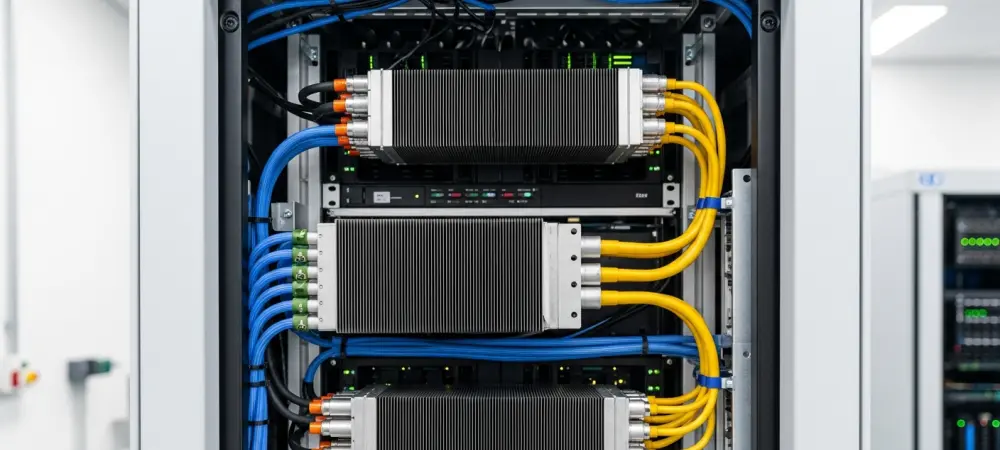
The beauty of our proprietary passive technology lies in its thermal battery, which functions as a smart buffer between the cooling system and the power grid. By taking heat when usage and electricity costs are at their lowest, we can store that energy and release it exactly when the data center reaches peak demand. This process virtually eliminates the need for water, stopping the constant cycle of evaporation that plagues traditional chilling plants. It’s a silent, efficient operation that feels like a radical departure from the loud, water-hungry towers we’ve seen for decades. We are essentially decoupling the cooling process from the immediate environmental cost of running high-density AI racks.
With the United States housing over 5,300 data centers compared to Germany’s 400, how are you prioritizing these markets to fix what you’ve called the “least sustainable” AI infrastructure?
It is simply impossible for us to ignore the US market because it currently represents the least sustainable AI landscape on the planet, and that is exactly what we are here to fix. We have already signed letters of intent with partners in these regions who recognize that the old way of building is no longer viable. Expanding into Europe, specifically Germany, allows us to bring our water-efficient chilling to markets that already have high environmental standards and a need for innovative thermal storage. There is a palpable tension between the demand for AI processing power and the environmental limits of current infrastructure, and we are stepping in to bridge that gap. We want to ensure that as the number of data centers grows, their footprint actually begins to shrink.
What is your forecast for the future of AI data center infrastructure?
I expect to see a total decoupling of high-intensity computing from local water supplies within the next decade. As AI demands continue to skyrocket, the industry will move away from reactive cooling toward proactive thermal storage, where every watt of heat is managed like a valuable asset. We will likely see the 5,300 facilities across the US undergo massive retrofits as regulations tighten around resource usage and electricity costs continue to fluctuate. The integration of thermal batteries will become as common as backup generators, allowing facilities to breathe with the grid rather than just drawing from it. Ultimately, the survival of the AI sector depends on our ability to disconnect massive compute power from environmental destruction.