

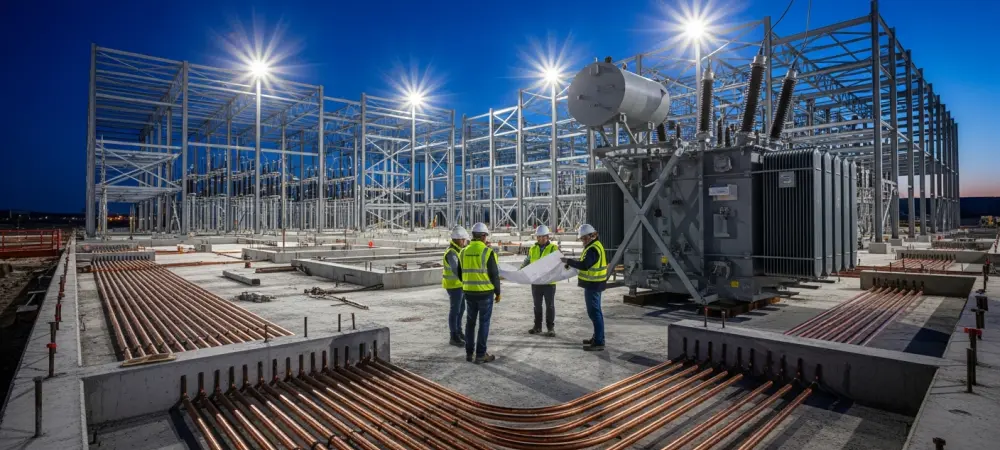
The absolute collision between the insatiable demand for artificial intelligence and the rigid physical constraints of the global energy landscape has reached a critical juncture where digital dreams must now confront the reality of concrete and copper. As the global technology sector pushes for unprecedented compute capacity, legacy power grids and supply chains are reaching a breaking point, making physical infrastructure the ultimate arbiter of success. This shift has created an execution gap that separates speculative announcements from operational reality. In the current landscape, the ability to secure a reliable power source is no longer a logistical detail but a core competitive advantage that dictates the survival of multi-billion-dollar investments. This analysis explores the staggering attrition rates of mega-projects, the regulatory hurdles stalling development, and the industry’s strategic pivot toward energy autonomy.
The Reality of the AI Gold Rush: Growth Data and Adoption Statistics
Quantifying the Surge and the High Rate of Project Attrition
In the period starting from 2026, the volume of proposed digital infrastructure has reached astronomical levels, yet the gap between ambition and completion is widening significantly. Recent data indicates that of the approximately 250 data center projects exceeding 100 megawatts (MW) announced in the preceding few years, industry analysts estimate that 50% will fail to reach operational status. This attrition is not due to a lack of capital or market interest; rather, it is the result of a physical environment that cannot keep pace with digital demand. The difficulty of transforming a site from a rural plot to a high-density compute facility has revealed a gauntlet of permitting and logistical failures that many developers were unprepared to navigate. Global electricity consumption from data centers is currently on a trajectory to double by 2030, reaching approximately 945 terawatt-hours (TWh) and accounting for nearly 3% of total global demand. This massive increase in load has created unprecedented strain on transmission networks. In key regions such as the PJM Interconnection, which serves the heart of the American data center corridor, capacity charges have surged by over 1,000% for the 2026–2028 period. This price volatility, driven by the combined pressure of AI growth and broader electrification, has forced many developers to rethink their financial models as the cost of simply staying connected to the grid begins to rival the cost of the hardware itself.
Mapping the Friction: Case Studies in Project Delays and Cancellations
The friction between massive digital development and local community interests has moved from the fringes to the center of project risk assessments. The Prince William Digital Gateway in Virginia serves as a primary example, where concerns over historical preservation and environmental impact halted a multi-billion-dollar development despite its potential for massive tax revenue. This case illustrates that even in regions traditionally friendly to the tech sector, the sheer scale of modern facilities—often spanning thousands of acres—triggers a level of public scrutiny and legal opposition that can derail projects for years or terminate them entirely.
Furthermore, international roadblocks have demonstrated that gridlock is a truly global phenomenon, as seen in Amsterdam where grid operators have flatly refused connections for new facilities. In Santa Clara, a region long considered a technology hub, completed data centers have been described as “ghost facilities” because they sit idle while waiting for the municipal utility to provide hundreds of millions of dollars in necessary grid upgrades. Similar project abandonments in Arizona and Malaysia highlight a trend where land acquisition is no longer the primary hurdle; instead, the physical ability to deliver power to the site has become the ultimate bottleneck for global expansion.
Expert Perspectives on the Infrastructure Execution Gap
Industry analysts are now observing a fundamental shift toward “compute-constrained” business models where growth is dictated by physical server capacity rather than market demand. In this new reality, thought leaders suggest that the era of speculative development is ending as the industry enters a sober phase of consolidation. Experts highlight the risk of developer inexperience, noting that many newer entrants lack the technical depth or established relationships with utilities required to secure long-term energy and water permits. This lack of expertise often leads to “zombie projects” that occupy grid queues without ever breaking ground, further complicating the planning process for legitimate operators.
Economic experts also warn that the transition from traditional cloud workloads to power-intensive AI services has exposed the profound fragility of aging electrical grids. This fragility leads to price spikes that impact not only the tech giants but also commercial and residential consumers who share the same transmission lines. Property consultants suggest that the most successful projects moving forward will be those that have secured firm power agreements before even seeking local permits. This “power-first” approach is replacing the traditional “land-first” strategy, as the scarcity of available megawatts becomes the primary factor in determining the viability of any digital infrastructure project.
Navigating the Future: Implications of Gigawatt-Scale Development
The industry is rapidly evolving toward “mega-gigawatt campuses,” where single sites are designed to accommodate power demands that rival entire industrialized nations like Ireland or the United Kingdom. Managing such a concentration of energy requires a move away from total grid reliance and toward sophisticated, energy-resilient campus designs. Developers are increasingly adopting onsite power generation, utilizing combinations of natural gas, massive battery storage arrays, and microgrid configurations to ensure uptime. This movement toward energy autonomy allows facilities to operate independently of a strained public grid, providing a layer of security that traditional data centers can no longer guarantee.
Supply chain evolution is also refocusing to alleviate the scarcity of critical components such as specialized liquid cooling systems and electrical switchgear, which currently lag behind construction timelines by eighteen months or more. To counter these delays, the largest players in the sector are vertically integrating their supply chains and securing long-term manufacturing slots for essential equipment. The long-term implications of these trends suggest a future where the most resilient campuses integrate demand-side management and enhanced energy efficiency directly into their architecture. This approach not only mitigates the impact of high energy costs but also ensures that compute capacity can continue to grow despite the constraints of the physical world.
Summary: The Transition from Blueprint Ambition to Physical Resilience
The surge in AI and cloud computing hit a wall of physical constraints that necessitated a fundamental reassessment of how digital infrastructure was built and powered. Success in this challenging period was defined by the strategic ability to navigate soaring energy costs, stringent local opposition, and a strained global supply chain that favored only the most prepared developers. As the sector pivoted toward creative and autonomous energy solutions, the focus shifted from simple expansion to the creation of a resilient foundation that supported the next generation of global compute demand. The transition from blueprint ambition to physical resilience required developers to embrace onsite generation and microgrid technology as standard features rather than experimental luxuries. Those who anticipated the gridlock by securing firm energy agreements and engaging with local communities early managed to bring their facilities online, while speculative projects faded into the background. Ultimately, the industry moved toward a model of decentralized energy management that integrated seamlessly with the demands of the digital age. This era of infrastructure development proved that while data may exist in the cloud, the machines that process it remained firmly tethered to the limits of the physical world.