

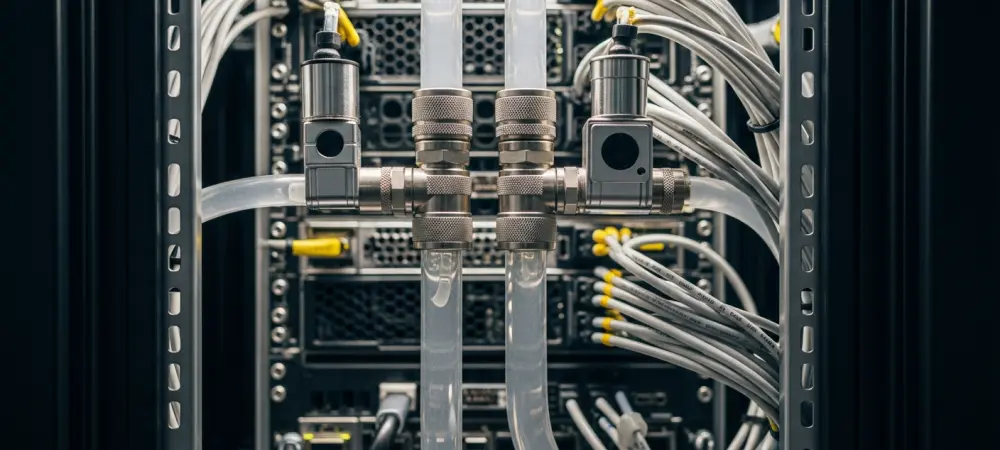
In a digital landscape where high-density computing and rapid artificial intelligence deployments define the standard of operation, the traditional reliance on calendar-based maintenance schedules has rapidly become an antiquated and risky practice for modern data centers. As organizations scale their infrastructure to accommodate massive NVIDIA Blackwell clusters and liquid-cooled server racks, the cost of a single minute of unplanned downtime has escalated to staggering heights, often exceeding tens of thousands of dollars in lost revenue and service-level agreement penalties. The move toward condition-based maintenance represents a fundamental shift in philosophy, moving away from the “just-in-case” mentality of replacing healthy components toward a “just-in-time” strategy driven by empirical evidence. By utilizing a sophisticated network of sensors and real-time telemetry, facility managers can now monitor the specific health of critical assets, such as uninterruptible power supplies and cooling pumps, with unprecedented precision. This transition not only mitigates the risk of catastrophic failure but also eliminates the wasteful replacement of functional hardware, ensuring that every dollar of the maintenance budget is spent on genuine needs rather than arbitrary dates.
Modernizing Infrastructure Management: From Schedules to Performance
Part 1: The Financial Risk of Reactive Infrastructure Management
The fundamental flaw in traditional preventive maintenance lies in its inherent disregard for the actual stress levels and environmental conditions that specific pieces of hardware experience during their operational life. Calendar-based schedules often mandate the replacement of critical components that are still in excellent condition, leading to massive amounts of electronic waste and unnecessary capital expenditure for the organization. Conversely, these rigid schedules can also miss signs of early failure in equipment that is operating in high-heat or high-vibration environments, where wear and tear occur much faster than the manufacturer’s average estimates would suggest. By adhering strictly to a timeline rather than monitoring actual performance, data center managers inadvertently introduce risk into their systems every time a technician opens a rack or disconnects a power cable for a routine check. This human intervention itself is a well-documented source of accidental outages, making the reduction of unnecessary maintenance cycles a top priority for modern site reliability engineers who want to maintain the highest possible level of uptime.
Part 2: Redefining Reliability Through Predictive Diagnostics
Moving toward a state of constant monitoring required the widespread deployment of advanced Internet of Things sensors and integrated power distribution units that track thousands of data points every second. These sensors monitor everything from subtle changes in acoustic signatures and micro-vibrations in cooling fans to the specific thermal gradients across a single server blade. When this telemetry is fed into a centralized management platform, the system can identify patterns that are invisible to the human eye, such as a slight increase in power consumption that precedes a transistor failure by several days. This level of granular visibility allows technical teams to schedule repairs during low-traffic windows long before a catastrophic failure occurs, ensuring that the critical path of data remains uninterrupted. Furthermore, this data-driven approach facilitates a much deeper understanding of how specific workloads affect infrastructure longevity, allowing companies to tailor their hardware refresh cycles to their actual usage patterns rather than following generic industry guidelines.
Strategic Benefits of Condition-Based Maintenance Frameworks
Part 3: Operational Efficiency and Financial Optimization
Implementing a condition-based framework also delivered significant financial improvements by allowing companies to reallocate their limited maintenance budgets toward high-impact upgrades rather than routine tasks. The reduction in spare parts inventory alone provided a substantial boost to operational cash flow, as facilities no longer needed to stockpile expensive components based on theoretical failure rates. Labor efficiency saw a similar improvement, as skilled technicians spent their time addressing identified anomalies instead of performing repetitive inspections on healthy machines that showed no signs of stress. This transition allowed for a leaner operational structure while simultaneously increasing the overall reliability of the data center, creating a rare win-win scenario for both the finance and engineering departments. Moreover, the detailed logs generated by these monitoring systems simplified the process of compliance and insurance auditing, providing undeniable proof that critical systems were being maintained to the highest possible standards of care throughout their service lives.
Part 4: Technical Integration and Enhanced System Resilience
To successfully navigate this transition, organizations adopted a strategy of phased integration that prioritized the most critical systems, such as uninterruptible power supplies and primary cooling loops. Leaders invested in upskilling their staff to interpret complex data visualizations, ensuring that the move toward automation was supported by human expertise rather than replaced by it. They also established clear thresholds for intervention, creating a standardized response protocol that balanced the urgency of the data with the logistical realities of the facility. These steps effectively eliminated the guesswork from infrastructure management and replaced it with a culture of empirical evidence and continuous improvement. By the time these systems reached full maturity, the frequency of unplanned outages had plummeted, and the overall lifespan of critical hardware had extended by nearly twenty percent. This evolution proved that the best way to manage a data center was to let the machines communicate their specific needs, fostering a resilient environment capable of supporting the most demanding digital workloads.