

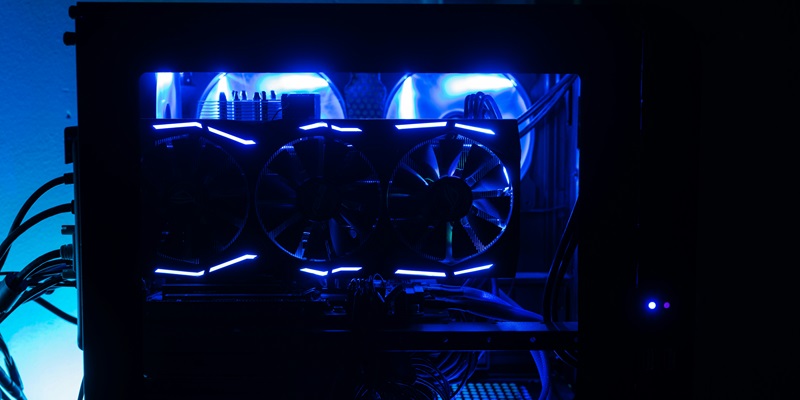
Machine learning, a branch of AI, hinges on substantial computing power to advance its learning and decision-making functions. GPUs stand at the forefront of this surge, offering the necessary computational muscle to elevate AI capabilities. The role of GPUs is crucial as they act as accelerators, speeding up the processing that machine learning algorithms deeply rely on. When integrating GPUs into machine learning endeavors, it’s vital to assess their architectural fit, performance metrics, and compatibility with the algorithms in use. As machine learning algorithms become more intricate, the choice and configuration of GPUs become even more critical to achieving optimal performance and fully harnessing AI’s potential. With the right GPU setup, AI systems can process vast datasets efficiently, leading to faster insights and innovation.
The Vital Role of GPUs in AI
Understanding GPU Advantages Over CPUs
GPUs have revolutionized the AI and machine learning landscape with their ability to perform multiple operations simultaneously. Originally developed for graphics rendering, GPUs have become critical in AI for their parallel processing prowess, which dramatically slashes calculation times for complex tasks. With thousands of cores optimized for concurrent tasks, GPU architecture is perfectly suited to machine learning’s demand for fast, efficient processing of vast datasets. In this realm, CPUs fall short due to their sequential processing approach, which pales in comparison to the concurrent capabilities of GPUs. Consequently, in the field of machine learning, GPUs are preferred for their ability to expedite algorithms that are integral to AI advancements, showcasing their superiority over the more linearly inclined CPUs.
Types of GPUs for Machine Learning
Choosing the right GPU is critical for both hobbyists and professionals. Inexpensive GPUs, priced between $100 and $300, are typically adequate for amateur projects or those with modest needs. Conversely, high-end GPUs, boasting a high number of sophisticated cores, are necessary for demanding tasks and complex computations. Data scientists and AI specialists must consider their specific needs when selecting a GPU, such as the size of their datasets, the computational intensity of the algorithms they plan to run, and the amount of time allotted for training. A careful analysis must be conducted to reconcile the trade-offs between performance capabilities and financial limitations. The most suitable GPU for any given project will be the one that best fits the intersection of the project’s requirements and fiscal realities.
High-End GPUs Driving Advanced AI
Cutting-edge GPU Specifications
Enter the domain of top-tier GPUs, where beasts like NVIDIA’s A100 with its colossal 6,912 CUDA cores and AMD’s Instinct MI250X, tailored for intensive AI workloads, reign supreme. These GPUs come with jaw-dropping specs geared toward the heavy lifting required in deep neural network training. Packed with vast VRAM, these units make it possible to keep more of the neural network within memory, minimizing data transfer delays and boosting the pace of learning algorithms. Essentially, the larger and faster the memory and core count of a GPU, the better it handles complex machine learning operations. Their advanced capabilities mark a significant leap in efficiency, catering to cutting-edge machine learning demands that require both power and speed.
Scaling AI Projects with Multiple GPUs
To tackle highly complex tasks, developers often employ multi-GPU systems to multiply computational capabilities. This necessity arises especially in fields like medical imaging analysis and intricate physical simulations where a single GPU falls short. Multiple top-tier GPUs working together efficiently parallelize workloads, significantly slashing the time requirements for processing – what might take weeks can be curtailed to days or hours. This parallel computation not only boosts efficiency but also unlocks advanced AI potential, offering a glimpse into a realm of accelerated innovation and expanded computational horizons. Through such synergy, daunting computational challenges are transformed into manageable tasks, facilitating breakthroughs that were once beyond reach.
Making GPU Resources Accessible for AI Development
The Emergence of Cloud-based GPU Services
The rise of cloud-based GPU services has been a game changer for AI development, offering tools once exclusive to those with deep pockets. Now, with platforms like Google Cloud’s AI Platform and Amazon Web Services, anyone can tap into powerful GPU resources on a flexible pay-as-you-go basis. This shift removes the barrier of high initial investment for state-of-the-art GPUs, opening doors for smaller entities and research bodies to engage in machine learning pursuits affordably. The cloud’s scalable nature means developers can leverage leading GPUs as needed, empowering a broader demographic to innovate and deploy AI solutions effectively. This model not only boosts accessibility but also ignites a new wave of creativity and progress in AI, as cost and hardware no longer tether the potential of developers and researchers in the field.
The Future of AI Accelerators
GPUs have been at the forefront of AI processing, but innovation is on the horizon as companies like Google and Apple create dedicated AI accelerators. With the introduction of Google’s TPUs and Apple’s Neural Engine, there’s a shift toward specialized hardware designed to better handle AI computations. These AI accelerators are engineered to be highly efficient at specific machine learning tasks, potentially outperforming conventional GPUs in terms of processing speed and energy consumption. This evolution is significant for mobile and edge computing AI applications, where conserving power and maximizing performance are crucial. As AI demands continue to rise, such dedicated AI hardware is poised to become an integral part of the technological landscape, offering bespoke solutions where general-purpose GPUs might not suffice. This specialized approach to hardware development heralds a future of more tailored, application-specific AI computing.
Aligning Project Needs with GPU Capabilities
Evaluating GPU Requirements for Machine Learning
Choosing the appropriate GPU is critical for a machine learning initiative’s effectiveness. The decision hinges on various factors, such as the type and scale of machine learning tasks, as well as the computational demands for proficient execution. The dimension and complexity of the models, how often they need to be trained, and the speed at which they must be operational are aspects to consider when identifying the ideal GPU for the job. AI professionals have to weigh whether the enhanced performance of top-tier GPUs offsets their higher cost compared to more affordable options. This evaluation is crucial to ensure that the project proceeds without delays and that the end results meet the expected standards of quality. The key lies in finding a GPU that aligns with the specific requirements of the machine learning project without compromising efficiency or exceeding budget constraints.
Cost-Benefit Analysis for AI Investments
Choosing the right Graphics Processing Unit (GPU) for AI R&D is a fine balance between technological needs and budgetary constraints. High-performance GPUs boost processing speed, which is crucial to rapid innovations in AI, but they come with substantial costs that could deter some projects. It is vital to consider the expenditure on these units versus the computational horsepower they render. Smart planning is key to align the project’s demand for computational capacity with the funds at hand, enabling cost-effective AI progress. An optimal GPU selection can significantly cut down on the time it takes to train models, thus accelerating the pace of AI breakthroughs and hastening the market introduction of AI-driven products and services. Careful investment in GPUs is indispensable for swift and efficient AI development, aligning resources to tech necessities.