

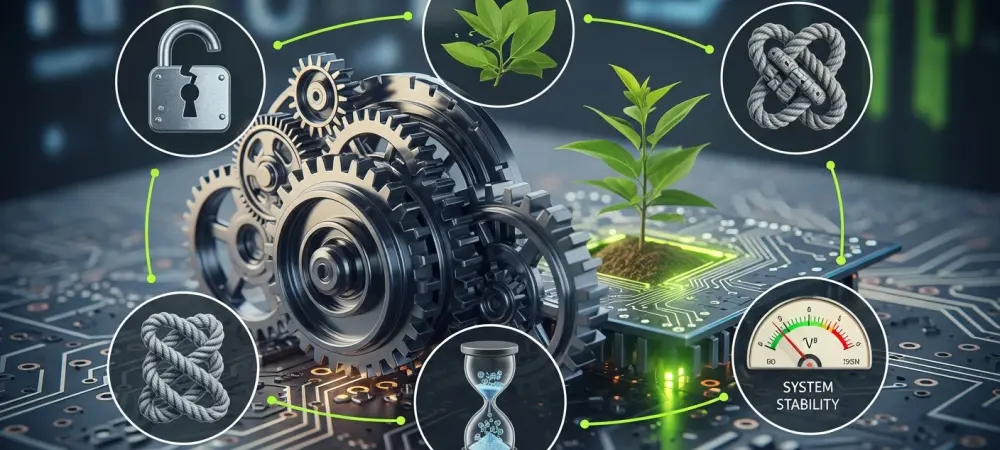
The silent engine of modern commerce has finally pushed its redline, forcing a transition from the frantic pursuit of deployment frequency toward an era where architectural integrity serves as the ultimate competitive moat. For years, the industry operated under the spell of rapid iteration, prioritizing the psychological rush of a “launch” over the quiet necessity of a system that actually works without constant intervention. However, the landscape has fundamentally shifted as the hidden costs of fragile codebases and fragmented microservices began to erode the very bottom lines they were meant to support. In the current environment, the most successful organizations are no longer those that boast the most frequent updates, but those that demonstrate the highest degree of operational resilience and long-term durability. This evolution represents more than just a technical pivot; it is a profound cultural realignment that values the endurance of the engineer and the stability of the stack over the ephemeral thrill of the release cycle.
The urgency of this shift is underscored by a maturing market that has little patience for downtime or security lapses. As software permeates every facet of global infrastructure, from autonomous supply chains to personalized healthcare, the stakes of a failure have escalated from minor inconveniences to systemic risks. Consequently, the mandate for durability has become a central pillar of corporate strategy, influencing everything from hiring practices to procurement decisions. We are witnessing the end of “move fast and break things” as the primary directive, replaced by a sophisticated focus on building systems that can withstand the pressures of a volatile global market. This transition requires a deep dive into the modernization of legacy assets, the disciplined integration of artificial intelligence, and a commitment to infrastructure that supports the developer rather than overwhelming them.
The Shift From Reckless Speed to Engineering Resilience
The era of reckless velocity has hit a hard ceiling, giving way to a period where engineering resilience is the primary metric of success. Organizations have realized that the competitive advantage gained by being first to market is quickly neutralized if the underlying software cannot scale or adapt to shifting operational stresses. In the past, “speed” was often a euphemism for cutting corners, leading to a proliferation of technical debt that eventually acted as a tax on every subsequent feature request. Today, market leadership is awarded to the resilient—those whose platforms remain steadfast under the weight of sudden traffic spikes or sophisticated cyber threats. This movement toward durability reflects a broader understanding that a stable system is actually the fastest path to sustainable innovation, as it allows teams to build upon a solid foundation rather than spending their days in a cycle of reactive patching.
The psychological toll of the old “break things” mantra cannot be overstated, as it frequently led to developer burnout and a culture of blame when systems inevitably failed. By shifting the focus to resilience, companies are fostering an environment where engineers are empowered to prioritize quality and long-term health. This change is visible in the way key performance indicators are being redefined; instead of just counting pull requests, leadership teams are now looking at mean time to recovery, change failure rates, and the longevity of core components. Resilience is not merely a technical requirement but a strategic asset that builds trust with users and provides a stable platform for the integration of next-generation technologies. As a result, the engineering discipline is maturing, moving away from the chaotic artistry of the past toward a more rigorous, predictable, and ultimately more successful methodology.
Moreover, the financial implications of this shift are becoming increasingly clear to stakeholders and investors who now demand predictability over volatility. A single hour of downtime can cost a large enterprise millions of dollars, not just in lost revenue but in long-term brand damage and regulatory penalties. The shift toward durability is thus a direct response to the economic reality that stability is more profitable than frantic experimentation. By investing in resilient architectures, companies are essentially buying insurance against the unknown, ensuring that they can navigate market fluctuations without their digital infrastructure becoming a liability. This focus on durability is transforming the software development lifecycle from a race to the finish line into a marathon of continuous, stable growth.
Bridging the Modernization Gap and the Risk of Technical Debt
The current software landscape is defined by a significant modernization gap that stems from a notable pause in technology spending during 2023 and 2024. During those years, many enterprises focused on survival and consolidation, allowing their legacy systems—many of which were already a decade old—to age without the necessary incremental upgrades. This delay turned what was once manageable technical debt into a massive operational anchor that now threatens to drag down the speed of even the most ambitious organizations. Modernization has moved from a back-burner IT task to a top-tier board-level risk management priority, as these aging systems are often incompatible with modern cloud-native architectures and high-velocity security requirements. With the custom software market projected to surge toward $334 billion by 2034, the ability to bridge this gap has become a matter of survival for the modern enterprise.
Addressing this gap requires more than just a surface-level update; it demands a fundamental rethinking of how legacy logic is integrated into modern workflows. These older systems often hold the “crown jewels” of a company’s business logic, making them both indispensable and dangerous to touch. The risk of technical debt is no longer just about slow code; it is about the inability to comply with new privacy regulations or the failure to provide the real-time data access that today’s consumers expect. As organizations look to 2026 and beyond, they are finding that the cost of maintaining these “zombie” systems is actually higher than the cost of a structured modernization effort. Consequently, the focus has shifted toward finding ways to wrap, refactor, or replace these systems without disrupting the day-to-day operations that keep the lights on.
The strategy for bridging this gap involves a delicate balance of technical skill and business intuition, as leaders must decide which parts of their legacy stack are worth saving and which must be discarded. This is where the concept of “modernization as risk management” truly comes into play. By identifying the most brittle components of their infrastructure and prioritizing their replacement, companies can systematically reduce their risk profile while simultaneously unlocking new capabilities. The $334 billion market for custom software reflects this reality, as companies invest heavily in bespoke solutions that can bridge the old and the new. This process is not just about writing new code; it is about preserving the institutional knowledge embedded in old systems while giving it a modern, durable delivery mechanism.
The Pillars of a Durable Software Ecosystem
Building a durable software ecosystem requires a transition away from monolithic dependency toward a modular architecture that emphasizes manageability and isolation. One of the most effective strategies emerging in this space is the adoption of the Strangler-Fig Pattern, a methodical approach where legacy functionalities are incrementally replaced by new services. Much like the vine that slowly envelops and eventually replaces its host tree, this pattern allows organizations to modernize their stacks without the catastrophic risks associated with a “big bang” rewrite. This incremental replacement ensures that the system remains operational throughout the transition, providing immediate value while steadily building a more resilient and modern foundation. By breaking down large, complex systems into smaller, independent services, companies can ensure that a failure in one area does not lead to a systemic collapse.
Parallel to these architectural shifts is the rise of Platform Engineering, which has become the backbone of the durable development environment. Platform engineering teams are tasked with creating internal developer platforms that provide a “paved path” for engineers, standardizing the tools and processes used for deployment, monitoring, and scaling. This approach significantly reduces the cognitive load on individual developers, allowing them to focus on writing business logic rather than wrestling with the complexities of underlying infrastructure. By establishing a unified environment, organizations can ensure that every deployment follows a reliable, cost-controlled process that adheres to the highest standards of quality and security. This standardization is a key pillar of durability, as it creates a predictable and repeatable framework for innovation that can scale alongside the business.
Furthermore, a durable ecosystem is one that prioritizes observability and automation as fundamental components of its operational DNA. In a world of distributed systems and microservices, being able to see exactly what is happening across the entire stack is essential for maintaining stability. Modern observability tools go beyond simple monitoring, providing deep insights into system behavior and allowing teams to identify and resolve issues before they impact the user. When combined with automated self-healing capabilities, these tools allow a system to maintain its own durability with minimal human intervention. This shift toward automated, observable, and modular architecture is what defines the next generation of software engineering, creating a landscape where durability is built into the very fabric of the system.
The Reality of AI Velocity and the Hidden Debugging Tax
While approximately 84% of developers have now integrated AI-based tools into their daily workflows to boost productivity, the initial promise of effortless code generation has been met with a sobering reality: the hidden debugging tax. Research indicates that while AI can generate vast amounts of code in seconds, roughly 70% of developers are spending a significant portion of their time correcting errors, refactoring non-idiomatic logic, or fixing subtle security vulnerabilities introduced by these tools. This phenomenon has created a paradox where the perceived velocity of the development cycle is high, but the actual progress toward a durable, production-ready system is often hindered by the poor quality of the machine-generated output. For technology leaders, this means that AI cannot be treated as a “set and forget” solution, but rather as a powerful tool that requires rigorous human oversight and governance. To maintain system integrity in the age of AI, organizations are implementing mandatory human-in-the-loop review gates that shift the focus of quality assurance from simple syntax to high-level architectural soundness. It is no longer enough to ensure that the code runs; engineers must now verify that the AI-generated logic aligns with the overall system design and does not introduce hidden technical debt. This requirement has led to a redefinition of the developer’s role, moving away from manual coding toward a position of “architectural validator.” The challenge lies in managing the sheer volume of code that AI can produce, which can easily overwhelm traditional peer-review processes. Without a structured governance framework that includes automated testing and strict code-quality standards, the rapid adoption of AI could ironically lead to the same architectural frailty that the industry is currently working so hard to move past.
Moreover, the debugging tax has a profound impact on the long-term maintenance costs of software, as AI-generated code that is not properly vetted can become a nightmare for future engineers to untangle. This creates a new form of technical debt that is particularly insidious because it often appears clean on the surface while masking deep-seated logic errors. To combat this, forward-thinking organizations are investing in “AI literacy” for their senior talent, training them not just how to use these tools, but how to identify their specific patterns of failure. The goal is to harness the velocity of AI without sacrificing the durability of the software, a balance that requires a disciplined approach to integration. By treating AI as a junior partner that requires constant mentorship and verification, companies can leverage its productivity gains while maintaining the high standards required for mission-critical systems.
A Practical Blueprint for Implementing Durable Infrastructure
Achieving true durability in 2026 requires a practical, phased approach that aligns technical upgrades with measurable business outcomes, typically organized around 90-day cycles. These short, focused bursts of activity allow organizations to make steady progress on their modernization goals while remaining flexible enough to adapt to changing market conditions. During each cycle, the focus is on achieving a specific, verifiable improvement—such as migrating a core service to a modern platform or automating a specific security protocol—which ensures that the project delivers value long before it is fully completed. This strategy avoids the pitfalls of long-running, multi-year initiatives that often lose momentum or relevance before they can be deployed. By breaking the journey into manageable segments, leadership can maintain stakeholder support and ensure that the most critical risks are addressed first. A cornerstone of this blueprint is the integration of DevSecOps as a continuous, automated gate rather than a final hurdle at the end of the development cycle. In a durable infrastructure, security is woven into every phase of the process, from initial design to production monitoring. This involves automating threat modeling and code scanning to identify vulnerabilities the moment they are introduced, significantly reducing the cost and complexity of remediation. For companies operating in highly regulated sectors like finance or healthcare, this proactive stance on security is not just a best practice; it is a fundamental requirement for maintaining operational trust. By treating security as an essential component of quality rather than an external audit, organizations can build systems that are inherently resistant to the evolving threat landscape, thereby strengthening the overall durability of the business.
Finally, the blueprint for durability must address the growing gap in senior talent, as the complexity of modern architecture requires a level of expertise that goes beyond simple coding skills. Organizations are prioritizing the upskilling of their senior engineers to manage the intersection of AI, cloud-native architecture, and automated security. This talent strategy is essential because, as the low-level tasks are increasingly handled by AI and platform automation, the value of the human engineer shifts toward high-level system design and risk management. Labor data indicates a 15% growth in demand for these high-level development roles through 2034, highlighting the critical nature of this human element. By investing in the people who build and maintain the systems, and by providing them with a structured, 90-day framework for improvement, organizations can create a foundation for performance and trust that will sustain them for years to come.
The industry moved through a period of intense reflection where the true cost of unstable software was finally measured against the sustainable value of engineering discipline. Leaders discovered that the path to longevity was paved with modularity and rigorous human oversight of machine-generated code, ensuring that the velocity of innovation never outpaced the capacity for governance. Organizations that embraced the transition toward durability found themselves better positioned to weather economic shifts, as their systems remained adaptable and their technical debt was systematically managed. This evolution proved that the most sophisticated technology was not the one that deployed the fastest, but the one that stood the test of operational stress without failing. Ultimately, the focus on resilience and the bridging of the modernization gap redefined the standards for excellence in the software development world. The future of the landscape was secured by those who recognized that trust was the most valuable asset any platform could provide. Action was taken to ensure that every new feature served the goal of long-term stability, turning the software stack from a source of anxiety into a reliable engine for growth.