

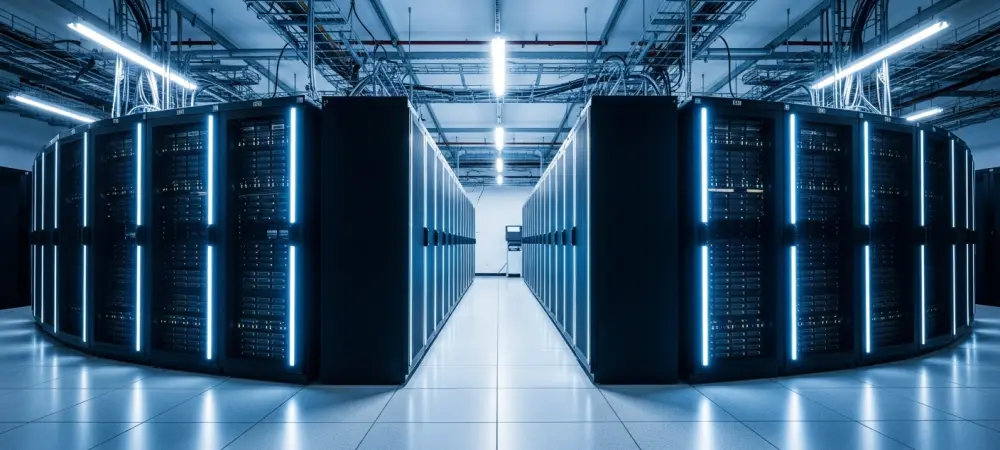
The hum of cooling fans echoing across the industrial corridors of Johor marks a fundamental shift where a single 50-megawatt data center can consume as much electricity as twenty-two thousand local households. This energy-intensive reality has turned quiet regions into high-density server clusters, positioning the nation at a critical crossroads. As global hyperscalers like Amazon, Google, and TikTok parent ByteDance pour billions into the local economy, the initial excitement is being met with a sobering realization about the physical limits of land and utilities.
This surge represents a defining moment for the digital economy in Southeast Asia, where the race for artificial intelligence supremacy is colliding with the basic needs of local populations. The phenomenon, now widely categorized as resource anxiety, is not merely a technical hurdle but a socio-political challenge that demands a new social license to operate. To maintain its trajectory, the country must now solve the complex equation of balancing international investment with the long-term sustainability of its national resources.
Beyond the Singapore Shadow: The Unprecedented Surge of Malaysian Digital Infrastructure
Malaysia has rapidly evolved from a secondary backup site into the primary destination for digital infrastructure in the region, effectively moving out of the shadow of its southern neighbor. The expansion is centered heavily in Johor and Selangor, where the landscape is being redesigned to accommodate massive server farms. Proactive government incentives and a robust fiber-optic network have made the country an attractive alternative for tech giants seeking to bypass the capacity constraints found in more mature markets.
This unprecedented growth is driven by the global appetite for cloud services and generative AI, which require vast amounts of compute power. Unlike previous industrial booms, the current expansion is characterized by its speed and the sheer size of the facilities being constructed. Industrial zones that once housed traditional manufacturing are now filled with windowless blocks of hardware, signaling a move toward a high-tech future that relies more on data throughput than on manual labor.
Understanding Resource Anxiety: Why Technical Feasibility Is No Longer Enough
The shift from simple capacity building to a state of resource anxiety reflects a maturing market where technical feasibility is no longer the sole metric for success. This term captures the growing tension between the rapid-fire approval of massive industrial projects and the underlying stability of public utilities. Much like the obstacles faced by data hubs in Europe, such as Ireland and the Netherlands, the Malaysian sector is discovering that land availability alone does not guarantee a smooth path to operation.
The dilemma is a direct consequence of the country’s success in attracting capital that was previously bound for Singapore. When Singapore enacted its moratorium on new data centers several years ago, Malaysia positioned itself as the logical overflow valve. However, the resulting influx has brought the same environmental and infrastructural bottlenecks to the forefront, forcing a re-evaluation of how much growth the domestic ecosystem can truly sustain without compromising the quality of life for its citizens.
The Three Pillars of Strain: Electricity, Water, and the Physical Landscape
The primary pressure point remains the national power grid, which must now accommodate the massive energy draw of AI-ready hardware. Utility providers like Tenaga Nasional are finding themselves at a turning point, where they must balance the lucrative demand from the tech sector with the need for long-term grid stability for residential consumers. If the consumption rates of these facilities continue to climb at the projected pace, the strain could lead to increased costs or reliability issues that affect the broader population. Cooling a single hyperscale facility can require millions of liters of water every day, a figure that rivals the needs of entire townships. In regions prone to seasonal shortages, the presence of such high-volume consumers creates a flashpoint for public debate, as residents and agricultural stakeholders question the priority given to servers over human and environmental needs.
Furthermore, the physical and aesthetic impact of these facilities has sparked a localized backlash in areas like Iskandar Puteri. Residents have raised concerns regarding noise pollution from industrial-grade cooling units and the dust generated during continuous construction cycles. These windowless, monolithic structures often lack the visual integration seen in other sectors, leading to a perception that they are “digital fortresses” that take much from the land while offering little in the way of natural scenery or communal value.
Navigating the New Regulatory Landscape: Perspectives From State Leaders and Industry Giants
In response to these mounting pressures, state governments are moving away from a policy of blank-check approvals in favor of a more disciplined vetting process. The goal is to ensure that every new megawatt of capacity brings a quantifiable benefit to the region, rather than just adding to the consumption totals of the state’s utility providers.
Industry giants like Equinix and Bridge Data Centres are increasingly aware that they must demonstrate their value beyond mere tax revenue. In Selangor, regulators have introduced thresholds requiring a percentage of local content, which aims to integrate Malaysian businesses into the global supply chain of these tech giants. This approach forces operators to focus on local economic spillover, ensuring that the wealth generated by the digital boom supports a local ecosystem of skilled labor and high-value technical roles.
Strategies for Sustainable Scaling: A Blueprint for Future-Proof Data Centers
To secure the future of the sector, operators must adopt advanced cooling technologies that minimize the impact on local water supplies. Implementing closed-circuit systems or utilizing treated industrial wastewater can significantly reduce the demand for potable water. By investing in these sustainable technologies, developers can mitigate the primary source of public friction and prove that high-density computing can coexist with environmental conservation efforts. The integration of renewable energy is another essential strategy for long-term viability, as it alleviates the load on the domestic electricity grid. Prioritizing solar power and other green energy sources allows data centers to operate with a smaller carbon footprint while contributing to the nation’s broader sustainability goals. Furthermore, the transition toward value-added investments, such as integrated circuit design and research in thermal management, ensures that the digital boom provides high-quality career opportunities for the local workforce.
National planners established a framework that successfully balanced the demand for digital expansion with the necessity of resource security. This proactive stance ensured that the industry moved toward a model of circular water usage and decentralized renewable energy sourcing. By prioritizing technological sophistication over simple volume, the country transformed the challenge of resource anxiety into a competitive advantage for the next generation of infrastructure. These decisions solidified the nation’s status as a responsible leader in the global digital landscape, proving that sustainable growth was the only viable path forward.