

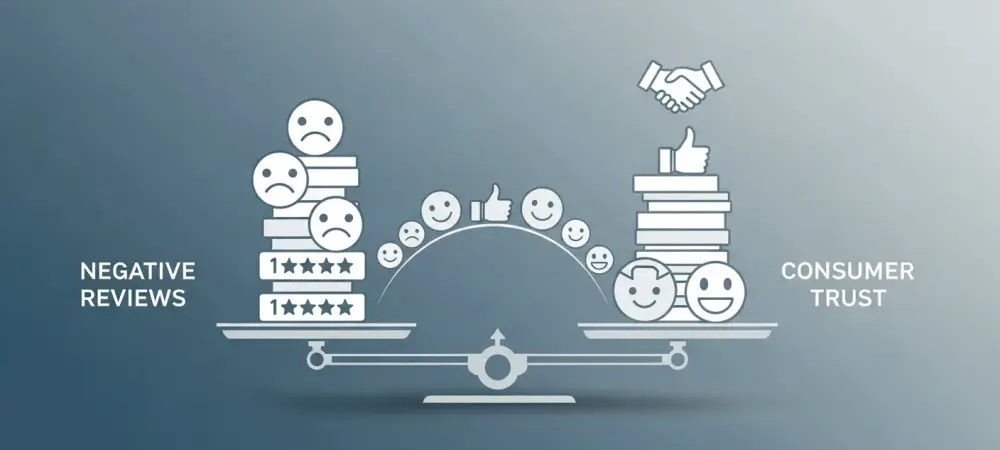
A pristine, unblemished digital reputation often provokes more skepticism than admiration among sophisticated modern shoppers who have learned to spot the difference between genuine praise and curated marketing. Modern consumers prioritize the messy reality of genuine feedback over the polished facade of marketing collateral. A disgruntled customer’s critique acts as a beacon of authenticity, providing a realistic perspective that five-star accolades cannot replicate. In a hyperbole-saturated landscape, a well-documented complaint serves as a point of verification, reassuring a buyer that the company is a real entity with authentic interactions. The absence of criticism no longer signals excellence; instead, it triggers a warning bell that a brand might be curating a storefront that is too good to be true. When every testimonial reads like a rehearsed script, instincts activate. Shoppers are hunting for the cracks in the armor to verify that a company is legitimate, viewing a few negative remarks as proof that the feedback loop is honest. By acknowledging flaws, businesses demonstrate a level of transparency that resonates with an audience tired of artificial perfection.
Navigating the Modern Crisis of Digital Credibility
The rise of generative AI and bot farms has fundamentally altered how people perceive online feedback, leading to a climate where ninety percent of consumers are worried about fraudulent content. With two-thirds of shoppers reporting that they trust online reviews significantly less than they did just five years ago, the stakes for authenticity have never been higher. This pervasive doubt creates a barrier for honest businesses, forcing them to prove integrity through transparency rather than volume.
Despite this widespread skepticism, reviews remain a non-negotiable step in the buyer’s journey. Nearly sixty-seven percent of the general population and a staggering ninety-seven percent of local service seekers rely on peer feedback to validate their purchasing decisions. Consequently, the challenge for modern brands is not to eliminate dissent but to provide a credible environment where even the most critical voices exist within a verifiable context.
Deconstructing the Fallacy of Perfection in Online Markets
The fallacy of perfection suggests that a pristine rating is a liability rather than a competitive advantage in the current market. Data indicates that only about one-fifth of consumers fully trust a brand that displays exclusively positive feedback, whereas a significant portion of shoppers feels more confident in a company that includes some negative reviews. This shift occurs because consumers use critical feedback as a litmus test for ethics; they aren’t just looking at the problem, they are looking at the resolution.
When a company addresses a complaint constructively and publicly, it transforms a potential PR disaster into a demonstration of reliable customer service. Shoppers appreciate the vulnerability required to leave a complaint visible, interpreting it as a sign of institutional confidence. By allowing negative feedback to stand, a brand shifts the narrative from perfection to accountability, which is a persuasive message for an audience concerned about post-purchase support.
Quantifying the Shift Toward Human-Centric Transparency
The demand for genuine interaction has turned the review section into a public stage for brand values, where response quality is scrutinized more than the original complaint. Research highlights that eighty-four percent of consumers expect prompt, human-centric responses rather than canned, automated scripts. Because communication breakdowns are responsible for over a third of all poor feedback, the speed and tone of a response can be the deciding factor in whether a prospect stays or leaves.
Moreover, the modern consumer prioritizes the person behind the screen over a statistically perfect score. Seeking out brands that are willing to admit mistakes and rectify them in real-time has become a standard protocol for the discerning buyer. This human-centric approach requires a move away from defensive corporate language toward a style that emphasizes empathy. Transparency in these public forums creates a ripple effect, building trust with readers who witness the brand’s dedication to conflict resolution.
Actionable Frameworks: Turning Criticism Into a Competitive Edge
To thrive in a skeptical market, brands must move beyond mere damage control and adopt a proactive strategy centered on operational transparency. Companies should implement a rigorous monitoring system to ensure every piece of feedback—especially the negative—receives a thoughtful response within a twenty-four to forty-eight-hour window. Focusing on review volume and recency is often more persuasive than chasing a high average, as steady feedback proves the brand is active.
The final step involved treating negative reviews as free diagnostic data, using recurring complaints to fix systemic issues before they escalated into reputation damage. Successful organizations established protocols to translate digital dissatisfaction into improvements in service delivery. By acknowledging the human element of commerce, businesses converted skeptical prospects into loyal advocates. This shift in perspective ensured that authenticity remained the most valuable currency in a marketplace defined by doubt.