

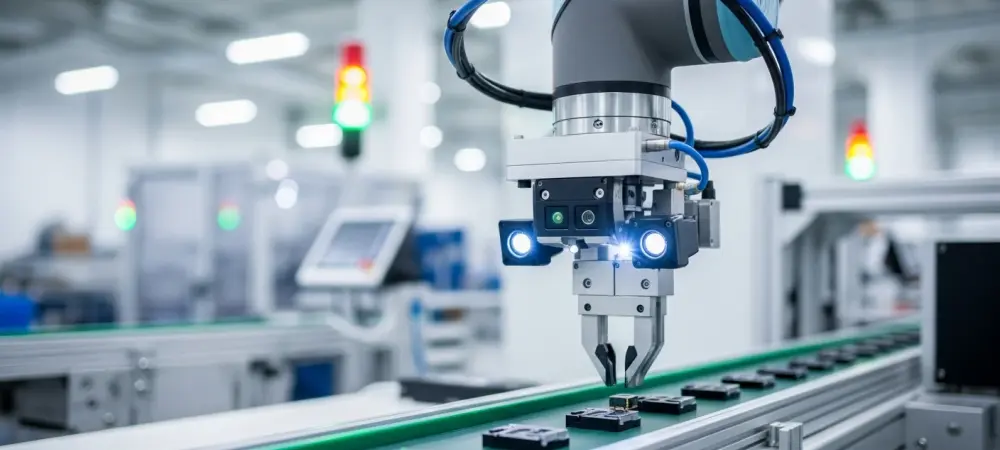
Modern manufacturing floors are rapidly shedding their reliance on rigid manual processes to embrace high-speed robotic systems that possess the uncanny ability to perceive and respond to their environments in real time. This shift toward intelligent automation is no longer a luxury but a fundamental requirement for survival in a volatile global market. As production cycles shorten and the demand for customized goods grows, the integration of vision systems provides the necessary “sight” to handle variety with precision. This analysis explores the current market trajectory, the technological breakthroughs in simplified software, and how these advancements are reshaping industrial efficiency across multiple sectors.
Market Dynamics and the Shift Toward Accessible Automation
Statistics and Growth Drivers: Vision-Guided Robotics
The global industrial landscape is currently grappling with a profound transformation as traditional labor models prove insufficient for contemporary high-velocity market demands. Recent data indicates that 74 percent of manufacturers struggle to secure skilled workers, a figure that has significantly accelerated the adoption of intelligent vision systems. These technologies allow robots to see and adapt, satisfying the modern consumer’s thirst for highly personalized products without sacrificing throughput. Moreover, the industry is moving toward “low-code” or “no-code” software environments that effectively lower the engineering barriers for original equipment manufacturers.
Real-World Implementation: The Rise of Streamlined Software Solutions
Innovations like ABB’s PickMaster Lite are responding to these pressures by offering intuitive, task-based interfaces that eliminate the need for deep programming expertise. By utilizing pre-configured templates and guided workflows, this software reduces engineering effort by 30 percent and commissioning time by 25 percent compared to conventional PLC-based solutions. Furthermore, the integration of digital twins within platforms like RobotStudio allows manufacturers to simulate and optimize robot paths in a virtual environment. This proactive approach ensures that the physical deployment is both rapid and optimized for maximum efficiency from the start.
Expert Perspectives on the Evolution of Robotic Picking
Industry leaders emphasize that the transition from rigid, PLC-bound logic to intuitive workflows is critical for the survival of mid-sized enterprises. Reducing the total cost of ownership remains a top priority, making it essential for robotic controllers like OmniCore to integrate seamlessly with existing factory architectures. When a vision system communicates directly with the factory HMI, the resulting synergy reduces downtime and simplifies the training required for floor staff. Professionals agree that removing complexity from the integration process is the most effective way to encourage wider adoption of robotics in cost-sensitive sectors.
The Future Landscape of Vision-Guided Systems
Looking ahead, vision-guided systems are poised to evolve from simple object recognition to complex, AI-driven sorting in chaotic and unstructured environments. This scalability ensures that a company starting with basic picking can eventually transition to advanced digital twin optimization as production scales. While challenges regarding standardized communication protocols and edge computing integration persist, the expansion into food, beverage, and e-commerce suggests that automation is becoming a universal standard. As these systems become more modular, the ability to rapidly reconfigure lines will define the next generation of industrial flexibility.
Conclusion: Navigating the Next Era of Industrial Efficiency
The industry recognized that maintaining global competitiveness required a radical departure from stagnant automation models. By embracing flexible, vision-guided systems, manufacturers successfully mitigated the risks posed by labor shortages and fluctuating supply chain pressures. The democratization of these tools eventually leveled the playing field, allowing even smaller operations to harness the power of advanced robotics. Stakeholders who prioritized these integrated and accessible solutions moved toward a more resilient future, setting a new benchmark for efficiency that defined the modern manufacturing landscape.