

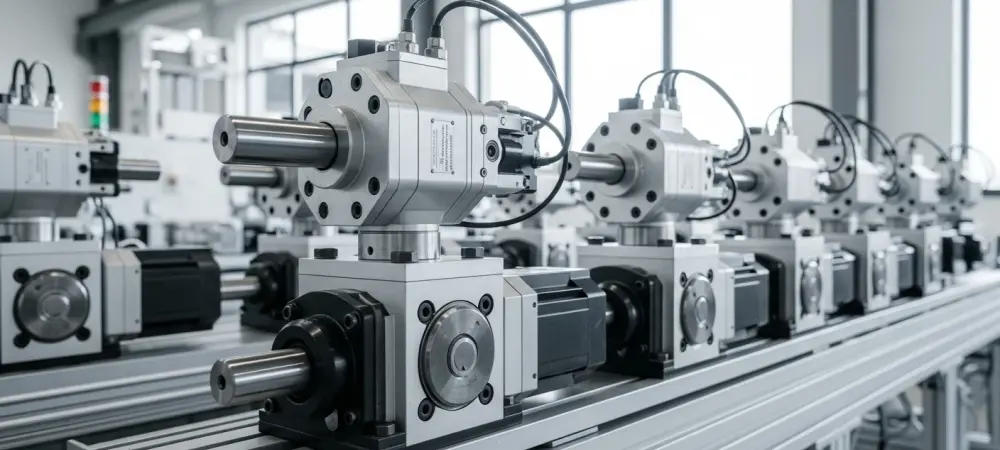
The traditional boundaries separating heavy mechanical engineering from sophisticated digital intelligence are dissolving as modern factories evolve into interconnected, self-optimizing ecosystems. This shift toward intelligent industrial automation represents a fundamental departure from the era of simple manual labor replacement, signaling a new age of high-precision operational environments. In a global landscape where supply chain resilience and production speed determine market survival, the integration of smart motion control and collaborative robotics has emerged as a primary competitive advantage. This transformation is not merely a technical upgrade but a philosophical shift in how production value is created and sustained.
Modern manufacturing facilities are no longer static assemblies of pulleys and gears but are becoming sentient environments capable of real-time adjustment. The current trajectory of industrial growth highlights a move toward decentralized intelligence, where individual components contribute to a larger, unified objective. This article explores the technological pillars sustaining this growth, the strategic visions of industry leaders, and the impending shifts that will redefine the factory floor for years to come. By analyzing the current state of automation, it becomes clear that the focus has transitioned from raw output to the quality of the “intelligent” interaction between machines and their tasks.
II. The Rapid Evolution of the Automation Landscape
1. Market Growth and Adoption Statistics
The global demand for intelligent manufacturing is currently fueled by a projected double-digit compound annual growth rate, reflecting a massive pivot toward autonomous systems across all industrial sectors. This surge in market value is largely attributed to the necessity for increased operational agility, particularly in response to volatile global economic conditions. Manufacturers are increasingly prioritizing investment in “smart” factory infrastructure, seeking tools that provide visibility into every step of the production process while maintaining the flexibility to pivot between product lines almost instantly.
Recent adoption statistics suggest that high-tech sectors like semiconductor fabrication and medical device manufacturing are spearheading this transition. These industries require a level of micron-level precision that human hands or traditional mechanical systems simply cannot achieve with consistency. Furthermore, the drive toward decentralizing production has led to the adoption of data-integrated hardware, allowing facilities to maintain high standards of quality control without relying on a single, centralized control unit. This trend toward distributed intelligence ensures that if one part of a system requires maintenance, the rest of the facility can continue to operate efficiently.
2. Real-World Applications and Technological Implementation
A compelling example of this technological shift can be found in specialized divisions like Norck Robotics, which bridges the gap between high-precision mechanical engineering and scalable manufacturing. By providing custom-engineered motion solutions, such organizations allow manufacturers to move beyond off-the-shelf components toward systems that are tailored to unique production challenges. This collaborative approach ensures that the hardware is not just a tool but an optimized extension of the specific manufacturing process it serves.
Micro-precision manufacturing has benefited immensely from these advancements, particularly through the use of advanced CNC machining and additive manufacturing for micro-metal parts. These components are essential for sensitive medical sensing systems where dimensional accuracy is non-negotiable. Moreover, the implementation of multi-axis coordination in high-speed packaging and semiconductor assembly has revolutionized throughput. The use of synchronized linear actuators allows for fluid, high-speed movement that minimizes production bottlenecks, demonstrating that the future of the factory floor relies on the harmony of motion and data.
III. Expert Insights and Leadership Vision
Strategic shifts in manufacturing philosophy are being driven by a new generation of leaders who prioritize synergy over raw power. Industry experts, including figures like Mucahit Basaran, argue that the next era of industry will be defined by the delicate balance between precision and adaptability. In this view, the ability of a system to learn from its environment and adjust its parameters is far more valuable than its ability to perform a single task at high speeds. This mindset encourages manufacturers to view their facilities as evolving organisms rather than fixed assets.
Thought leaders are increasingly vocal about the “intelligence mandate,” suggesting that the reliability of a system is now its most significant metric. To remain competitive, manufacturers must transition to future-proof tools that can adapt to shifting market demands without requiring a total infrastructure overhaul. This approach reduces the risk of technological obsolescence and ensures that capital investments remain productive over longer lifecycles. The focus is shifting toward software-defined hardware, where the capabilities of a machine can be expanded or refined through digital updates rather than mechanical replacements.
However, professionals in the field also highlight that the primary challenge remains the seamless integration of these systems into existing digital frameworks. While the mechanical “muscles” of automation—such as actuators and robotic arms—are advancing at a rapid pace, creating a unified “brain” for the facility remains complex. Achieving true synchronization between disparate machines requires standardized communication protocols and robust data security. Industry leaders emphasize that the success of intelligent automation depends on the ability to translate raw sensor data into actionable insights that can be used to optimize the entire production chain.
IV. The Future Outlook of Intelligent Industrial Automation
The development of agile robotic platforms is set to take another leap forward with the advancement of high-torque density in rotary actuators. This technology allows robotic joints to become more powerful while remaining lightweight, which is a critical requirement for the next generation of collaborative robots, or cobots. These machines will be capable of working safely alongside human operators in tighter spaces, performing complex tasks that were previously too delicate for automation. The move toward more compact, powerful actuation will likely expand the use of robotics into smaller-scale manufacturing environments.
Sustainability and thermal management will remain at the forefront of engineering priorities as energy costs and environmental regulations tighten. Optimized electromagnetic designs are expected to reduce heat generation in industrial motors, thereby extending the lifecycle of machinery and lowering the total cost of ownership. By minimizing energy waste, manufacturers can achieve a dual goal: reducing their carbon footprint and improving their bottom line. This focus on efficiency is driving a wave of innovation in material science, with a particular emphasis on components that can withstand high stress with minimal wear.
The implications for the global workforce are equally significant, as the nature of industrial labor undergoes a permanent change. While automation reduces the need for repetitive manual tasks, it simultaneously creates a high demand for roles in motion control engineering and collaborative design. The labor focus is shifting toward system optimization, where human workers supervise and refine the performance of autonomous cells rather than performing the labor themselves. This transition will require a massive upskilling effort but promises to create safer, more intellectually engaging work environments for the next generation of technicians.
Potential challenges do exist, particularly regarding the standardization of connected systems and the high initial capital expenditure required for turnkey automation. Small and medium-sized enterprises may find the barrier to entry daunting without new financing models or the availability of modular, “pay-as-you-grow” automation solutions. Furthermore, the industry must address the cybersecurity risks associated with increasingly “connected” factories. As machines become more integrated with the cloud, protecting the integrity of production data will become as important as maintaining the machines themselves.
V. Conclusion and Summary of Key Findings
Intelligent industrial automation successfully transitioned from a specialized luxury to an absolute necessity for manufacturers seeking long-term scalability. The analysis of recent market trends showed that the integration of high-precision actuators and collaborative engineering models created more efficient and autonomous production environments. It was observed that organizations prioritizing the synergy between digital intelligence and mechanical precision gained a distinct advantage in both speed and reliability. The evidence pointed to a future where the total cost of ownership was significantly lowered by energy-efficient designs and future-proof hardware.
The shift toward motion control engineering roles indicated that the global workforce began adapting to a more technical and supervisory capacity. Manufacturers who invested in bespoke automation solutions rather than generic hardware were able to respond to market fluctuations with greater agility. This evolution proved that the future of industry belonged to those who viewed automation as a holistic, interconnected system. Ultimately, the adoption of intelligent motion control and the cultivation of engineering talent were identified as the most critical steps for any organization aiming to thrive in an increasingly sophisticated and autonomous global market.