

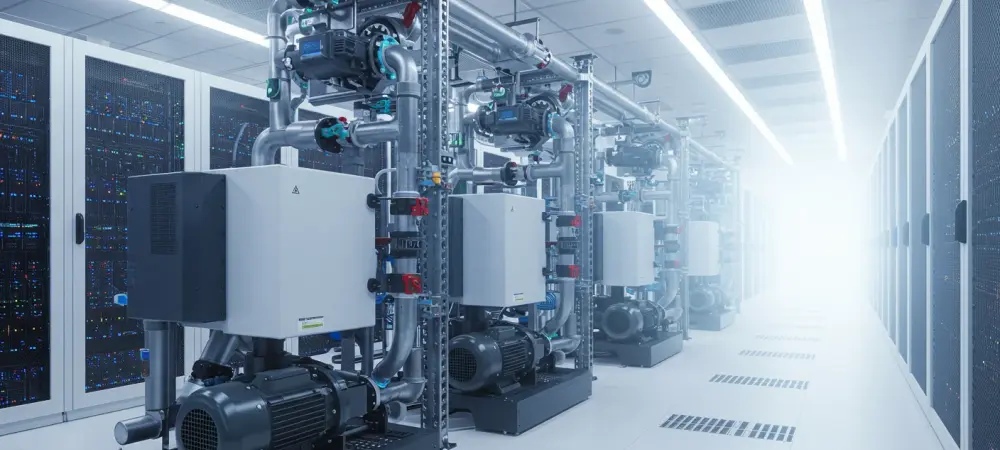
In the high-stakes realm of data centers, where artificial intelligence and high-performance computing drive continuous growth, temperature regulation is critical. The rise of thermal challenges has highlighted the limitations of traditional air cooling, propelling liquid cooling methods into the spotlight. This shift underscores a broader movement toward sustainable practices that meet the energy and environmental demands of tomorrow. The following analysis explores the rise of liquid cooling, its real-world applications, expert perspectives, and future prospects, painting a comprehensive picture of its role in transforming data center operations.
The Emergence of Liquid Cooling
Rising Temperatures and Energy Demands
Today’s data centers face unprecedented thermal pressures due to escalating processing loads. With global energy demands from data centers increasing, existing cooling methods often struggle to keep pace. Liquid cooling emerges as a superior alternative, boasting heat transfer capabilities roughly 3,500 times more efficient than those of air. Statistics reveal a 45% improvement in power usage effectiveness with liquid systems, making them a compelling choice for next-generation data centers committed to sustainability and efficiency.
Real-World Applications of Liquid Cooling
Leading companies are embedding liquid cooling technology into their operations as they seek to balance performance with environmental accountability. Notable examples include Microsoft’s initiative to integrate cold-plate liquid cooling into its data centers, reducing greenhouse gas emissions and cutting water usage by up to 50%. Another innovation, liquid-to-air technology, bridges liquid systems with existing air infrastructure, reducing operational costs while facilitating seamless scalability.
Expert Insights on Liquid Cooling
Industry experts assert that liquid cooling’s transformative potential cannot be overstated. Thought leaders emphasize that this technology is essential for managing the energy consumption challenges inherent in today’s data-centric world. However, they caution that deploying liquid cooling systems requires overcoming barriers such as initial retrofit costs, environmental considerations, and ongoing maintenance demands. Expert opinions converge on the importance of precision in fluid management, a pivotal factor in safeguarding operational integrity and maximizing system lifespans.
Future Prospects of Liquid Cooling
Looking ahead, liquid cooling is expected to shape the data center landscape. Its applications are set to expand, particularly in energy storage, where enhanced thermal management could lead to denser and more efficient batteries. Though not without challenges, including the need for innovative solutions to manage maintenance demands, this technology promises to revolutionize not only cooling efficiencies but also energy savings and environmental impact. The prospect of integrating recycled waste heat into various applications, such as agriculture, presents an exciting opportunity for broader industry applications.
Conclusion
Liquid cooling has emerged as a pivotal player in data center management, offering promising results for energy and environmental sustainability. It influences strategies aimed at aligning high-performance demands with eco-conscious practices. Despite challenges like maintenance complexities and initial costs, the potential benefits for efficiency, scalability, and carbon footprint reduction become evident. Embracing precision and innovation in liquid cooling allows for the exploration of its full capabilities. Its ability to support operational and environmental goals demonstrates that liquid cooling operates as a foundational element on the road toward sustainable data centers.