

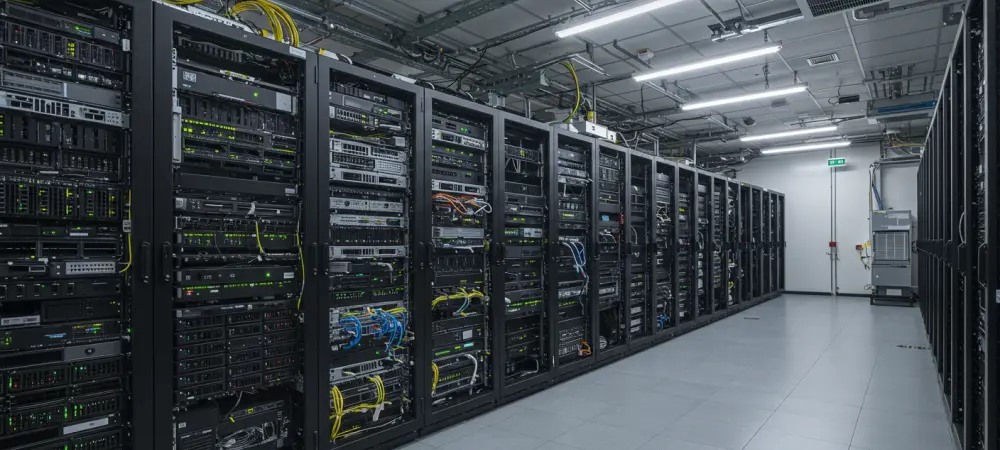
Amid evolving demands in the tech world, particularly the increasing emphasis on AI, Google has reevaluated its strategic initiatives. The recent decision to cease plans for constructing a data center on a 30-hectare site in the Berlin-Brandenburg area provides striking insights into the broader market dynamics and infrastructural challenges faced by tech giants worldwide. Understanding the implications of this move unveils essential trends and future directions in technology infrastructure development.
Shaping the Future: Context and Market Dynamics
As industries gravitate towards AI and other advanced technologies, infrastructure demands have exponentially intensified. Google’s decision reflects significant shifts not only in its corporate strategy but also in the broader tech landscape’s evolution. Emphasizing AI infrastructure, which demands robust power and cooling capabilities, companies experience pressures to innovate and reassess operational priorities. Google’s existing activities in the Berlin-Brandenburg and Frankfurt areas remain crucial, illustrating its commitment despite the site withdrawal.
In-Depth Analysis: Current Trends and Future Projections
Navigating Energy and Technological Demands
Currently, the rapid pace of AI development outstrips the capabilities of many existing infrastructures. In regions like Berlin-Brandenburg, power insufficiencies have pushed companies to rethink expansion strategies. The power outage in Frankfurt’s europe-west3-c zone exemplifies ongoing challenges, highlighting a pivotal need for innovation in energy solutions and data operations. Companies must align new technological advancements with infrastructure capabilities to ensure growth.
Strategic Adaptations and Regional Exploration
Google’s continued exploration of Frankfurt, particularly its Hanau data center utilizing state-of-the-art cooling systems, demonstrates adaptability to infrastructural limitations. The company’s strategic redirection towards more feasible locations in the Rhine-Main region showcases the balancing act between operational needs and regional constraints. This pivot unveils an industry trend of reorganizing infrastructural strategies to keep abreast of rapidly evolving technological demands.
Unraveling Regional Disparities and Innovation Thresholds
Variability in power grids and regulatory policies across Germany defines the landscape for data center development. Understanding these regional disparities can drive innovation and collaboration among stakeholders to mitigate constraints. A focus on maximizing the capabilities of power supply regions can lead to harmonized strategies that unlock new potentials for large-scale tech projects. Addressing these disparities head-on is essential to foster conducive environments for technological innovation.
Reflections and Strategic Pathways
The implications of Google’s halted plans in Berlin point towards actionable insights for stakeholders across the tech industry. Evaluating infrastructural capabilities and fostering collaborations for regional upgrade projects will be crucial for sustainable growth. Companies must remain agile and forward-thinking, continuously reassessing priorities to align with evolving technologies. Emphasizing a strategic approach that considers both scalability and sustainability may lay the groundwork for overcoming infrastructural challenges while harnessing AI advancements effectively. Understanding these dynamics implies that companies should adopt innovative measures and engage in partnerships that push the boundaries of regional infrastructural capabilities. By doing so, they can carve a robust and resilient path amidst the ever-evolving tech landscape.