

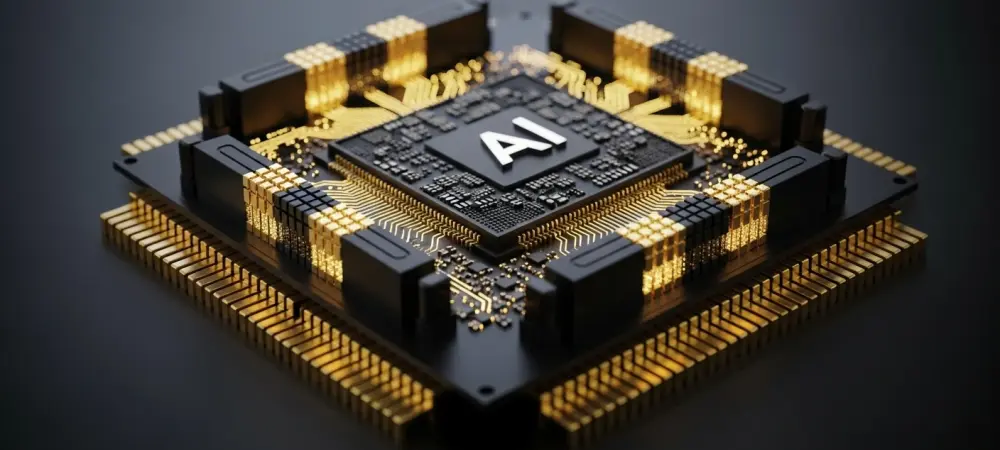
The global race for artificial intelligence supremacy has officially entered a high-stakes era where automotive manufacturers must choose between relying on third-party general silicon or investing billions into custom-made chips that define the very limits of machine learning performance. Tesla has decisively chosen the latter path, confirming the successful “tape out” of its revolutionary A15 AI chip. This transition represents a fundamental shift for the company, moving beyond vehicle manufacturing to become a premier architect in the semiconductor industry.
While the market focused on traditional silicon providers, Tesla engineered a specialized powerhouse designed to meet the rigorous demands of real-world robotics. The A15 is not merely a component for a vehicle dashboard; it is a foundational piece of infrastructure that enables vehicles to navigate complex environments with human-like intuition. This development marks a tectonic shift in the hardware landscape, proving that bespoke silicon is the new frontier for companies seeking total control over their technological destiny.
Breaking the Silicon Ceiling in the Race for Autonomy
Tesla is no longer just a car company as it evolves into a specialized semiconductor architect. While the world watched the sky-high valuation of NVIDIA, the official confirmation of the A15 chip signals a move toward total hardware independence. This chip provides a bespoke solution for the staggering computational demands of real-world artificial intelligence, moving away from the constraints of general-purpose hardware. The shift toward custom silicon allows for a deeper synergy between software and hardware. By controlling every transistor, the company ensures that the neural networks driving its fleet operate without the latency typical of generic chips. This vertical integration is the key to achieving Level 5 autonomy, as it provides the raw processing power required to interpret trillions of data points in real time.
The Strategic Necessity of Custom-Built Semiconductors
The global reliance on third-party hardware created a bottleneck for companies pushing the limits of neural networks. By developing the A15 as the successor to Hardware 4, Tesla aims to sever its dependency on external suppliers. This strategic pivot addresses a critical industry trend where application-specific integrated circuits (ASICs) replace general-purpose GPUs to handle driving-specific tasks with maximum efficiency.
Furthermore, building in-house silicon allows for a faster development cycle that is uncoupled from the release schedules of external vendors. This independence ensures that hardware upgrades occur exactly when the software requires them, maintaining a continuous loop of improvement. The move toward ASICs reflects a broader industry realization that generalized solutions are no longer sufficient for the specific, high-intensity needs of autonomous navigation.
Technical Prowess: Comparing the A15 to Previous Generation Hardware
The performance metrics of the A15 suggest a monumental leap that dwarfs its predecessor, Hardware 4. With a projected 40-fold overall improvement, the chip is built to deliver roughly 2,500 Tera Operations Per Second (TOPS) of AI compute power. This massive increase is supported by a significant hardware overhaul, including 144 GB of memory and twelve specialized SK hynix DRAM modules that provide the bandwidth necessary for high-speed processing.
These specifications highlight a design optimized for high-capacity throughput, ensuring that the next generation of Full Self-Driving can process visual data with unprecedented speed. The architecture focuses on reducing data movement bottlenecks, which is often the primary constraint in AI training. By integrating high-bandwidth memory directly onto the package, the A15 achieves a level of efficiency that traditional setups simply cannot match.
Disrupting the NVIDIA Monolith with Bespoke Architectures
Tesla’s strategy directly challenges NVIDIA’s current market dominance by offering a specialized value proposition based on superior performance-per-watt. The A15 will be deployed in two distinct configurations: a single-SOC design aimed at NVIDIA’s Hopper architecture and a dual-SOC setup intended to compete with the Blackwell architecture. By focusing on performance-per-dollar, the company intends to achieve top-tier AI capabilities at a lower production cost and thermal footprint.
Unlike general-purpose chips that must cater to a variety of industries, the A15 is stripped of unnecessary features to focus entirely on vision-based neural networks. This lean architecture results in lower power consumption, which is vital for maintaining vehicle range while running intensive AI tasks. This disruption forces the industry to reconsider the utility of versatile but power-hungry data center chips in mobile applications.
From Fabrication to FSD: The Long-Term Roadmap for Tesla’s AI Infrastructure
The rollout of the A15 is only the beginning of an aggressive multi-year roadmap that includes the “TeraFab” initiative, a plan to consolidate chip fabrication and advanced packaging under a unified infrastructure. With high-volume production slated for 2027 through partners like TSMC and Samsung, the groundwork for the A16 chip and the Dojo3 supercomputer is already established. This proactive strategy ensured that as autonomous technology evolved, the underlying hardware supported the next generation of neural network complexity.
The transition toward a fully integrated hardware ecosystem proved to be the decisive factor in scaling autonomous systems. Industry analysts noted that the move to the A15 allowed for a smoother deployment of FSD features across global markets, reducing the cost of compute by a significant margin. Ultimately, the development of these bespoke architectures secured a competitive advantage that prioritized efficiency and long-term scalability in the race for true machine intelligence.