

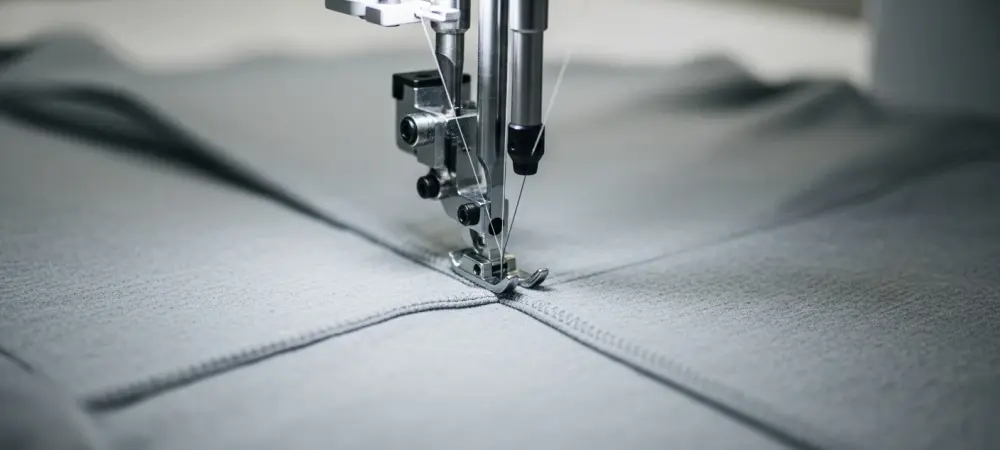
Walking through a modern clothing factory today reveals a surprising scene where high-tech digital design software meets the century-old manual labor of a person sitting at a sewing machine; this juxtaposition highlights the stubborn resistance of fabric to full automation. While industrial robots have mastered the assembly of complex automobiles and the sorting of high-speed logistics for decades, the simple act of sewing a shirt remains a stronghold of manual labor.
This manufacturing lag stems from the unpredictable nature of flexible goods. Unlike a rigid car door, materials like cotton jersey or silk fold and stretch in ways that historically baffled even the most advanced sensors, leaving the apparel sector as one of the last major holdouts of the industrial revolution. The primary hurdle is not a lack of mechanical power, but the inherent complexity of soft materials that refuse to stay still during high-speed production.
The Limp Fabric Problem: Why Your T-Shirt Still Requires a Human Touch
The physics of fabric manipulation represents a significant engineering challenge that has delayed the robotics revolution in fashion. When a robotic arm picks up a piece of denim, the material drapes and deforms unpredictably, making it nearly impossible for a standard needle to hit a precise seam without human guidance. This mechanical uncertainty requires constant micro-adjustments that human fingers perform instinctively, but sensors often fail to replicate at industrial speeds. Consequently, the global apparel industry has remained anchored to manual labor, necessitating a massive workforce to handle the billions of garments produced annually. While automated cutting machines have become standard, the actual joining of fabric pieces still depends on the hand-eye coordination of skilled operators. This reliance has prevented the kind of exponential productivity gains seen in electronics or automotive manufacturing, keeping the sector labor-intensive and slow to innovate.
The Historical Stagnation of Apparel Assembly and the Modern Push for Change
Reliance on manual labor has historically shaped a global footprint defined by a race to the bottom for the lowest wages. This model created brittle supply chains that are often environmentally taxing due to the extreme distances garments must travel from factory to consumer. However, rising costs in traditional manufacturing hubs and a renewed desire for supply chain resilience have forced a total re-evaluation of how clothes are made. The industry reached a tipping point where economic necessity finally outweighed the technical hurdles of handling textiles. Brands now face immense pressure to increase transparency and decrease lead times, making the old model of offshore manual production increasingly risky. This shift is driven by a post-pandemic realization that geographic proximity and speed are more valuable than the lowest possible unit cost, sparking a surge in automation research.
From Adhesives to Airflow: The New Technologies Tackling Textile Complexity
Recent breakthroughs are bypassing traditional limitations through innovative engineering that looks beyond the needle and thread. California-based CreateMe pioneered a move toward industrial adhesives, bonding fabrics together to eliminate the mechanical complexity of stitching entirely. This method is already proving successful for basics like underwear, where seamless construction is a benefit rather than a compromise, allowing machines to bypass the difficult task of fabric alignment.
For garments that demand traditional aesthetics, such as denim jeans, Softwear Automation refined robotic sewing to handle heavy fabrics with high-speed precision. Meanwhile, the German firm Robotextile solved the material handling puzzle with airflow technology, using specialized robotic grippers that lift delicate layers without damaging the fibers. These diverse technological paths demonstrate that the “one-size-fits-all” approach to automation is being replaced by specialized solutions tailored to specific fabric types.
The Nearshoring Catalyst: Expert Insights on Sustainability and Localized Production
Industry analysts agree that robotics will serve as the primary engine for nearshoring, allowing brands to pull production back to Western markets like the United States and the United Kingdom. This shift represents a strategic move to meet consumer demand for locally made goods and ethical transparency. By bringing factories closer to the point of sale, companies can respond to trends in days rather than months, effectively ending the era of long-haul shipping.
The environmental implications of this technological shift are equally profound for the planet. Research from the Technical University of Leoben suggests that localized, automated manufacturing could reduce a garment’s carbon footprint by up to 45%. By eliminating the need for transoceanic transport and adopting on-demand manufacturing models, companies can drastically reduce the massive textile waste generated by overproduction and unsold inventory.
Strategies for a Hybrid Future: Integrating Automated Systems into Global Apparel Chains
The integration of automated systems into global apparel chains offered a structured path forward rather than an abrupt replacement of the global workforce. Brands prioritized high-volume, low-complexity items like t-shirts where adhesive bonding provided the highest immediate return on investment. This hybrid strategy flourished by utilizing robotic systems for repetitive assembly while retaining human artisans for complex tailoring and high-fashion design.
The successful implementation of these systems ultimately dismantled the risks of brittle supply chains and excessive logistics waste. By strategically balancing technological efficiency with the socioeconomic needs of workers, manufacturers built a more sustainable and responsive fashion ecosystem. This transition ensured that localized production became a permanent reality, proving that the integration of robotics was the essential key to a more ethical and resilient global industry.