

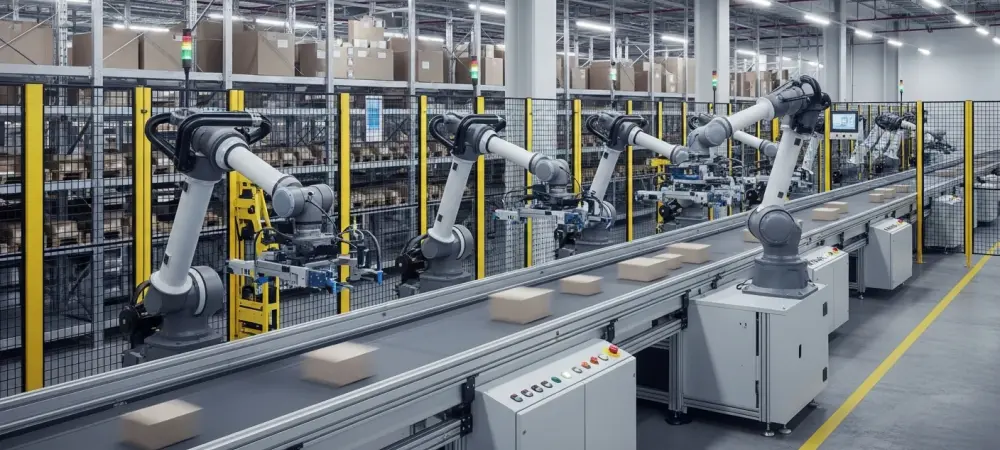
Watching a machine perform flawlessly for thirty seconds in a carefully curated marketing video is one thing, but witnessing that same hardware tackle a grueling eight-hour shift without a single interruption reveals the true state of modern automation. Plus One Robotics recently broadcasted an unfiltered, continuous stream of its parcel induction system to prove its operational reliability. This live event served as a definitive answer to skeptics who are tired of seeing robots only in controlled, idealized environments.
The End of the “Smoke and Mirrors” Era in Robotics
For years, the robotics sector has struggled with a reputation for “vaporware” and produced promotional content that glosses over technical glitches. Many companies rely on post-production editing to hide manual resets or software hang-ups that occur behind the scenes. By opting for a live broadcast on YouTube and LinkedIn, the firm stripped away these layers of artifice to present a raw look at industrial AI.
The absence of a “reset” button forced the technology to stand on its own merits under the watchful eyes of thousands. This move signaled a departure from traditional marketing, prioritizing authenticity over aesthetic perfection. It proved that the system could handle the monotonous yet demanding requirements of a full warehouse shift without the intervention typically hidden in shorter demonstrations.
Navigating the High-Stakes World of Modern E-Commerce Logistics
In the current landscape of 2026, the pressure on global logistics has reached a breaking point due to a shrinking labor pool. Parcel carriers are no longer just looking for innovation; they are searching for survival strategies to maintain shrinking delivery windows. Automation has transitioned from a luxury to a fundamental necessity for any facility hoping to remain competitive.
The transition from a sterile laboratory to the unpredictable chaos of a warehouse floor remains a significant hurdle for physical AI. Systems must adapt to fluctuating lighting and the sheer volume of packages that never cease. This demonstration highlighted how robust AI must be to survive the relentless pace of a modern distribution center where every second of downtime impacts the bottom line.
Benchmarking Success: 19,784 Picks Under Sustained Pressure
The performance metrics gathered during the eight-hour window provided a transparent baseline for operational efficiency. Recording 19,784 successful picks, the robotic arm maintained an average throughput of 2,488 items per hour. This output reflects the system’s ability to process a diverse stream of parcels with a consistent 1.45-second pick time, a speed that rivals human capabilities over a long duration.
Handling variability is where most automated systems falter, yet this system navigated a complex mix of envelopes and polybags. The raw data showed that the AI could perceive and react to different package orientations without hesitation. This level of sustained performance offered a clear view of how high-speed induction can be integrated into existing sorting lines.
Shifting Industry Standards from Marketing Polish to Measurable ROI
CEO Erik Nieves has been vocal about the need to demystify the logistics process for end-users who are increasingly data-driven. Sophisticated clients in the parcel industry are less impressed by flashy maneuvers and more concerned with uptime and the long-term return on investment. By providing an open window into the system’s performance, the company shifted the conversation toward technical validation.
This commitment to transparency set a new benchmark for how automation vendors should interact with prospective partners. When companies prioritize raw performance data over marketing polish, they build a foundation of trust with carriers who cannot afford to gamble on unproven tech. The focus remained squarely on how the integration of AI directly solves the primary bottlenecks in the global supply chain.
A Framework for Evaluating Automation Readiness in Real-World Environments
To determine if an AI-driven system was ready for deployment, stakeholders prioritized sustained operational uptime during peak-load simulations. They examined the ability to handle high-variability inventory without manual intervention, which confirmed that the software was truly autonomous in its decision-making. These markers provided a clear roadmap for organizations looking to scale their automated infrastructure.
Finally, the availability of real-time, unfiltered performance dashboards became the gold standard for verifying claims. Stakeholders recognized that true reliability required a system that remained transparent even during challenging workflows. This rigorous approach to evaluation ensured that the transition from pilot programs to full-scale rollouts was backed by empirical evidence rather than optimistic projections.