

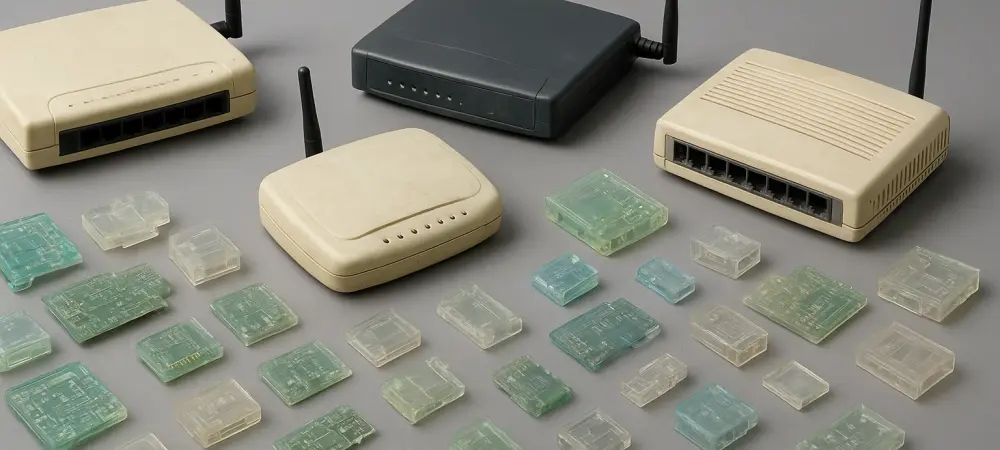
The first-generation eero systems now act as weak links in mesh networks, potentially degrading the performance and security of more modern connected nodes. The rapid evolution of digital infrastructure has turned the “set it and forget it” mentality regarding home routers into a significant liability that compromises the integrity of personal data. While a networking device might still power on and broadcast a signal, its physical functionality does not guarantee its digital viability in the high-demand environment of 2026. A dangerous discrepancy has emerged between aging hardware and the rigorous demands of modern cybersecurity, requiring a proactive approach to hardware lifecycle management. Many users continue to rely on equipment that has bypassed its safe and effective lifespan, leaving their networks exposed to sophisticated threats that did not exist when these devices were manufactured. To maintain a secure and efficient digital environment, it is essential to identify and decommission hardware that lacks active manufacturer support, fails to meet current encryption standards, or restricts modern throughput speeds. This transition is not merely about achieving higher speeds but about establishing a resilient foundation for the dozens of connected devices that now inhabit the modern household.
The Decline of Legacy Ecosystems
The End of the Apple AirPort Era
Apple’s discontinued networking line, including the AirPort Express and AirPort Extreme, once represented the gold standard for consumer convenience and aesthetic design, but their presence in a 2026 network is increasingly problematic. The AirPort Express is particularly concerning because it relies on the 802.11n standard, which is now two generations behind current mainstream technology used by modern smartphones and laptops. Beyond wireless limitations, the AirPort Express is crippled by its 10/100 Ethernet ports, creating a severe bottleneck for modern fiber or cable plans that regularly exceed these speeds. While the AirPort Extreme offered slightly better specifications with Wi-Fi 5 and Gigabit Ethernet, its lack of security patches for over seven years makes it a high-risk entry point for malicious actors. These devices have shifted from being reliable tools to static targets in a dynamic and hostile threat landscape where unpatched vulnerabilities are actively exploited. The lack of software updates means that any newly discovered flaws in the WPA2 encryption protocol remain open, providing a permanent gateway for unauthorized access to the entire home network.
Legacy Connectivity and Performance Bottlenecks
The persistence of legacy Apple hardware in modern homes often leads to inexplicable performance issues that users mistakenly attribute to their internet service provider. Because these devices cannot efficiently handle the dense traffic patterns of 2026, they often cause high latency and packet loss during simultaneous high-definition streams or gaming sessions. The hardware was designed for an era when a household might have had five connected devices, whereas the modern average has soared past twenty. This density causes significant airtime contention that the older processors in AirPort devices simply cannot manage, leading to frequent disconnects and sluggish response times. Furthermore, the absence of modern beamforming and MU-MIMO technologies means that the signal quality drops off significantly as more devices connect to the network. Replacing these units is a necessary step to unlock the actual bandwidth provided by modern internet subscriptions and to ensure that the wireless environment remains stable across all rooms. The transition to current hardware allows for better spectrum management and the use of the 6GHz band, which remains clear of the interference that plagues older 2.4GHz and 5GHz bands.
Risks of the AirPort Time Capsule
The AirPort Time Capsule shares the same end-of-life status as its siblings, despite its unique integration of a router and a backup hard drive that many users still find convenient. Using this device in 2026 poses a double risk: it compromises network security while simultaneously threatening the integrity of critical stored data. Mechanical hard drives within these aging units are prone to failure after years of continuous operation, making them an unreliable choice for backups compared to modern solid-state or cloud-based solutions. If the internal drive fails, the user loses not only their backup history but also their primary network gateway, leading to total digital paralysis. Furthermore, the backup speeds over the outdated Wi-Fi 5 or 10/100 Ethernet connections are agonizingly slow compared to modern standards, often causing backup processes to fail before they can complete. The security implications are equally dire, as the firmware governing the network-attached storage features has not been audited for modern exploits in nearly a decade, leaving sensitive personal files vulnerable to network-based attacks.
Reliability Concerns with Integrated Storage
Relying on a decade-old mechanical drive for data redundancy is a gamble that most professional technicians advise against due to the high probability of head crashes or motor failure. The heat generated by the internal power supply in the Time Capsule further accelerates the degradation of the storage platters, leading to silent data corruption that might only be discovered when a restoration is desperately needed. Modern Network Attached Storage solutions have moved toward modular designs where drives can be easily swapped and upgraded, a feature the Time Capsule lacks entirely. By migrating to a dedicated NAS or a modern router with a high-speed USB 3.0 port, users can achieve significantly higher data transfer rates and better protection against drive failure. These newer systems also offer advanced encryption for stored data at rest, a critical feature that the legacy Apple hardware does not provide. Transitioning away from the Time Capsule ensures that the network gateway and the data backup strategy are handled by specialized, supported hardware that receives regular security definitions. This separation of duties prevents a single hardware failure from compromising both the connectivity and the data history of the household.
The Obsolescence of Early Mesh Pioneers
Google’s Experimental Hardware Heritage
Google’s entry into the networking market began with the OnHub, a collaborative effort with TP-Link and ASUS that is now more than a decade old and entirely obsolete. Official support for OnHub ceased in late 2021, meaning these devices have operated without vital software updates for nearly five years in a rapidly evolving threat environment. Continuing to use an OnHub is an objective risk, as any newly discovered vulnerabilities in its operating system remain permanently unpatched by the manufacturer. These devices also lack the advanced mesh capabilities of newer systems, often resulting in “dead zones” and poor handoff between nodes as a user moves through their home. While the cylindrical design was revolutionary at the time, the internal antennas are tuned for older wireless frequencies that struggle with the interference found in modern residential areas. The processing power of the OnHub is also insufficient for the deep packet inspection and parental controls that modern users expect from their home gateway. Retirement of these experimental units is mandatory for anyone seeking a stable, modern internet experience that can support the high-speed requirements of 2026 applications.
The Limitation of First-Generation Google Wifi
The original Google Wifi system, launched in 2016, is nearing its own decade of service and no longer meets the performance benchmarks required for a high-speed home. Although it brought mesh networking to a mass audience, its AC1200 speeds are now considered sluggish for high-definition streaming, virtual reality, and large-scale cloud synchronization. With Google typically providing software updates for only five years post-release, this original system has long since passed the window of guaranteed stability and security. The hardware lacks support for Wi-Fi 6, meaning it cannot take advantage of the increased efficiency and battery-saving features offered to modern smartphones and tablets. Users often experience “bottlenecking” when multiple devices attempt to stream 4K or 8K content simultaneously, as the dual-band architecture of the original Google Wifi becomes saturated. Furthermore, the lack of a dedicated backhaul channel means that the nodes must share the same wireless airwaves for both device communication and inter-node data transfer, further reducing available speeds. Upgrading to the newer Nest Wifi Pro or similar Wi-Fi 6E/7 systems provides the necessary bandwidth and security features to support the next generation of connected devices.
First-Generation eero Systems and Mesh Performance
The eero system pioneered the movement toward painless home Wi-Fi, but its first-generation units have become legacy hardware that hinders the efficiency of modern setups. These AC1300 nodes have had their support terminated for several years, creating a security gap in what was once a highly secure ecosystem. In a mixed mesh environment, these older units act as weak links, potentially degrading the performance of more modern eero 6 or eero 7 nodes by forcing them to communicate using older, slower protocols. This backward compatibility, while convenient for a transition period, eventually becomes a liability as the legacy nodes cannot handle the same level of encryption or traffic management as the newer hardware. The first-generation units also lack the hardware-level security modules found in modern iterations, making them more susceptible to advanced persistent threats. Furthermore, the range and penetration of the original eero nodes are significantly lower than current models, leading to inconsistent coverage in larger homes. Replacing these aging components ensures that the entire mesh fabric is operating on a unified, high-performance standard that can provide seamless roaming and consistent speeds.
Impact of Legacy Nodes on Network Uniformity
Maintaining a uniform hardware standard across a mesh network is critical for ensuring that security policies and performance optimizations are applied consistently to all connected devices. When a first-generation node is part of a modern network, it creates a “lowest common denominator” scenario where the entire system may revert to older communication standards to maintain compatibility. This can disable advanced features like WPA3 encryption or targeted beamforming, leaving the network less secure and more prone to interference. The management software must also work harder to balance traffic between nodes with vastly different processing capabilities, often leading to glitches in the handoff process. Users might notice that their devices stay connected to a slower, distant node rather than switching to a closer, faster one because the legacy hardware cannot negotiate the handoff efficiently. By retiring these first-generation units, homeowners can ensure that their network utilizes the full suite of optimization tools provided by modern eero firmware. This results in lower latency for time-sensitive applications like video conferencing and online gaming, where even minor delays can cause significant disruption to the user experience.
Moving Beyond Outdated Technical Standards
The Departure from Wi-Fi 5 Standards
One of the most significant shifts in the 2026 landscape is the transition away from Wi-Fi 5 as the primary standard for home and business connectivity. Introduced in 2013, Wi-Fi 5 was designed for a digital era that preceded the explosion of smart home sensors, high-resolution cameras, and ubiquitous cloud computing. Just as a consumer would not expect a smartphone from that era to handle modern applications, they should not expect a router from that period to manage current household traffic. Newer standards like Wi-Fi 6 and Wi-Fi 7 offer superior congestion management through technologies like OFDMA, which allows the router to serve multiple devices in a single transmission. This efficiency is necessary for homes filled with smart devices that frequently send small bursts of data, as it prevents these smaller devices from “clogging” the airwaves. Wi-Fi 5 routers struggle to manage this many simultaneous connections, often resulting in a “traffic jam” effect where even high-speed devices experience significant delays. Moving to a modern standard ensures that the network can scale with the increasing number of connected items in the home without sacrificing performance.
Managing Congestion in Modern Smart Homes
The sheer volume of contemporary digital life requires a level of intelligence in spectrum management that older Wi-Fi 5 routers simply do not possess. Modern homes often contain dozens of IoT devices, from light bulbs and thermostats to security cameras and appliances, all of which compete for limited wireless bandwidth. Wi-Fi 6 and 7 introduced better ways to handle this “noisy” environment, including BSS Coloring, which helps the router ignore interference from neighboring networks. In contrast, older hardware is easily disrupted by nearby routers, leading to dropped connections and reduced range. The lower latency provided by modern standards is also essential for the growing trend of cloud-based gaming and interactive media, where every millisecond counts. Furthermore, the improved power efficiency of newer standards helps extend the battery life of mobile devices by allowing them to “sleep” more effectively between transmissions. Upgrading to a newer standard is not just about seeking faster peak speeds; it is about ensuring that the network remains reliable and responsive under the heavy load of a fully connected household.
The Death of Sub-Gigabit Ethernet
A consensus among technology experts in 2026 is that 10/100 Fast Ethernet is effectively dead as a viable standard for home networking. Because even entry-level internet service provider plans now frequently exceed 100 Mbps, hardware limited to these older ports acts as a physical dam that restricts the flow of data. Any networking hub, switch, or router that cannot facilitate at least 1,000 Mbps prevents the user from accessing the full bandwidth they are paying for, leading to wasted expenditure. Many legacy devices, including older smart home hubs and entry-level routers, still utilize these outdated ports, which can cause significant slowdowns for wired devices. Even if the wireless side of a router is fast, a 100 Mbps WAN port will limit the entire home’s internet speed to a fraction of its potential. This bottleneck is particularly noticeable during large file downloads, operating system updates, or when multiple people are using the internet simultaneously. Transitioning to Gigabit or Multi-Gigabit Ethernet ports is a fundamental requirement for any network intended to serve a modern household effectively.
Bandwidth Barriers in Legacy Wired Connections
The physical limitation of a 100 Mbps port cannot be overcome with software updates or configuration changes, making replacement the only viable solution for performance issues. In 2026, the file sizes for games, movies, and professional media have grown so large that a sub-gigabit connection is no longer practical for daily use. For example, downloading a modern high-definition game over a 100 Mbps connection could take hours, whereas a gigabit connection would complete the task in minutes. Furthermore, as local network traffic increases—such as streaming content from a media server to a television—the lack of gigabit speeds can cause buffering and playback errors. Many older switches and “value” routers from the mid-2010s are still in service, quietly limiting the performance of much newer devices connected to them. Replacing these components with modern, inexpensive gigabit switches is one of the most cost-effective ways to improve network reliability. This ensures that the wired backbone of the home is capable of supporting the high-speed wireless access points and client devices that rely on it for consistent data delivery.
Prioritizing Security and Future Growth
The Myth of “If It Ain’t Broke”
A router is not a passive appliance like a toaster; it is a critical gateway that requires constant vigilance and active software maintenance to remain secure. The common argument that a device should be kept because it is still “working” ignores the reality of silent vulnerabilities that do not manifest as obvious hardware failures. Once a manufacturer stops scanning for and repairing software holes, an old router becomes a permanent liability that can facilitate unauthorized access to every other device in the home. Malicious actors specifically target older, unpatched hardware because it represents the path of least resistance for infiltrating a network. These “zombie” routers can be co-opted into botnets, used to monitor personal traffic, or serve as a jumping-off point for ransomware attacks. Privacy risks are also heightened on older gear that lacks modern encryption protocols like WPA3, which provides much stronger protection against password-cracking attempts. Given that high-quality, secure routers are now available for under $100, the financial barrier to upgrading is minimal compared to the potential cost of a total network breach.
Silent Vulnerabilities in Abandoned Hardware
The shift in cyber-threat landscapes means that hardware from only a few years ago may lack the fundamental architecture needed to defend against modern attack vectors. For instance, many legacy routers lack secure boot processes or hardware-based encryption modules, making it easier for attackers to install persistent malware that survives a factory reset. Without regular firmware updates, these devices cannot respond to new types of exploits that leverage flaws in common networking protocols. Furthermore, the administrative interfaces of older routers often use outdated web standards that are themselves vulnerable to cross-site scripting and other web-based attacks. This means that simply visiting a compromised website could allow an attacker to gain control of a legacy router. Modern hardware is designed with a “security-first” mindset, featuring automatic updates and cloud-based threat monitoring that can block malicious traffic before it reaches the internal network. Retiring abandoned hardware is a necessary act of digital hygiene that protects not only the individual household but also the broader internet ecosystem from being exploited by malicious actors.
Sustainable Strategies for Modern Infrastructure
For users seeking longevity and a higher degree of control, a modular approach like the Ubiquiti Unifi ecosystem proved to be a highly effective strategy for 2026. By separating the core gateway from the wireless access points, users successfully upgraded their Wi-Fi standards over the last year without needing to replace their entire network infrastructure. This prosumer strategy offered a more sustainable lifecycle and greater versatility for those who wanted a robust, professional-grade home network. The analysis of recent network trends indicated that modular systems allowed for more frequent, targeted upgrades that kept pace with specific technological advancements. For the average consumer, modern mesh systems like the eero 6 or eero 7 provided the best balance of simplicity and security, with guaranteed updates through at least 2030. These systems scaled easily as household needs grew, ensuring that the network remained resilient against the evolving demands of high-bandwidth applications. The transition to supported hardware allowed users to enjoy the full performance of their internet connections while resting assured that their digital gateways were protected by the latest defensive measures.
Actionable Next Steps for Hardware Retirement
The process of auditing and replacing obsolete networking hardware was the most significant maintenance task for responsible digital citizens over the past twelve months. Experts recommended a complete inventory of all networking hubs, switches, and access points to identify any units lacking WPA3 support or Gigabit Ethernet ports. The transition involved decommissioning legendary but outdated devices like the Apple AirPort line and first-generation mesh nodes, which had become liabilities in the modern threat landscape. By moving to Wi-Fi 6 or Wi-Fi 7 standards, households successfully mitigated the congestion issues caused by the proliferation of smart home devices. The adoption of modern security protocols provided a necessary layer of defense against sophisticated cyber-attacks that targeted legacy infrastructure. Looking forward, the focus remained on selecting hardware with clear, long-term support commitments from manufacturers to avoid future obsolescence. This proactive approach to network management ensured that the foundation of the modern smart home remained secure, efficient, and capable of supporting future innovations in digital connectivity. The shift toward actively maintained and technically current hardware represented a fundamental requirement for maintaining privacy and performance in the connected world of 2026.