

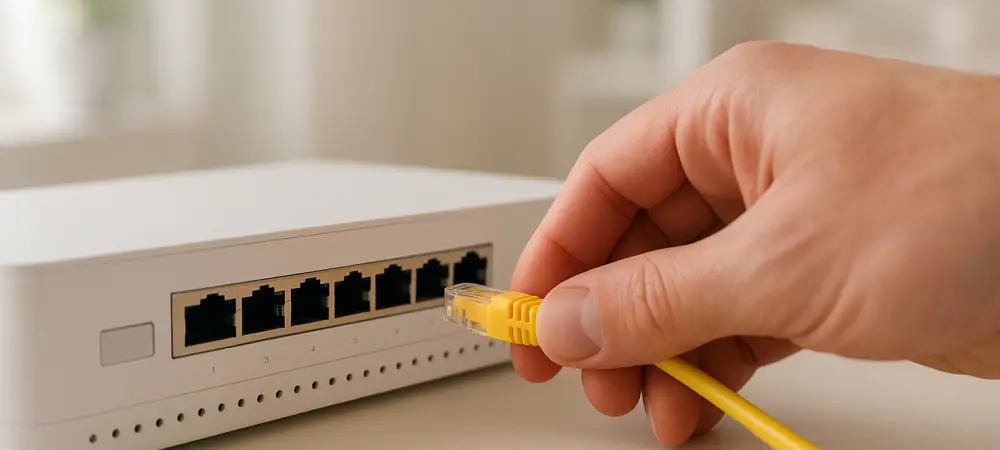
The transition to a wired mesh setup prioritizes sustained performance and objective utility over the convenience of a fully wireless but compromised configuration. While the promise of seamless whole-home connectivity has driven the massive adoption of mesh technology, the underlying reality often involves a significant trade-off in actual throughput. Users frequently encounter a frustrating paradox where their mobile devices display full signal strength, yet latency spikes and throughput fluctuations persist during critical tasks. This discrepancy is largely attributed to the invisible overhead of managing node communication. In a typical consumer environment, the struggle to maintain a stable link between the primary gateway and remote satellites often consumes the very bandwidth intended for the end-user. By shifting the focus away from the allure of purely wireless freedom and toward the reliability of physical infrastructure, it becomes possible to unlock the true potential of modern networking hardware without the prohibitive costs.
Understanding the Wireless Backhaul Bottleneck
Standard mesh systems rely on a mechanism where nodes relay data back to the primary router using the same frequencies that connect to client devices. Because wireless spectrum is a finite resource, the node is forced to partition its available airtime, often resulting in a scenario where the effective bandwidth is halved at each hop. This internal competition for the 5GHz or 6GHz bands ensures that even high-end hardware remains susceptible to environmental interference and congestion from neighboring networks. The “middleman” effect is not merely a minor inefficiency; it is a fundamental architectural limitation that prevents wireless mesh systems from achieving the low-latency performance required for competitive gaming or real-time professional collaboration. Even if a node is positioned perfectly, the inherent physics of shared wireless backhaul will always introduce a layer of delay.
The impact of this congestion becomes particularly pronounced when multiple household members engage in high-demand activities like 4K video conferencing or large cloud-based file transfers. When the backhaul link is saturated, the entire network suffers from bufferbloat, a condition where data packets are queued up, leading to inconsistent response times. While the industry has attempted to mitigate these issues through the introduction of tri-band systems—incorporating dedicated radios specifically for node-to-node communication—these solutions are often inefficient and prohibitively expensive. Physical obstructions such as thick drywall, metal appliances, and floor insulation further degrade the quality of these dedicated wireless links, making them unreliable compared to a hardwired connection. Ultimately, the reliance on airwaves for infrastructure tasks introduces a variable of uncertainty that cannot be fully managed by software optimizations or expensive radio arrays, regardless of the marketing claims.
Strategic Implementation: The Superiority of Wired Connections
Implementing a wired backhaul using Category 6 (Cat6) Ethernet cables offers a robust solution that bypasses the limitations of the wireless spectrum entirely. Unlike wireless signals that are prone to attenuation and interference, a Cat6 cable provides a shielded, high-capacity path capable of sustaining 10Gbps speeds over significant distances. The internal construction of these cables, featuring tightly twisted copper pairs, is specifically engineered to reject electromagnetic interference and minimize crosstalk between data lines. By physically anchoring the mesh nodes to the primary router, the network designer ensures that the entirety of the node’s wireless radio capacity is dedicated to serving local clients like smartphones and smart home sensors. This structural change transforms the mesh node from a resource-consuming repeater into a high-performance access point. The result is a dramatic reduction in ping times and a massive increase in reliable throughput, providing a level of consistency.
The successful transition to a stabilized wired mesh network relied on specific technical adjustments that guaranteed long-term reliability for the home environment. Experts identified that selecting high-quality Category 6 cabling provided the necessary overhead for 10-Gigabit standards, ensuring the infrastructure outlasted several router replacement cycles. Once the physical links were secured, the most effective step involved configuring the mesh nodes to operate in access point mode, which eliminated the redundant wireless handshakes that previously hindered performance. It was also recommended to use adhesive mounting solutions to prevent cable strain at the connection points, which preserved the hardware’s longevity. By prioritizing these tangible connections over the variable nature of airwaves, the setup successfully addressed the increasing demands of intensive remote collaboration and streaming. This methodical approach proved that physical reliability remained the cornerstone of a high-performance home network.