

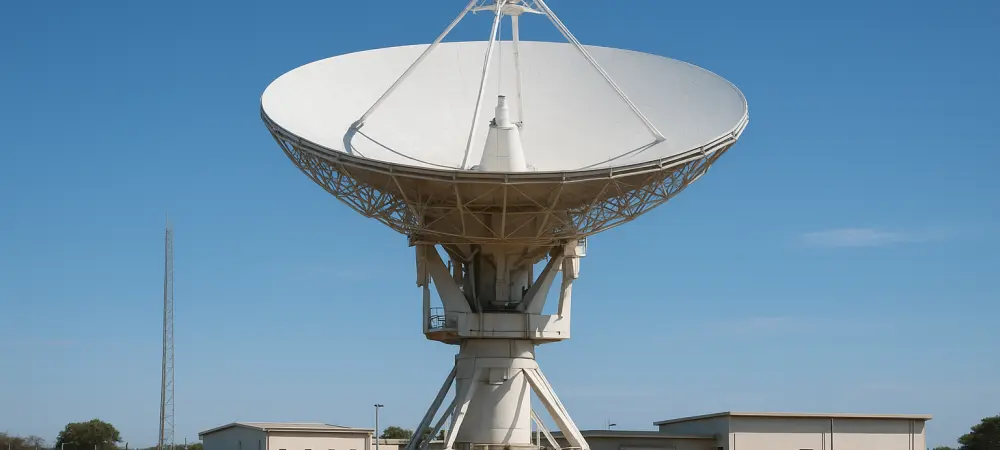
Historical dependence on geostationary earth orbit links with 1 Mbps capacities has been replaced by the need for low-latency systems capable of 1 Tbps internal switching. This shift marks a significant milestone in Zimbabwe’s technological evolution, which first gained momentum in 1985 with the establishment of the Mazowe Earth Station. Today, the nation is aggressively pursuing a twelve-month roadmap to integrate Starlink’s Low Earth Orbit constellation with its domestic fiber network. By establishing gateway teleports and a localized Point of Presence in Harare, the country aims to overcome the bandwidth bottlenecks that have historically hampered digital growth. While Starlink’s initial entry into the market provided a much-needed speed boost, subsequent regional adoption has introduced peak-hour throttling challenges. Consequently, the strategic focus has shifted from mere satellite access to a robust hybrid architecture that offloads data directly into local terrestrial backbones to ensure resilience.
Advanced Technical Architecture and Spectrum Engineering
The cornerstone of this new digital era lies in the utilization of Q/V frequency bands, which represent the cutting edge of satellite communications. Unlike standard Ku and Ka bands, the Q/V bands offer ultra-wide channel widths, enabling capacities that exceed 100 Gbps per earth station cluster. This transition is particularly critical for the deployment of Starlink V3 satellites, which boast internal switching capabilities surpassing 1 Tbps. By building local Q/V band ground stations, Zimbabwe allows these satellites to bypass the traditional and often inefficient daisy-chain method of moving data between orbiters. Instead, data is delivered straight into the domestic network, ensuring that latency remains below the critical 20-millisecond threshold. This level of performance is essential for modern applications such as high-frequency trading, remote medical procedures, and real-time cloud computing, which are becoming integral to the local economy in 2026.
Furthermore, the success of this satellite integration is fundamentally dependent on the underlying strength of the national fiber infrastructure. Major players like Liquid Intelligent Technologies have already established a backbone spanning over 26,000 kilometers, providing the essential long-haul routing required for a truly connected nation. This is complemented by the PowerTel and Paratus Zimbabwe partnership, which has successfully deployed a high-capacity Dense Wavelength Division Multiplexing network. Initially starting with 800 Gbps links, this infrastructure is designed to scale dynamically toward 10 Tbps to facilitate massive regional data transfers. Such a robust ground-based network ensures that data received at the Harare Point of Presence can be efficiently distributed across Southern Africa. This synergy between space and terrestrial assets creates a redundant and scalable ecosystem that can support the increasing demands of both industrial sectors and consumer markets.
Strengthening the Backbone Through Strategic Partnerships
Complementing these efforts, TelOne and DFA Zimbabwe have focused on expanding their respective backbone capacities to meet the surging demand along key transit links. TelOne continues to upgrade its wavelengths to 100G and beyond, specifically targeting corridors like Beitbridge and Kazungula to facilitate regional trade and communication. Meanwhile, DFA Zimbabwe has utilized national railway servitudes to construct an open-access optical fiber backbone covering 1,500 kilometers. This provides vital redundancy and high-speed wholesale backhaul for local internet service providers and mobile network operators. Additionally, the integration of the local Starlink infrastructure with the Google Umoja cable system is a game-changer. This connection establishes a direct, low-latency terrestrial path from East Africa through Southern Africa to global subsea landings. By securing this international cloud connectivity, Zimbabwe positions itself as a central digital hub for the entire region.
To ensure the long-term efficiency of the Harare Point of Presence, the technical strategy heavily emphasizes the localization of content through edge Content Delivery Networks. By housing local caches for major platforms like Google, Meta, Netflix, and Akamai directly within the domestic borders, up to 70% of routinely requested data can be served locally. This approach significantly relieves the load on satellite feeder links and preserves expensive international subsea capacity for unique traffic. Furthermore, integrating these localized systems with the Zimbabwe Internet Exchange ensures that domestic IP traffic remains within the country’s borders. This not only reduces latency for end-users but also enhances national digital sovereignty by decreasing reliance on external routing points. The result is a more responsive internet experience that can support the burgeoning digital economy, from e-commerce to educational platforms, without the lag associated with international hops.
Regulatory Frameworks and Global Benchmarks
Establishing a stable and high-speed hybrid network requires more than just technical hardware; it necessitates a transparent and fast-tracked regulatory framework. Global benchmarks from countries like Brazil and the United States highlight the importance of proactive spectrum management in the success of satellite-terrestrial systems. In Brazil, the regulator Anatel authorized the use of various bands alongside a network of over 100 operational gateways to support a massive subscriber base. Zimbabwe is following this lead by prioritizing the licensing of Q/V bands and identifying physical locations for gateway teleports. By providing a clear regulatory roadmap, the government fosters an environment conducive to private sector investment and technological innovation. This structured approach ensures that the necessary frequency allocations are available to support the high-capacity throughput required by the next generation of satellite constellations, paving the way for a sustainable digital future. The execution of this digital transformation followed a rigorous three-phase strategic roadmap that prioritized long-term stability and regional scalability. The analysis identified that the first phase required immediate regulatory alignment and site acquisition to ensure that the legal foundations were in place for the new infrastructure. This was followed by the second phase, which focused on the physical construction of tracking dishes and the installation of core networking hardware for the Harare Point of Presence. Finally, the third phase involved the successful integration of the Starlink constellation with major terrestrial fiber providers such as TelOne and Liquid. The study concluded that this transition from a satellite-only model to a satellite-terrestrial hybrid system was the only viable method for resolving bandwidth throttling. These findings established that localized ground infrastructure provided the most resilient framework for serving both rural and urban markets with world-class connectivity.