

The visual landscape of digital displays reached a pivotal juncture where the limitations of traditional backlighting finally met a formidable challenger in quantum dot technology. For years, the Liquid Crystal Display (LCD) served as the reliable workhorse of the industry, yet its reliance on polarizers and directional backlights often compromised the experience for those viewing from a side angle. Samsung Display addressed these inherent flaws by introducing QD-OLED panels, a technology that merges the self-emissive properties of organic LEDs with the color purity of quantum dots. This shift represents more than just a marginal upgrade; it is a fundamental reconfiguration of how light reaches the human eye in modern workspaces.
Evolution of Display Standards: From Traditional LCDs to Samsung’s QD-OLED
The journey from the bulky CCFL-backlit monitors to the sophisticated LED-LCD panels of the current era was driven by a need for thinner profiles and better energy efficiency. However, even modern LCDs struggle with off-axis viewing, where colors wash out and contrast disappears as the viewer moves away from the center. In response, Samsung Display engineered the QD-OLED to bridge the gap between high-speed performance and cinematic visual depth. This innovation gained significant momentum with the introduction of the QuantumView verification from UL Solutions, providing a standardized metric for viewing angle quality that emphasizes luminance and color consistency.
While initially aimed at the enthusiast gaming crowd, the technology is now being adopted by industry giants like ASUS for their ProArt series and Dell for the UltraSharp lineup, with upcoming releases from Acer, Lenovo, and MSI following suit to redefine professional standards. This transition into the B2B sector highlights the relevance of QD-OLED in high-performance environments. By providing a high-performance alternative to the directional light constraints of traditional LCDs, these panels serve as a vital tool for industries that require both accuracy and wide-reaching visibility across a single surface.
Technical Performance and Visual Consistency Benchmarks
Viewing Angle Stability and Luminance Retention
Viewing angle stability remains one of the most stark differentiators between these two competing standards in the current market. Traditional LCDs are essentially shutters that block or allow light to pass through multiple layers, which inherently restricts the effective viewing cone for the user. According to the UL Solutions QuantumView assessment, QD-OLED panels maintain over 60% of their peak brightness even when viewed at a sharp 60-degree angle. This performance ensures that the image remains vibrant even if the user is not sitting directly in front of the monitor. In contrast, standard LCDs often see their luminance plummet to less than 20% under the same conditions, making them far less effective for collaborative work or large-room presentations where viewers are scattered around the screen. This drastic drop in brightness often forces users to adjust their physical position constantly, a frustration that QD-OLED effectively eliminates. The ability to retain such a high percentage of light at extreme angles allows for a more flexible and comfortable viewing experience in both home and office settings.
Color Accuracy and Chromatic Distortion
Chromatic distortion is a significant hurdle for professional design work, and here, the QD-OLED architecture offers a clear and measurable advantage. The metrics show that Samsung’s technology exhibits a minimal color shift of less than 0.012 at extreme angles, ensuring that what a creator sees from the front remains consistent for a colleague standing to the side. This stability is critical for ensuring that color-sensitive decisions are made based on accurate data rather than distorted visual feedback caused by the hardware itself.
Traditional LCDs typically suffer from double this amount of color distortion, leading to noticeable shifts that can ruin the accuracy of a photographic edit or a color-grading session. When colors shift toward different hues at an angle, the reliability of the image for users in shared or professional environments is compromised. This consistency makes QD-OLED the superior choice for high-stakes environments where visual truth is non-negotiable and every pixel must remain true to its intended value regardless of the observer’s position.
Light Emission Mechanics and Optical Efficiency
The underlying reason for this superiority lies in the Lambertian-like emission pattern of the quantum dots used in the panel construction. While LCD backlights are highly directional, forcing light through a series of filters that narrow its path, QD-OLEDs operate through the absorption of blue light and its subsequent re-emission into red and green wavelengths. This process creates a spherical distribution of light, ensuring that photons are emitted evenly in all directions directly from the front surface of the screen.
This optical efficiency not only improves the viewing experience but also maximizes the energy used to produce vibrant colors without the need for excessive power. Because the light is generated at the very front of the display stack, there is less interference and less opportunity for light to be trapped or reflected internally. This uniform light distribution is what allows QD-OLED panels to achieve such superior performance metrics compared to the layered, restrictive architecture found in standard LCD backlighting systems.
Practical Considerations and Industry Implementation Challenges
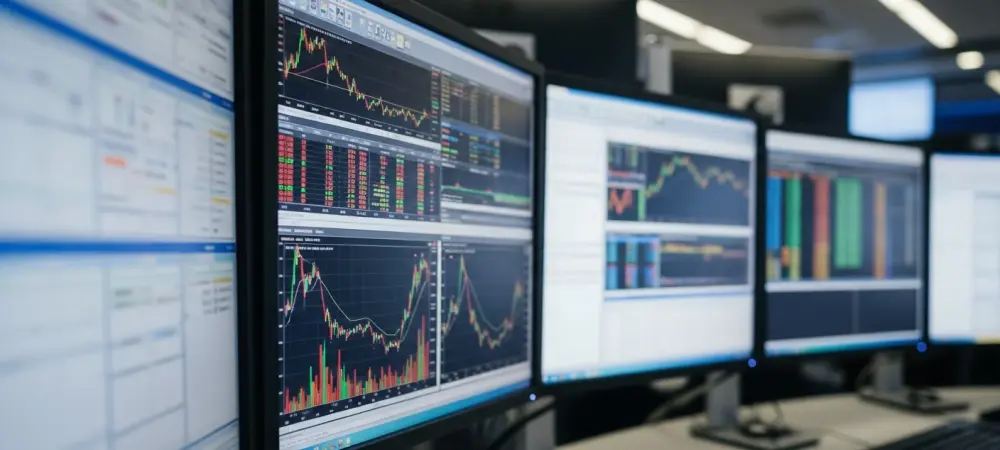
Transitioning from consumer-grade entertainment to color-critical professional sectors brings about significant hardware and calibration challenges for manufacturers. Brands like ASUS and Dell have had to refine their internal processing to handle the immense color volume and brightness provided by these panels. For high-stakes environments like financial trading floors or video production suites, the requirement for absolute clarity from every angle is paramount. Integrating these panels into professional workflows requires rigorous factory calibration to ensure the wide color gamut is mapped accurately.
Real-world obstacles include managing the heat and longevity of organic components while maintaining the high-brightness standards required for professional HDR work. Manufacturers face the task of ensuring these screens can run for extended hours without degradation, especially in industries where multiple users must view the same screen without loss of clarity. The hardware requirements for driving these high-resolution, high-refresh-rate panels also mean that the surrounding infrastructure must be capable of supporting the increased data bandwidth required by modern professional monitor lineups.
Final Assessment: Recommendations for Professional and Premium Use Cases
The comparative analysis showed that Samsung’s QD-OLED technology outperformed traditional LCDs in nearly every category regarding visual consistency and luminance retention. Professional content creators were encouraged to look toward flagship models like the ASUS ProArt or Dell UltraSharp QD-OLED displays to secure the best possible color fidelity for their projects. These devices provided a level of reliability that older LCD technology could not match, particularly when it came to maintaining a uniform image across the entire panel surface in collaborative environments.
For personal entertainment or solo gaming, the study found that traditional LCDs remained a viable, cost-effective option, but they fell short in shared professional spaces. The transition toward QD-OLED was recognized as the necessary move for those in color-sensitive industries like graphic design and video production. Choosing the right display ultimately depended on whether the user prioritized budget or the uncompromising quality of a wide-angle, high-luminance viewing experience that has now become the industry benchmark. Future considerations pointed toward a broader adoption of these standards as calibration tools and hardware integration became even more streamlined for the average professional.