

The rapid maturation of generative technologies has forced a fundamental rethink of how operating systems interact with the hardware they manage and the developers who build upon them. Windows 11 is currently undergoing a massive transformation, moving away from its legacy as a general-purpose consumer interface to become a specialized, agent-native environment designed for the rigorous demands of machine learning engineering. This shift represents a strategic pivot toward making the operating system the primary infrastructure for the entire lifecycle of autonomous software. Rather than treating artificial intelligence as a layer of add-on features like basic chatbots, the platform is now being rebuilt to support local model execution and complex agent orchestration. By establishing a trusted platform for this era, the goal is to eliminate the fragmentation that has plagued the industry. The objective is to provide a seamless, high-performance workbench where developers can move from initial experimentation to enterprise-grade deployment without switching ecosystems or compromising on security.
Unifying the Development Workflow
Addressing Tool Sprawl: Orchestrating AI Pipelines
Modern software engineering for autonomous systems is frequently hindered by significant tool sprawl, where developers must navigate a disjointed collection of third-party APIs, local frameworks, and disparate cloud services. This fragmentation creates unnecessary friction during the transition from writing code to orchestrating functional agents that can perform real-world tasks. Windows 11 is positioning itself as a universal integration layer that bridges these gaps, focusing heavily on the after-code phase of development. By centralizing the monitoring, governance, and orchestration of models within the operating system, the platform reduces the cognitive load on engineers. This approach allows for a more cohesive workflow where different components of an agentic system can communicate efficiently under a unified management umbrella. The goal is to ensure that the operating system acts as a sophisticated traffic controller, ensuring that data flows smoothly between various local and cloud-based resources while maintaining the structural integrity of the application.
Integrating Context: Data Synergy Through Microsoft IQ
A critical element of this integration strategy involves the Microsoft IQ context layer, which serves as a bridge between autonomous agents and the vast repositories of enterprise data found in productivity suites. By linking AI agents directly to information within Microsoft 365 and Teams, developers can create tools that are inherently aware of the specific business context in which they operate. This connectivity is managed under strict organizational controls, ensuring that data privacy and security remain paramount even as agents gain the ability to synthesize information from various corporate sources. The availability of this connected stack allows developers to maintain significant flexibility in their choice of underlying models while the operating system handles the complex tasks of data retrieval and security enforcement. This strategy effectively turns the operating system into a high-level conductor, enabling agents to provide more relevant and actionable insights without requiring manual data preparation or the use of insecure external storage solutions.
The Agent-Native Architecture
Secure Runtime: Isolation via Microsoft Execution Containers
To facilitate the safe expansion of autonomous software, Windows has introduced a specialized execution layer known as Microsoft Execution Containers (MXC). These containers function as policy-driven sandboxes that allow developers and IT administrators to establish highly granular permissions for individual AI agents. This system ensures that autonomous agents can only interact with the specific files, network resources, and peripheral hardware they are explicitly authorized to access, effectively mitigating the risks of unintended system interference. By isolating agent processes from the core operating system, MXC provides a robust defense against potential vulnerabilities that could arise from the unpredictable nature of machine learning outputs. This transition to an agent-native architecture represents a move toward a more transparent and secure environment where the behavior of autonomous software is carefully regulated and contained. This level of control is essential for building trust in systems that are designed to operate with minimal human intervention in complex enterprise settings.
Identity Management: Accountability Through Microsoft Entra
Security within this new architecture is further enhanced by the assignment of distinct digital identities to every agent through the Microsoft Entra framework. By treating an AI agent as a first-class entity with its own identity, the operating system can maintain a permanent and immutable audit trail for every action the agent performs within its container. This level of accountability is vital for corporate governance and legal compliance, as it allows organizations to trace the specific origin of any decision or system change back to the responsible agent. Attributing actions to a unique identity also enables more sophisticated access control policies, where agents can be granted temporary or conditional permissions based on their specific task requirements. This transformation turns the operating system into a highly observable environment where the lifecycle and activities of autonomous software are fully visible. Such a granular approach to identity management ensures that as agents become more capable, they also become more manageable, preventing opaque automated processes.
Local Compute and Hardware Synergy
High-Performance Models: Local Inference and Aion 1.0 Plan
Microsoft is actively encouraging the shift toward local AI inference to help developers reduce latency and significantly improve the privacy of their sensitive training data. To support this move, the company has released proprietary local models like the Aion 1.0 Plan, which is specifically engineered to handle complex reasoning tasks directly on the device. These small but powerful language models are capable of orchestrating various sub-agents and managing intricate workflows without the need for a constant connection to cloud-hosted APIs. By prioritizing local compute, the platform enables a more responsive development experience, where models can be tested and iterated upon in real-time. This local-first approach also addresses the growing concerns regarding the cost and availability of high-end cloud computing resources. Providing developers with the tools to run sophisticated agentic logic on their own machines ensures that the development process remains efficient and cost-effective, even as the complexity of the applications grows with the demands of the current technological landscape.
Hardware Optimization: Scaling with NVIDIA RTX Integration
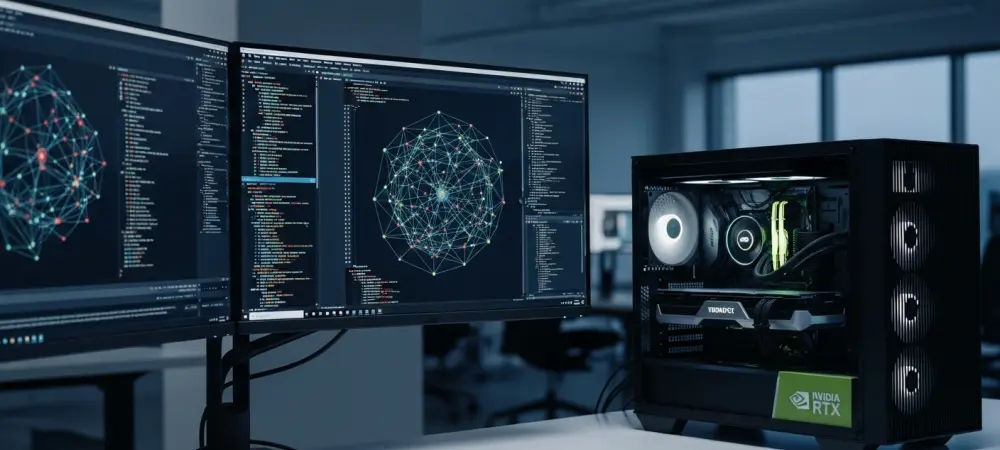
A fundamental component of the local-first strategy is the deep engineering partnership with NVIDIA, which aims to optimize RTX hardware for the specialized needs of AI development. This collaboration ensures that Windows 11 can leverage the full power of modern GPUs and specialized tensor cores to accelerate machine learning workloads across a wide variety of hardware configurations. By supporting a broad spectrum of processors, Microsoft ensures that high-performance local environments are accessible to a diverse range of developers, from independent researchers to large-scale enterprise teams. The integration of DirectML and other low-level optimization frameworks allows for seamless hardware acceleration, making it a credible and powerful alternative to expensive cloud-based instances. This hardware synergy not only improves the speed of model training and inference but also provides a more stable and predictable environment for developing the next generation of software. The focus on maximizing on-device performance reflects a broader commitment to ensuring that Windows remains the most capable platform.
Reclaiming Developer Trust
Linux Compatibility: Enhancing the Windows Subsystem for Linux
Recognizing that a significant portion of the AI research and development community relies on Linux-based tools and open-source frameworks, Microsoft has deepened the integration of the Windows Subsystem for Linux (WSL). Recent enhancements to the subsystem allow developers to utilize Python, CUDA, and Linux containers natively within the Windows ecosystem while still benefiting from the operating system’s robust security and governance features. This hybrid environment ensures that engineers do not have to compromise their preferred workflows or switch to different hardware to access the specialized tools required for machine learning. The ability to run high-performance Linux workloads alongside native Windows applications creates a versatile and efficient development environment that caters to the specific needs of modern software engineers. By bridging the gap between these two historically separate worlds, the platform has become a more inclusive and flexible workbench. This move has been instrumental in reclaiming the trust of the technical community by providing a system that is both open and optimized.
UI Refinement: Professional Tooling and Performance Standards
The refinement of the user interface and the core shell components marked a significant turning point in the professional perception of the operating system. By rebuilding essential tools like File Explorer and Search using native frameworks such as WinUI 3, the platform achieved a level of responsiveness that was previously missing. These improvements moved the focus away from forced consumer features and toward a lean, professional environment that prioritized performance and developer productivity. The transition to an agent-native architecture proved to be a successful strategy for addressing the complexities of autonomous software deployment. Organizations that embraced these new governance and security tools found themselves better equipped to manage the challenges of local model orchestration and data privacy. Moving forward, the emphasis on local compute and seamless hardware integration set a new standard for what a professional operating system should provide. Developers who integrated these agentic workflows early were able to build more resilient and scalable applications, ultimately validating the shift toward a more specialized ecosystem.