

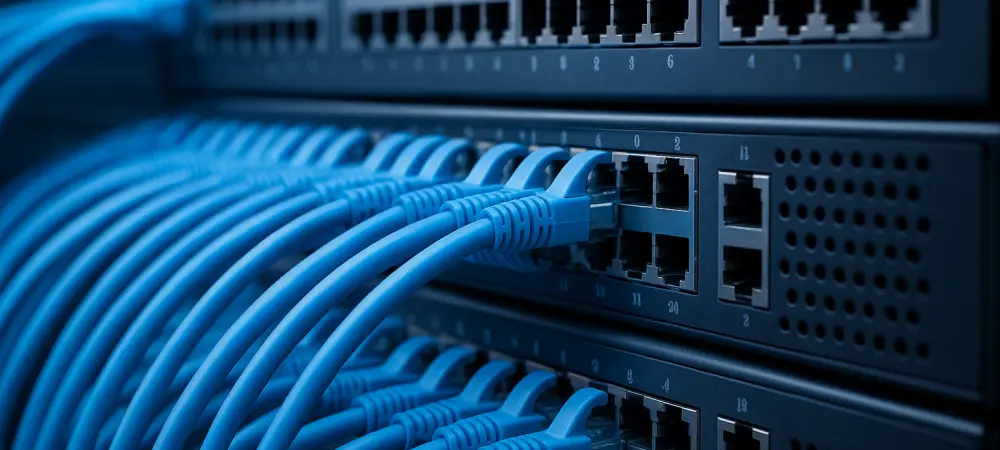
The massive volume of data generated by cloud gateways and end-user devices is creating a telemetry storm that overwhelms manual troubleshooting efforts in the enterprise. For years, the prevailing logic suggested that the on-premises data center would eventually be replaced by a combination of public cloud services and distributed colocation facilities. However, the rise of sophisticated generative AI and autonomous agentic systems has triggered a rapid reversal of this trend, making centralized, high-performance infrastructure the cornerstone of modern business strategy. As enterprises in 2026 grapple with the demands of massive model training and real-time inference, they are discovering that general-purpose cloud environments often lack the specialized configurations needed for cost-effective scaling. This architectural pivot is not a simple return to legacy hardware; it represents a fundamental shift toward a holistic fabric design that integrates networking, compute, and storage into a single, cohesive engine for intelligence.
Overcoming the Performance Gap in Legacy Architectures
Legacy infrastructure was built for a world of high entropy where traffic patterns were relatively random and managed through statistical oversubscription. Modern AI workloads, however, operate on a different mathematical principle, requiring deterministic performance that ensures data reaches Graphics Processing Units (GPUs) without delay. When large language models are being trained across thousands of nodes, even a minor micro-burst of congestion can cause a significant drop in overall computational efficiency, leading to a waste of expensive resources. Consequently, the performance gap between standard enterprise networks and the needs of AI clusters has widened, forcing a shift toward non-blocking architectures and specialized interconnects. By moving away from older switches and adopting fabrics designed for low-latency RDMA over Converged Ethernet, organizations are finally bridging the gap between historical infrastructure and modern requirements.
Beyond logical network architecture, the physical limitations of existing facilities present a barrier to AI integration. Current industry research indicates that over 80 percent of existing data center racks are designed for power densities below 30 kilowatts, which is insufficient for the high-density requirements of modern GPU clusters. These high-performance systems generate heat at levels that traditional air-cooling methods cannot effectively dissipate, leading to thermal throttling and hardware degradation. To address this power and cooling crisis, infrastructure teams are transitioning toward advanced liquid cooling solutions, including direct-to-chip and immersion techniques. This modernization effort also involves redesigning power distribution units and backup systems to handle the sustained load of AI processing. Solving these physical challenges is essential to ensure that hardware can operate at its peak capacity without constant environmental risks.
Cross-Domain Integration: Moving From Silos to Fabrics
The historical separation of IT departments into isolated silos for compute, storage, and networking is becoming a liability. In the past, these teams could operate with minimal coordination, but the massive scale of AI-driven data flows requires a highly integrated fabric approach where every component is contextually aware of the others. Fragmentation leads to visibility gaps, where a networking issue might be misdiagnosed as a server failure, wasting time during critical outages. Modern design principles now prioritize cross-domain integration, allowing telemetry data to flow freely between different layers of the infrastructure stack. By implementing a unified management layer, organizations ensure that storage protocols, network routing, and compute resources are perfectly aligned to support the specific needs of an application. This coordination is particularly important for agentic AI models that require near-instantaneous data access across distributed nodes. Achieving this level of integration requires a shift from managing individual components to managing the entire data center as a single, programmable entity. This holistic visibility allows IT personnel to distinguish between background noise and critical system failures that could derail a training job. The resulting observability provides a contextual understanding of how data moves throughout the facility, which is essential for optimizing the user experience and ensuring high availability. As data centers become more complex, the ability to correlate disparate telemetry points becomes the primary differentiator between a high-performing enterprise and one struggling with technical debt. By consolidating these views into a unified platform, administrators gain the clarity needed to make informed decisions about resource allocation. This strategic alignment ensures that the infrastructure remains an enabler of innovation rather than a bottleneck for developers.
Autonomous Operations: The Rise of Self-Driving Networks
As the volume of telemetry data grows exponentially, manual intervention is no longer a viable strategy for maintaining modern infrastructure. The industry is moving toward full autonomy, leveraging AI agents and self-driving network technologies to handle the day-to-day operations of the data center. These autonomous systems utilize Large Experience Models (LEMs) to analyze patterns and predict potential failures before they occur, moving the operational focus from reactive troubleshooting to proactive remediation. Instead of waiting for a hardware failure to trigger an alert, these systems identify subtle deviations in performance that indicate an impending issue. This transition to AIOps allows human operators to focus on high-level strategy rather than getting bogged down in repetitive maintenance tasks. By creating a self-aware environment, enterprises maintain a level of uptime and reliability that was previously unattainable through traditional manual oversight.
A critical component of this autonomous shift is the implementation of Intent-Based Networking (IBN), which allows administrators to define business outcomes while the software manages the technical execution. Under this framework, an operator might specify a requirement for a high-bandwidth path between a storage cluster and a GPU farm, and the IBN system will automatically configure the necessary protocols and validate the deployment. This continuous validation loop ensures that the actual state of the network matches the intended state, significantly reducing the risk of human error during configuration changes. IBN also facilitates rapid triage by pinpointing the root cause of connectivity issues within seconds, rather than hours. This level of precision is vital for large-scale AI fabrics where traditional methods are too slow to be effective. The result is an agile infrastructure that can adapt to changing business needs with minimal manual configuration or technical overhead.
Strategic Imperatives for Infrastructure Resilience
Building a resilient data center for the current AI era required a move toward specialized high-performance switches and advanced graph databases. Leading organizations found that using graph-based modeling allowed them to map the complex relationships between every node and connection in the network, creating a digital twin of their entire infrastructure. This approach ensured that the intent of the network design was constantly maintained and verified against real-time data flows. Furthermore, the integration of networking management with hybrid cloud platforms and compute-focused orchestration tools allowed for the breakdown of traditional organizational barriers. By adopting these unified platforms, enterprises simplified their operations and gained a more deterministic response to network issues. These strategic investments in highly dense, non-blocking fabrics and sophisticated management software laid the groundwork for the efficient delivery of AI services.
Moving forward, IT leaders should focus on several actionable priorities to maintain their competitive edge. First, organizations should prioritize the deployment of AI-native operations that utilize Large Experience Models to provide reliable, deterministic infrastructure responses. Second, it is essential to invest in modular liquid cooling and high-density power distribution to accommodate the hardware requirements of future AI generations. Third, the transition from component-based management to fabric-level automation must be accelerated to ensure that infrastructure scales at the pace of business demand. By embracing these next steps, enterprises can transform their data centers into self-healing organisms that not only support current AI applications but are also prepared for the next wave of technological breakthroughs. This proactive stance ensures that infrastructure remains a central asset in the quest for digital transformation and long-term enterprise growth.