
Melted 16-Pin Connector Reported in NVIDIA GeForce RTX 5080 Setup

Article Highlights
Off On

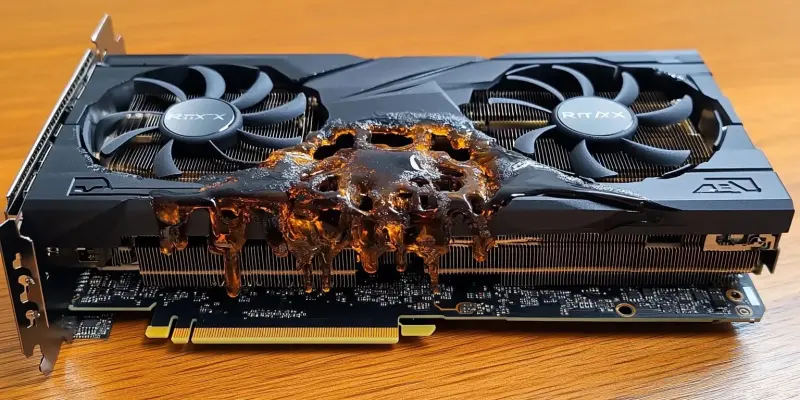
In a concerning development for PC enthusiasts and gamers alike, a Reddit user detailed an alarming incident involving a melted 16-pin power connector on their power supply unit (PSU) while operating an NVIDIA GeForce RTX 5080. This report marks one of the first instances of such a problem with the RTX 5080, sparking discussions across various tech communities.

Investigating the Incident

The user’s setup, including an ASUS ROG Loki PSU, experienced several abnormalities following the connector malfunction. These irregularities encompassed downgraded monitor settings and unusual GPU behaviors while operating in PCI-E x3 mode. While previous instances, particularly with the RTX 5090, reported both GPU and cable connectors melting due to overheating, this case was slightly different as the GPU remained unaffected. The ASUS ROG Loki PSU had previously been a point of discussion within the PC community. Notably, a presentation by the well-known overclocker Der8auer highlighted the potential for overheating connectors, attributing the issue to the connectors’ wires carrying significant loads that exceeded their design limits.

Broader Implications

This troubling incident involving a melted 16-pin power connector on an NVIDIA GeForce RTX 5080 has raised significant concerns among PC enthusiasts and gamers. The user r/Ambitious_Ladder1320, who first reported the issue, emphasized that the power connector was securely attached when the problem began. This occurrence has sparked widespread discussions across various tech forums, questioning the reliability and safety of 16-pin connectors used with high-performance GPUs. The tech community is now contemplating whether additional precautions are necessary when using these powerful components to prevent similar issues. As more information emerges, enthusiasts and experts alike are keenly waiting for further incidents or official responses to better understand and address the problem.

Explore more

How Will Algeria and Oman Reshape the Digital Future?

Dominic Jainy is a seasoned IT strategist whose work at the intersection of artificial intelligence and blockchain has shaped digital transformation roadmaps for emerging markets. With a career dedicated to understanding how infrastructure serves as the bedrock for economic evolution, he brings a unique perspective to the burgeoning technological alliance between Algeria and Oman. This dialogue explores the recent bilateral

How Will Algeria and Oman Reshape the Digital Future?

Dominic Jainy is a seasoned IT strategist whose work at the intersection of artificial intelligence and blockchain has shaped digital transformation roadmaps for emerging markets. With a career dedicated to understanding how infrastructure serves as the bedrock for economic evolution, he brings a unique perspective to the burgeoning technological alliance between Algeria and Oman. This dialogue explores the recent bilateral

Little Pepe Leads the Shift Toward Utility-Driven Meme Coins

The global cryptocurrency market has reached a critical juncture where the novelty of digital assets is no longer enough to sustain the interest of a highly informed and cynical investor base. This transformation marks the end of a speculative era defined by assets that flourished on social media buzz while lacking any practical application. As the market matures in 2026,

Little Pepe Leads the Shift Toward Utility-Driven Meme Coins

The global cryptocurrency market has reached a critical juncture where the novelty of digital assets is no longer enough to sustain the interest of a highly informed and cynical investor base. This transformation marks the end of a speculative era defined by assets that flourished on social media buzz while lacking any practical application. As the market matures in 2026,

HR Leaders Take Charge of Corporate AI Transformation

The traditional corporate hierarchy is undergoing a radical realignment as the responsibility for deploying artificial intelligence shifts from technical departments to the human resources office. For decades, the implementation of transformative technology was viewed almost exclusively through the lens of hardware, software, and data infrastructure, leaving the Chief Information Officer as the sole architect of change. However, as organizations navigate