

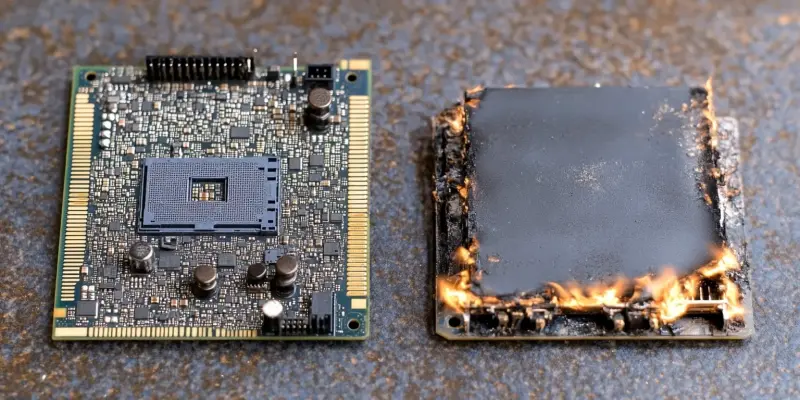
In an unexpected turn of events, a Reddit user reported a major hardware failure involving the AMD Ryzen 7 9800X3D CPU, which unexpectedly burnt out within a month of assembling their new PC. This user’s experience serves as a stark reminder of the potential risks associated with newly assembled systems, even when using high-end components. The incident occurred without any prior warning, with the PC suddenly shutting down and subsequent inspection revealing significant damage to both the CPU and the AM5 socket. The setup in question featured a Ryzen 7 9800X3D processor and an ASRock Nova X870E motherboard, with no overclocking performed on the processor. Notably, AMD EXPO was enabled for memory overclocking, yet this is not typically associated with causing such extensive hardware damage.
Hardware Failures Highlighting Deeper Issues
This isolated incident is drawing comparisons with other recent hardware failures, such as the melting connectors of RTX 5090 graphics cards and other occurrences of burnt CPUs. What makes this case particularly concerning is that the hardware was relatively new and had been operating without any signs of high temperatures or stress prior to the burnout. This suggests that the problem may lie deeper, possibly pointing towards issues related to the integrity of the hardware itself rather than external factors such as misuse or overheating. These recurring problems in new hardware models highlight an urgent need for manufacturers to delve deeper into quality assurance and reliability checks before releasing products to the market.
Thorough Investigations Needed
In response to the incident, Reddit user u/t0pli returned the damaged CPU for Return Merchandise Authorization (RMA), and the local store is now investigating. Additionally, tech media outlet Gamers Nexus expressed interest in examining the affected components to understand what caused the issue. Speculation from Twitter user suggests a short circuit in the VDDCR area, differing from past incidents often linked to improper CPU seating. Interest from such notable media highlights the situation’s severity and rising concerns within the tech community about new hardware reliability.
Hardware malfunctions’ unpredictability, even in high-end, non-overclocked setups, emphasizes the need for constant scrutiny and immediate investigation to identify root causes and prevent future issues. This incident underscores the importance of rigorous testing and validation processes, ensuring users can rely on their systems without fearing sudden catastrophic failures. The ongoing analysis by the tech community aims to enhance the dependability and safety of future hardware, reflecting the critical need for robust quality assurance in tech products.