
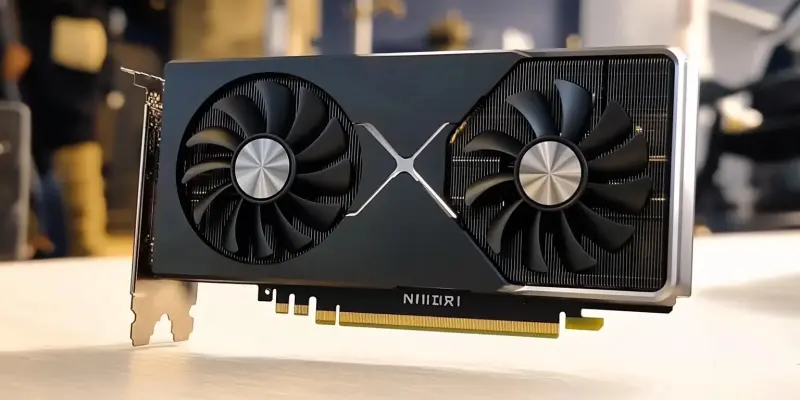
Are Nvidia’s RTX 5080 and 5090 GPUs Facing Severe Power Connector Issues?

Article Highlights
Off On

Concerns about Nvidia’s latest RTX 5080 and RTX 5090 GPUs have surged after reports of power connector failures, with users noting unsettling incidents of melting. This worrying trend has emerged as users sound the alarm about a serious defect that risks damaging cutting-edge hardware. Complaints echo previous issues identified with the RTX 4090 units, drawing particular focus now from tech enthusiasts and industry analysts.

A Reddit user, identified as Ambitious_Ladder1320, recently shared a harrowing experience involving their Asus ROG Loki PSU and an RTX 5080 GPU. They detected a red alert light on the GPU and upon investigating, discovered that their 16-pin power connector had melted. Despite multiple attempts to reconnect, the damage persisted, leading to lowered resolution, a drop in refresh rate, and a forced switch to PCIe 3.0 mode. Similar reports have surfaced online from other ROG Loki PSU users, although it’s unclear if they all pertain to RTX 5080 or 5090 cards.

Notably, another incident involved an RTX 5090 Founders Edition using a Moddiy third-party cable. The cable, previously reliable with an RTX 4090, melted on both ends. This recurrence of the issue pushes the question of the efficacy of these power connectors into the spotlight. Tests performed by prominent tech reviewers Steve Burke from Gamers Nexus and Der8auer revealed critical overheating problems. These tests highlighted uneven power distribution in the connectors, with temperatures soaring to an alarming 150°C on the PSU side, far surpassing safe operational limits.

These repeated incidents underscore significant concerns regarding the power delivery mechanisms in Nvidia’s new GPUs. The power connector problem is not limited to proprietary designs, also affecting third-party connectors, exacerbating the reliability issues these advanced but delicate components face. It implies a broader systemic issue, casting doubt on the robustness of Nvidia’s hardware design strategies.

Given the gravity of these problems, a thorough investigation into the root causes is imperative to prevent potential widespread damage and preserve user trust. Nvidia must prioritize transparency and timely solutions to mitigate these risks, ensuring future iterations of their GPUs do not inherit this critical fault. The tech community and stakeholders eagerly await substantive responses to alleviate these growing anxieties around Nvidia’s flagship GPU offerings.

Explore more

Is Second-Chance Hiring Putting Young Workers at Risk?

The pursuit of a diverse and inclusive workforce often leads major corporations to adopt second-chance hiring initiatives, yet the execution of these programs requires a delicate balance between social rehabilitation and the non-negotiable safety of young, vulnerable employees. In a high-stakes legal battle currently unfolding in Oklahoma, a teenage worker’s harrowing experience has cast a shadow over the “family-friendly” image

Can AI Automation Close the $9 Trillion Insurance Gap?

Global economic volatility and the increasing frequency of climate-driven catastrophes have pushed the worldwide insurance protection gap to a staggering nine trillion dollars, leaving millions of households and small businesses dangerously exposed to financial ruin. This massive deficit, representing the difference between total economic losses and those covered by insurance policies, continues to widen as traditional underwriting models struggle to

Can Conversational AI Transform Customer Segmentation?

Static demographic data like age, zip code, and gender has historically served as the cornerstone of marketing strategies, but the volatility of current market trends requires a much more nuanced approach to audience identification. When a customer interacts with a modern AI interface, they provide a wealth of unstructured data that transcends simple purchase history or basic identity markers. This

Is Safari or Google Chrome the Best Browser for macOS?

Every time a user opens a lid on a modern MacBook Pro or clicks the dock on an iMac, they are essentially entering a digital workspace where the browser acts as the primary conductor for almost every professional and personal task. This decision between Safari and Google Chrome has evolved beyond simple aesthetic preferences into a significant technical strategy that

Why Power Users Are Switching From Windows to ChromeOS

High-performance computing was once synonymous with the meticulous management of local registries and system drivers, yet the modern digital landscape increasingly favors architectural simplicity over traditional complexity. For decades, power users defined their expertise by their ability to troubleshoot Windows environments, optimize startup sequences, and navigate the labyrinthine file structures required to keep a machine running at peak efficiency. However,