

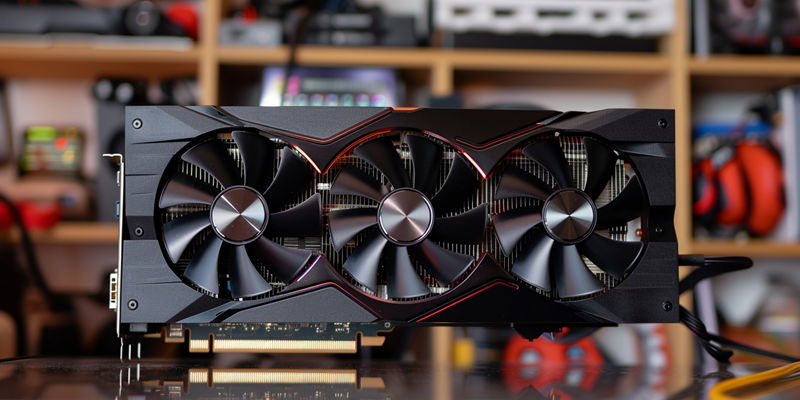
The gaming and tech community is abuzz with the release of ZOTAC’s RTX 4070 Ti SUPER SOLID graphics card. Built on NVIDIA’s cutting-edge AD102 GPU architecture, this new model promises to deliver remarkable performance improvements. ZOTAC, along with AIB partners like MSI, has strategically leveraged existing AD102 GPU dies to create a product that aims to strike a balance between performance and cost-effectiveness. But does this make the RTX 4070 Ti SUPER SOLID the ultimate GPU for performance? Let’s delve into the details.
Leveraging AD102 for Enhanced Performance
Architecting Superiority: AD102 vs. AD103
The key differentiator for the RTX 4070 Ti SUPER SOLID lies in its use of the AD102 GPU, traditionally reserved for higher-tier models. Unlike the standard RTX 4070 Ti configuration, which uses the AD103, ZOTAC’s version disables half of the AD102 cores to fit within the necessary specifications. This strategic adaptation aims to offer greater performance without the added costs associated with top-tier models. Even though ZOTAC hasn’t officially announced these modifications, the unique capacitor layout serves as a strong indicator of the underlying architecture.
This move highlights a growing trend among NVIDIA’s AIB partners: repurposing higher-end GPU architectures for lower-tier models. By selectively disabling certain cores and adjusting power specifications, ZOTAC can deliver enhanced performance while maintaining cost-efficiency. The use of AD102 architecture in the RTX 4070 Ti SUPER SOLID reflects a higher tier of technology that still stays within the expected price and performance bracket for an RTX 4070 Ti model. This approach not only maximizes the use of available GPU dies but also introduces consumers to higher-quality performance metrics, setting a new standard in the mid-range GPU market.
Decoding Technical Specs: CUDA Cores and Frequencies
When examining the technical specifications, the RTX 4070 Ti SUPER SOLID stands out. It boasts 8,448 CUDA cores and offers a boost frequency of up to 2,640 MHz in its OC variant. With 16 GB of GDDR6X VRAM and a 256-bit bus interface, the card can achieve speeds of up to 21.0 Gbps and a bandwidth of 672 GB/s. The TDP of this new model aligns with its enhanced capabilities, clocking in at 295W—a slight increase compared to its predecessors.
These specifications suggest that the RTX 4070 Ti SUPER SOLID will likely exceed performance expectations for this GPU tier. The high CUDA core count and substantial VRAM enable efficient multitasking and smooth operation in high-resolution gaming and professional use. The increased TDP, though minimal, indicates the card’s enhanced capability to handle demanding tasks without compromising stability. For gamers and professionals seeking a powerful yet economical option, the RTX 4070 Ti SUPER SOLID offers a significant step-up from previous models without the prohibitive costs associated with top-tier GPUs.
Design and Market Strategy
Aesthetics and Build: Rugged Yet Refined
From a design perspective, the RTX 4070 Ti SUPER SOLID is both bulky and boxy, with physical dimensions of 336.5mm x 136mm x 74.8mm. The sturdy 3.5-slot structure complements its performance-focused internals, wrapped in a sleek black and gray color scheme. This rugged yet refined aesthetic aims to appeal to gamers and professionals seeking both form and function in their hardware.
The bulky design reflects the card’s robust cooling mechanisms and power requirements, ensuring consistent performance during extended use. This visual representation of strength and solidity is likely to attract consumers who prioritize durability and reliability in their gaming setups. The 3.5-slot structure, while substantial, also accommodates the card’s advanced internal architecture, providing a balanced form that doesn’t compromise on aesthetic appeal. The combination of functionality and design makes the RTX 4070 Ti SUPER SOLID not only a performance powerhouse but also a visually appealing addition to any gaming or workstation rig.
Target Market: North America and Beyond
ZOTAC’s release strategy focuses heavily on the North American market. This geographic specificity suggests an intent to target tech-savvy consumers familiar with NVIDIA’s product lineup. Although regional availability could be broader, U.S. consumers will be the first to experience this novel GPU. Additionally, to identify the onboard GPU die, consumers are encouraged to use tools like GPU-Z.
This targeted approach indicates an understanding of the market dynamics and consumer behavior in North America. By prioritizing this region, ZOTAC aims to capitalize on the high concentration of tech enthusiasts and professionals willing to invest in superior performance hardware. Nonetheless, the localized initial release strategy leaves the door open for potential global expansion based on consumer response and demand. The call to use tools like GPU-Z for verification also underscores ZOTAC’s confidence in their product, encouraging transparency and informed consumer decisions.
Market Dynamics and Consumer Considerations
Stock Clearance Strategies
One driving factor behind this release is the need for AIB partners like ZOTAC to clear existing AD102 GPU die stock. By repurposing these higher-tier GPU structures, manufacturers can manage their surplus inventory while still delivering robust performance. This approach not only aids in inventory management but also provides consumers with a potentially superior product compared to standard AD103 configurations.
Clearing stock of higher-tier components by integrating them into mid-range products represents a win-win scenario for both manufacturers and consumers. For manufacturers, it is an effective method to reduce excess inventory without incurring losses, while consumers benefit from enhanced performance metrics not typically seen in mid-range GPUs. This strategy reflects the agility and adaptive thinking of AIB partners like ZOTAC, demonstrating their ability to navigate market pressures and evolving consumer expectations efficiently. This unique utilization of surplus stock provides a compelling value proposition to those eyeing mid-range GPU options.
Consumer Awareness: Unofficial Modifications
Interestingly, the modifications made to incorporate the AD102 GPU are not officially disclosed by ZOTAC. Instead, savvy consumers are expected to discern the hardware’s capabilities through indicators like capacitor layout and verification tools. This lack of documentation might induce caution among buyers; however, the potential performance gains could be substantial, making it a worthwhile consideration.
While some consumers might be hesitant due to the lack of official confirmation regarding modifications, the technologically adept are likely to appreciate the advanced architecture and resultant performance boosts. The trust factor, however, hinges on the brand’s reputation and the efficacy of third-party verification tools like GPU-Z. Despite these subtleties, ZOTAC has effectively positioned their RTX 4070 Ti SUPER SOLID as a high-caliber option within the mid-range market, maintaining an allure of exclusivity through discreet architectural enhancements. For those who prioritize performance over official specifications, this model stands out as a formidable choice.
Performance Metrics and Real-World Application
Comparing Benchmarks: RTX 4070 Ti vs. SUPER SOLID Variant
In benchmarking scenarios, the RTX 4070 Ti SUPER SOLID demonstrates improved metrics over its AD103-based counterparts. Higher CUDA core counts and boosted frequencies translate to enhanced performance in gaming and professional applications alike. These improvements could particularly benefit users involved in graphic-intensive tasks, rendering, and high-fidelity gameplay.
Benchmark tests often reveal the true capabilities of a GPU beyond just its on-paper specifications. The RTX 4070 Ti SUPER SOLID’s enhanced core counts and boosted frequencies highlight its superior processing power, making it suitable for a wide range of demanding applications. Professional users in fields like graphic design, animation, and game development are likely to experience significant productivity gains. Moreover, gamers can expect smoother frame rates and high-resolution gameplay performance, reinforcing the card’s standing as an exceptional mid-range option with high-end tendencies.
Real-World Impact: User Experience and Feedback
The gaming and tech communities are buzzing with excitement over the release of ZOTAC’s latest graphics card, the RTX 4070 Ti SUPER SOLID. This powerhouse is built on NVIDIA’s advanced AD102 GPU architecture, promising significant leaps in performance. ZOTAC, alongside AIB partners like MSI, has ingeniously utilized existing AD102 GPU dies to craft a product that finds the sweet spot between top-tier performance and cost-efficiency. The RTX 4070 Ti SUPER SOLID is designed to meet the high demands of gamers and tech enthusiasts alike, offering a stellar experience without the hefty price tag of some high-end models.
But what really sets this card apart in a crowded marketplace? It’s the strategic use of resources and innovative engineering that aims to deliver exceptional quality without compromising on affordability. Such considerations are crucial in making high-performance GPUs more accessible to a broader audience. The question remains: does the RTX 4070 Ti SUPER SOLID redefine what we can expect from a performance GPU? Let’s dive into the specifics to understand why this might be the game-changer many have been waiting for.