

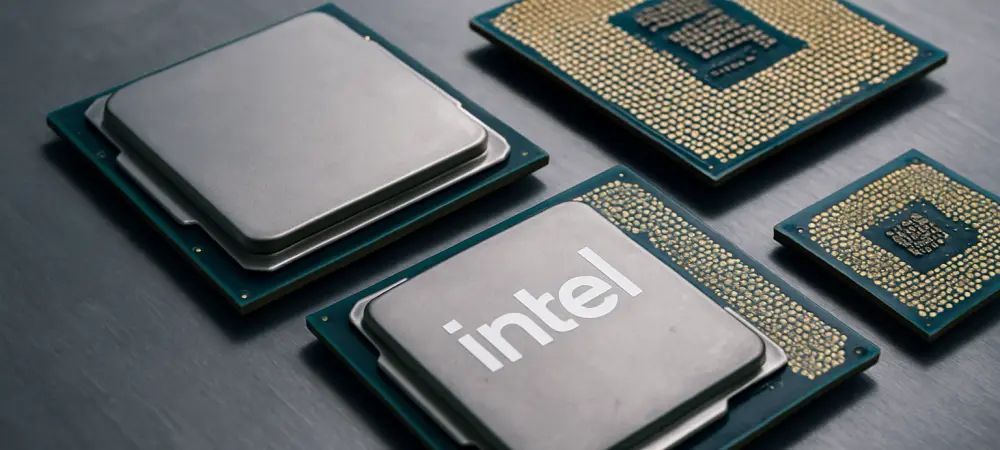
I’m thrilled to sit down with Dominic Jainy, a seasoned IT professional whose deep knowledge of cutting-edge technologies like artificial intelligence, machine learning, and blockchain has made him a respected voice in the industry. Today, we’re diving into the world of computer hardware, specifically Intel’s latest Bartlett Lake-S Desktop CPUs. With his unique perspective on tech innovations and their applications, Dominic is the perfect person to help us unpack the intricacies of these processors, their design choices, and their potential impact on various sectors. Our conversation will explore how these CPUs fit into Intel’s broader lineup, their performance capabilities, and their specialized focus on Edge and Networking solutions.
Can you give us a broad picture of what the Bartlett Lake-S Desktop CPUs are and how they position themselves within Intel’s existing range of processors?
Absolutely, Maise. The Bartlett Lake-S Desktop CPUs are an interesting addition to Intel’s portfolio, primarily built on the LGA 1700 socket. Unlike the hybrid designs we’ve seen in Raptor Lake and Arrow Lake series, which combine P-Cores and E-Cores, Bartlett Lake-S takes a different route with a P-Core-only configuration. This makes them stand out as a specialized offering, initially designed with Edge and Networking solutions in mind rather than the mainstream consumer market. They’re somewhat of a refresh of the Raptor Lake architecture but tailored for specific use cases, which I think shows Intel’s intent to diversify their CPU applications beyond traditional desktop and gaming setups.
What stands out to you about the design choice of a P-Core-only configuration in Bartlett Lake-S compared to Intel’s hybrid models?
The P-Core-only design is quite intriguing because it prioritizes raw performance over the efficiency that E-Cores bring to the table in hybrid models. P-Cores, or performance cores, are optimized for high-speed, demanding tasks, so focusing solely on them suggests Intel is targeting workloads that need consistent, high-end processing power without the overhead of managing a hybrid setup. For Edge and Networking environments, where latency and throughput are critical, this makes sense. It simplifies the architecture and can potentially reduce complexity in systems that don’t benefit as much from E-Cores’ power-saving features.
Let’s talk about the flagship Bartlett Lake-S model with 12 P-Cores. What are your thoughts on its specs, especially the 6.0 GHz boost clock?
The top model with 12 P-Cores is a powerhouse on paper. A boost clock of 6.0 GHz on a single core, and 5.5 GHz across all cores, puts it in the same league as high-end chips like the Core i9-14900K, though it’s a tad behind the 14900KS which hits 6.2 GHz. What’s impressive is the sheer number of P-Cores—12 of them with SMT, offering 24 threads. That’s a significant jump over the 8 P-Cores maxed out in current Raptor Lake and Arrow Lake CPUs. This configuration signals a focus on workloads that can leverage multiple high-performance cores simultaneously, which is exciting for specific professional applications.
With that kind of setup, how do you see this 12 P-Core CPU performing in gaming compared to something like the Core Ultra 9 285K from the Arrow Lake-S series?
In gaming, I’d expect the Bartlett Lake-S with 12 P-Cores to have a noticeable edge over the Core Ultra 9 285K. The reason lies in the architecture—it uses Raptor Cove P-Cores, which we’ve seen outperform the newer Lion Cove cores in Arrow Lake-S for gaming tasks in previous generations like the 13th and 14th Gen CPUs. Gaming often relies heavily on single-threaded performance and a handful of cores rather than a hybrid mix, so having more high-performing P-Cores could translate to smoother frame rates and better responsiveness in demanding titles.
I noticed Intel didn’t include an unlocked design for overclocking on this flagship model. What do you think drove that decision?
That’s a curious choice, isn’t it? I believe Intel’s decision to skip an unlocked design ties back to the intended use case of Bartlett Lake-S. Since these CPUs are geared towards Edge and Networking solutions, stability and reliability are likely prioritized over enthusiast features like overclocking. In such environments, systems need to run 24/7 without the risk of instability that overclocking can introduce. Plus, with a boost clock already hitting 6.0 GHz, Intel might feel there’s enough performance out of the box for the target audience without needing manual tweaking.
Speaking of Edge and Networking, can you elaborate on why Bartlett Lake-S is designed specifically for those solutions and how that influences its architecture?
Edge and Networking solutions require processors that can handle real-time data processing, low latency, and high throughput, often in constrained or distributed environments. The P-Core-only design of Bartlett Lake-S aligns well with this, as it ensures consistent performance for compute-intensive tasks without the complexity of managing E-Cores, which are more about power efficiency. In these scenarios, power draw might be less of a concern compared to raw performance, so Intel likely optimized the architecture for sustained processing power over energy savings, which hybrid designs typically address.
Looking at the lineup, Bartlett Lake-S offers various power configurations like 125W, 65W, and 45W. How do these differ in terms of core counts across the models?
The Bartlett Lake-S lineup is structured to cater to different power envelopes, which directly impacts core counts in the P-Core-only configurations. At the high end, the 125W, 65W, and 45W models for Core 9 all feature 12 P-Cores, which is consistent across the board for maximum performance. For Core 7, you get 10 P-Cores in all three power segments, and for Core 5, it’s 8 P-Cores across the board. This scaling ensures that even at lower power levels, you’re still getting a substantial number of performance cores, which is critical for the workloads these CPUs target. Notably, lower-tier Core 3 and Core models don’t have P-Core-only options, sticking to hybrid configs, which suggests Intel sees those as better suited for efficiency-driven tasks.
How do you think the Raptor Cove P-Cores in Bartlett Lake-S compare performance-wise to the Lion Cove cores in Arrow Lake-S?
From what we’ve observed, Raptor Cove P-Cores in Bartlett Lake-S seem to have an advantage in specific workloads like gaming, where single-threaded performance is key. They’ve shown better results in benchmarks compared to Lion Cove cores in Arrow Lake-S, likely due to optimizations in clock speeds and architecture for such tasks. However, Lion Cove cores, paired with E-Cores in a hybrid setup, shine in multi-threaded workloads where efficiency and core diversity play a bigger role. So, it’s really about the use case—Bartlett Lake-S for high-performance, focused tasks, and Arrow Lake-S for broader, mixed workloads.
What’s your forecast for the future of P-Core-only designs like Bartlett Lake-S in Intel’s strategy, especially beyond Edge and Networking applications?
I think P-Core-only designs like Bartlett Lake-S could carve out a niche in Intel’s strategy, especially as specialized workloads grow in importance. While hybrid architectures will likely remain the norm for consumer markets due to their balance of performance and efficiency, P-Core-only chips could expand into other high-performance sectors like professional workstations or even AI training at the edge if Intel sees demand. The focus on Edge and Networking right now is just the starting point—I wouldn’t be surprised if we see adaptations or derivatives of this architecture trickle into other areas as Intel refines its approach to segmented markets. It’ll be fascinating to watch how they balance these specialized designs with their mainstream offerings in the coming years.