

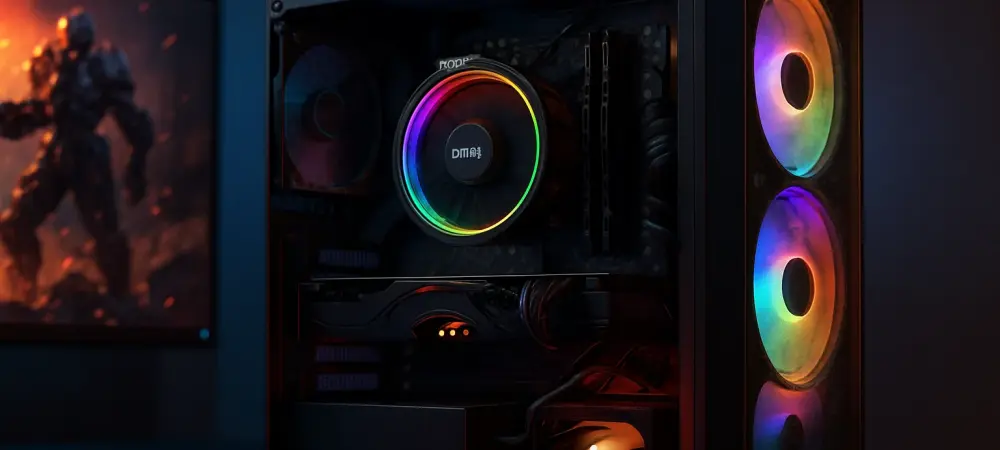
Introduction to AMD Ryzen 5 and Intel Core i5
In the ever-evolving landscape of PC hardware, mid-range processors stand as the backbone for countless gamers and builders seeking performance without breaking the bank, and AMD Ryzen 5 and Intel Core i5 have emerged as the titans of this segment. Catering to budget-conscious enthusiasts and mainstream users who demand reliable power for gaming, productivity, and multitasking, these processor families strike a balance between cost and capability, making them the go-to choice for mid-tier systems that handle everything from competitive esports to everyday workloads. Both AMD Ryzen 5 and Intel Core i5 target similar audiences, yet they carve distinct paths with their technological approaches and ecosystem offerings. Ryzen 5 processors, built on AMD’s AM5 platform, emphasize gaming optimization through innovations like 3D V-Cache, while Intel’s Core i5 lineup, leveraging the LGA 1700 socket, often focuses on versatility with mixed core architectures. Their competition in price and performance shapes the decisions of many PC builders, setting up a rivalry that influences market trends.
This comparison delves into how these two giants stack up, examining their strengths and weaknesses across gaming performance, technical specifications, and overall value. By exploring the nuances of each platform, from pricing strategies to upgrade paths, a clearer picture emerges for those navigating the mid-range CPU market. The stage is set to analyze which processor family offers the best fit for specific needs in today’s competitive landscape.
Performance and Specifications Breakdown
Gaming Performance at 1080p Resolution
When it comes to gaming at 1080p resolution with high settings, the AMD Ryzen 5 7600X3D positions itself as a formidable contender against Intel’s Core i5 14600K and Core Ultra 5 245KF. AMD’s internal benchmarks reveal that the Ryzen 5 7600X3D holds a significant edge, boasting an average 22% performance lead over the Core Ultra 5 245KF in competitive titles, with a striking 42% advantage in games like PUBG. In AAA titles, the lead narrows to 13%, yet remains impressive with a 34% boost in Borderlands 3.
Against the Core i5 14600K, the Ryzen 5 7600X3D still maintains a notable advantage, though the gap is smaller. Data indicates a 12% lead in competitive games and an 8% edge in AAA titles, showcasing consistent gains across various genres. These numbers highlight AMD’s focus on delivering high frame rates tailored for gamers who prioritize smooth gameplay at popular resolutions.
A key factor behind AMD’s gaming prowess is its 3D V-Cache technology, stacking a substantial 96 MB of total cache to minimize latency and enhance performance in CPU-bound scenarios. Intel, by contrast, leans on higher clock speeds and increased core counts in its Core i5 models, which can benefit certain titles but often fall short of AMD’s cache-driven approach at 1080p. This distinction underscores a fundamental difference in design philosophy for gaming optimization.
Core Architecture and Technical Specs
Diving into the architectural underpinnings, the AMD Ryzen 5 7600X3D features a 6-core, 12-thread design based on the Zen 4 architecture, with a base clock of 4.0 GHz and a boost clock reaching 4.5 GHz. This setup contrasts with Intel’s Core i5 offerings, such as the 14600K, which often incorporate a hybrid architecture of performance (P-cores) and efficiency cores (E-cores), alongside higher boost frequencies. Intel’s design aims to juggle diverse workloads with raw speed, while AMD hones in on efficiency and gaming-specific enhancements.
Power consumption reveals another divergence, with the Ryzen 5 7600X3D operating at a modest 65W TDP, making it easier to cool and more energy-efficient for compact builds or budget cooling solutions. Intel’s mid-range CPUs, like the Core i5 14600K, typically demand higher TDPs, necessitating robust cooling systems and drawing more power under load. This difference can impact long-term operating costs and system design considerations for builders.
The real-world implications of these specs manifest in varied scenarios. AMD’s architecture excels in gaming environments where cache plays a critical role, while Intel’s higher clocks and core diversity offer an edge in multitasking or productivity tasks like video editing. Choosing between them often hinges on whether gaming frame rates or broader workload flexibility takes precedence in a user’s priorities.
Price-to-Performance Value
Evaluating cost-effectiveness, the Ryzen 5 7600X3D stands out at a price point of $269, positioning it as an attractive option compared to Intel’s Core i5 14600K and Core Ultra 5 245KF, which often hover in a similar or slightly higher bracket. AMD’s lower entry cost, paired with its gaming-optimized cache, delivers exceptional value for budget gamers focused on maximizing frame rates without splurging on premium hardware. Intel’s offerings, while occasionally pricier, cater to users who require stronger multi-threading capabilities for mixed workloads beyond gaming. The Core i5 models provide a more rounded performance profile, appealing to those who balance gaming with tasks like streaming or content creation. However, for pure gaming value, AMD’s strategic pricing often tips the scales in its favor for cost-conscious buyers.
Trade-offs exist on both sides. The Ryzen 5 7600X3D sacrifices higher boost clocks compared to top-tier AMD models, while Intel’s broader versatility may not justify the cost for gamers uninterested in productivity gains. Assessing value ultimately depends on aligning the processor’s strengths with specific user needs, whether prioritizing raw gaming power or a more generalized performance spectrum.
Challenges and Limitations of Each Platform
AMD’s Ryzen 5 7600X3D, despite its gaming strengths, faces hurdles with its relatively modest clock speeds, lagging up to 700 MHz behind higher-end X3D siblings. This limitation can dampen performance in scenarios that rely heavily on frequency rather than cache. Additionally, its constrained multi-threading capacity may pose challenges for non-gaming workloads, such as heavy multitasking or professional applications.
Intel’s Core i5 lineup, including models like the 14600K, grapples with higher power consumption and corresponding cooling demands, which can complicate builds for users with limited budgets or smaller cases. Furthermore, Intel’s gaming performance at 1080p often lacks the pronounced edge seen in AMD’s 3D V-Cache approach, making it less specialized for gamers seeking maximum frame rates at this resolution.
Platform-specific considerations also weigh in. AMD’s AM5 socket mandates DDR5 memory and PCIe 5.0 support, potentially inflating build costs for those upgrading from older systems. Intel’s LGA 1700 platform, while offering DDR4 compatibility on some motherboards for cost savings, faces its own constraints with upgrade paths as newer generations may shift socket designs. These ecosystem factors add layers of complexity to the decision-making process for prospective buyers.
Conclusion and Recommendation for Gamers and Builders
Reflecting on the detailed comparison, it becomes evident that the AMD Ryzen 5 7600X3D carves a niche as a gaming powerhouse at 1080p, consistently outpacing Intel’s Core i5 14600K and Core Ultra 5 245KF with substantial leads in frame rates across competitive and AAA titles. Meanwhile, Intel’s Core i5 lineup demonstrates a more balanced profile, adept at handling mixed workloads beyond just gaming. For those looking ahead, gamers on a budget who prioritize efficiency and raw gaming performance will find a clear winner in the Ryzen 5 7600X3D, and the recommendation is to pair it with a cost-effective AM5 motherboard to maximize value. Builders needing versatility for productivity alongside gaming are advised to lean toward Intel’s Core i5, ensuring their systems can adapt to diverse tasks with robust multi-threading support. As the mid-range CPU market continues to evolve, staying informed about upcoming releases and platform updates from both AMD and Intel is suggested as a critical next step. Exploring community benchmarks and real-world reviews offers deeper insights, helping users tailor their choices to emerging technologies and personal build goals, ensuring their systems remain competitive in a dynamic tech landscape.