

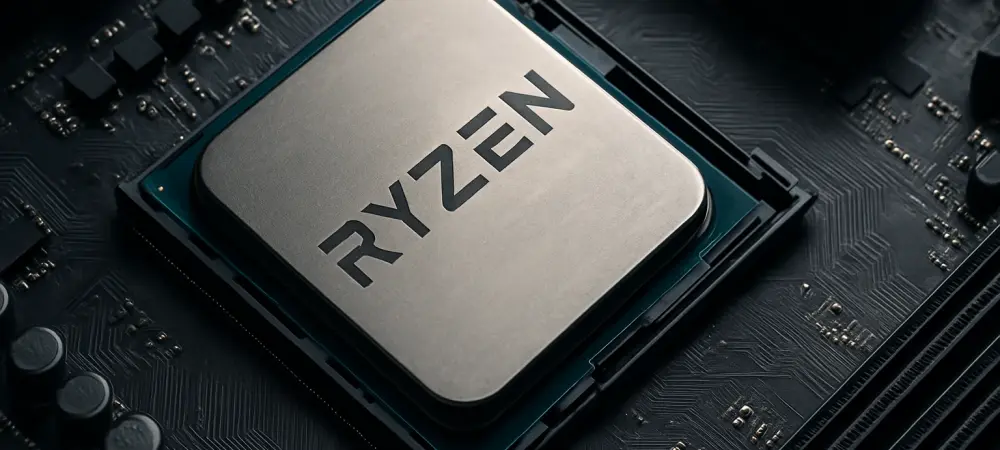
At a time when the tech industry is consistently evolving, the discovery of counterfeit AMD Ryzen processors highlights a growing concern in the hardware marketplace. A recent investigation into a fake AMD Ryzen 7 9800X3D processor exemplifies the challenges faced by consumers and industry professionals alike. Despite the counterfeit’s seemingly authentic exterior, a deeper examination reveals major discrepancies that affirm its illegitimacy. This analysis delves into understanding the extent of counterfeit processors and their impact on the industry.
Understanding Ryzen Processors
AMD’s Ryzen processors have become a staple in the computing world, recognized for their innovative architecture and performance capabilities. The Ryzen series, distinguished by its advanced multi-core designs and energy efficiencies, quickly captured significant market share upon release. Celebrated for providing high performance at an affordable price, Ryzen processors play a critical role in driving technology forward, influencing trends in gaming, professional computing, and beyond. The introduction of Ryzen processors revolutionized consumer expectations, offering unparalleled processing capabilities that fed into broader technological advancements such as AI development and VR realization. The significance of Ryzen lies not only in their immediate tech applications but in their potential to scaffold emergent technologies that hinge on high processing power.
Distinguishing Features of Counterfeit Processors
Counterfeit Ryzen processors often stand apart by distinct physical characteristics that are tell-tale signs of falsification. An investigative approach reveals physical discrepancies such as incorrectly marked exterior labels and inconsistent heat spreader designs. The counterfeit’s lid was deliberately protruded to mimic the authentic profile, yet the illusion quickly fell apart once its innards were scrutinized.
Technically, these counterfeit units lack the core architecture that gives genuine processors their edge. A close examination uncovers missing solder points and the absence of key internal components like chiplets, which fundamentally undermine functionality and performance. These faux models, upon rigorous analysis, fail to deliver on any of the processing promises made by their authentic counterparts.
Trends and Market Dynamics
The rise of counterfeit Ryzen processors indicates a troubling trend within the hardware market, driven by unscrupulous sellers seeking to exploit consumer trust. While the frequency of such items on platforms like Amazon remains marginal compared to genuine sales, their existence poses an operational threat. Consumers and industries have responded with heightened vigilance, emphasizing the need for verified purchasing avenues and comprehensive awareness campaigns.
Despite the challenges, the industry’s response has been multifaceted, including the rollout of authenticity verification methods and increased monitoring of retail channels. These efforts aim to protect consumers from fraudulent products and uphold trust in legitimate Ryzen processors.
Consequences for Stakeholders
The ramifications of counterfeit processors extend beyond the individual consumer, affecting retailers who unwittingly circulate these products and the broader tech industry ensnared in reputation risks. Notable instances have surfaced where customers purchased counterfeits only to find performance drastically lacking, resulting in considerable financial and operational losses.
Industries that rely on the consistent performance of genuine processors face heightened uncertainty, emphasizing the need for robust counterfeit mitigation mechanisms. The ensuing damage to trust and credibility necessitates a concerted effort to curb these illicit activities and shield consumers and businesses from potential harm.
Addressing Counterfeit Challenges
Detecting counterfeit processors remains a daunting challenge, with both technical difficulties and market manipulation in play. Initiatives to counteract these challenges include enhanced forensic techniques for product validation and the development of advanced encryption technologies to certify authenticity.
Efforts spearheaded by government agencies, industry consortia, and AMD itself are instrumental in devising strategies that address production lines and distribution networks vulnerable to counterfeiting. The advancements in combating these issues reflect an ongoing commitment to consumer and enterprise protection.
Future of Counterfeit Mitigation
Looking to the future, there are promising developments on the horizon for combating counterfeit processors. Ongoing research aims to invent cutting-edge embedded identification technologies that pinpoint authenticity at the manufacturing level. Such breakthroughs promise to inhibit the spread of counterfeits right at the source, thereby enhancing consumer confidence. Industry collaboration in setting new standards for verification processes and consumer education campaigns will play a pivotal role moving forward. These initiatives are expected to not only fortify protections against counterfeiting but also usher in an era of increased security and transparency in processor technologies.
Concluding Thoughts
In conclusion, the uncovering of counterfeit Ryzen processors underscores significant vulnerabilities within the tech supply chain. Although current measures show progress in identifying and mitigating these risks, continuous innovation and cooperative vigilance are essential. Tackling these threats demands a comprehensive approach encompassing technological ingenuity and strategic policymaking, guiding the industry toward a more secure and resilient future.