

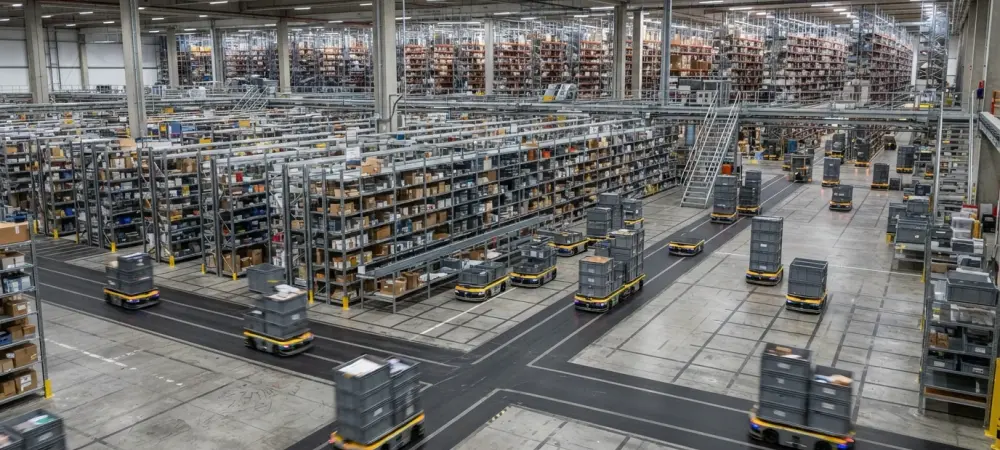
A massive shift is occurring within the sprawling corridors of regional distribution centers as high-speed robotics and sophisticated artificial intelligence replace the manual rhythms of traditional retail fulfillment. This transition is not merely a technical upgrade but a fundamental redesign of how commerce functions at a global scale. As consumer expectations for rapid delivery and constant availability continue to rise, the infrastructure supporting these demands has evolved from a series of passive warehouses into a dynamic, interconnected network of intelligent nodes. At the heart of this transformation is a commitment to automation that prioritizes seamless integration over individual robotic tasks, signaling the end of the experimental era in supply chain management.
The multi-billion-dollar collaboration between retail leaders and technology innovators represents a critical turning point in the industry. By moving beyond localized pilots and into full-scale network deployment, companies are attempting to solve the inherent inefficiencies of traditional logistics. This story is no longer about whether a robot can perform a single human task; it is about how a unified fleet of thousands of machines can be orchestrated to ensure that every product reaches its destination with surgical precision and minimal cost.
The $6 Billion Bet on the Future of Retail Logistics
The decision to invest approximately $6 billion into the automation of 25 regional distribution centers marks one of the most ambitious technological commitments in retail history. This massive capital expenditure reflects a belief that the future of competitive advantage lies in the speed and efficiency of the back-end supply chain. By modernizing these critical hubs, the goal is to transform the way inventory moves from the manufacturer to the store shelf and the customer’s doorstep. This effort is designed to span several years, with the current roadmap for implementation extending from 2026 to 2029 to ensure a staggered and sustainable rollout across the existing infrastructure. Crucially, this partnership includes a $125 million carve-out specifically for research and development. This strategic move indicates that off-the-shelf solutions are no longer sufficient for the complexities of modern retail. Instead, the focus has shifted toward co-developing proprietary technology tailored to the specific needs of high-volume fulfillment. By investing in custom racking systems and advanced inventory-management software, the organization ensures that its hardware and software are perfectly synchronized. This approach creates a unique barrier to entry, as competitors cannot simply purchase the same level of optimization from a third-party vendor without similar long-term investment.
The End of the “Isolated Robot” Era
For years, automation was viewed as a tactical fix for specific problems, such as a robotic arm used for palletizing or an autonomous cart for moving bins. However, the limitations of this “isolated robot” model became clear as omnichannel retail demands intensified. A single automated station cannot fix a systemic bottleneck if the rest of the facility remains tethered to manual, paper-based processes. The focus has now shifted to a network-wide strategy where automation is the baseline rather than the exception. This ensures that data flows as freely as physical goods, providing a real-time view of inventory that was previously impossible to achieve.
Traditional warehouse models, which rely heavily on manual labor and decentralized workflows, struggle to keep pace with the sheer volume of modern e-commerce. To overcome this, a standardized technological architecture is being deployed across all regional distribution centers. This standardization allows for a plug-and-play approach where updates to the AI orchestration layer can be pushed to dozens of sites simultaneously. It creates a predictable environment where operational success is no longer dependent on the unique layout of a specific facility, but on the performance of a unified digital and physical system that treats the entire supply chain as one cohesive unit.
Modernizing the Supply Chain: From Tactical Tools to Operating Systems
The intelligence behind these modern distribution centers is an AI orchestration layer that serves as the “brain” of the entire operation. This software does more than just control movements; it predicts demand, optimizes storage locations, and manages the complex interactions between thousands of mobile bots. By transitioning from a project-based mindset to a system-based management model, facilities can operate with a level of fluidity that manual processes simply cannot match. The software ensures that every bot is positioned to maximize throughput, drastically reducing the “dead time” that often plagues traditional logistics operations. Maximizing every cubic foot of available space is another critical component of this technological shift. Through the use of high-density racking and specialized modules like BreakPack and SymMicro, warehouses can store significantly more inventory within the same physical footprint. This increase in storage capacity is achieved by utilizing vertical space and minimizing the width of aisles needed for robotic navigation. Economically, this allows a company to increase its product assortment and stock levels without the massive expense of building new real estate, providing a sustainable way to scale operations in an increasingly crowded market.
Reliability has emerged as a primary competitive advantage in this new era of automation. By creating a “predictable heartbeat” for inventory flow, automated systems stabilize the replenishment cycle for physical stores. This consistency is vital for maintaining shelf availability and preventing the out-of-stock scenarios that frustrate customers. Furthermore, the automation of repetitive and physically demanding tasks helps to insulate the supply chain from the volatility of the labor market. While human workers remain essential, their roles are elevated to focus on system oversight and problem-solving, rather than the grueling manual labor that historically led to high turnover rates.
Benchmarking Success: Lessons from Industry Giants
The shift toward integrated robotics is validated by the successes of other global industry giants. Amazon, for example, has refined its Sequoia system to integrate mobile robotics and robotic arms into a seamless workflow that processes inventory up to 75% faster than older models. This level of speed is not about making a single robot move faster; it is about the coordination of a massive fleet to eliminate friction at every touchpoint. The lesson here is that the value of automation is found in the collective performance of the system, where mobile units and stationary arms work in perfect harmony to move goods from receiving to shipping in record time.
Similarly, the achievements of DHL and Locus Robotics provide a blueprint for scalable deployment. By reaching the milestone of one billion picks across dozens of global sites, they demonstrated that autonomous mobile robots can be successfully integrated into diverse operational environments. Expert consensus now suggests that the primary challenge has evolved from proving the viability of the hardware to mastering the orchestration of the fleet. The organizations that succeed are those that treat their robotic workforce as a unified entity, managed by a centralized intelligence that can adapt to changing order volumes and seasonal peaks in real time.
A Framework for Implementing Network-Scale Automation
Implementing automation at a network scale requires a relentless focus on repeatability. Rather than treating each facility as a unique project, companies must develop a template that allows for the rapid rollout of technology across multiple sites. This includes ensuring that the hardware stack is compatible with existing facility layouts and that local teams are trained on a standardized set of procedures. As the implementation process matures, the time required to bring a new automated center online should decrease, allowing the organization to achieve its strategic goals faster and more cost-effectively.
Monitoring performance after the initial rollout is equally important, requiring the identification of critical post-implementation KPIs. Measuring system uptime during peak stress periods, such as the high-volume weeks surrounding major holidays, provides the ultimate test of the technology’s durability. Additionally, tracking “implementation speed” serves as a vital metric for long-term scalability. If a company can deploy its automated system to a new location with minimal disruption to ongoing operations, it proves that the model is truly scalable and ready to support the next generation of retail logistics. The transition toward network-scale automation redefined the standard for modern logistics. Leadership teams recognized that the path to resilience required moving beyond the localized fixes of the past. They prioritized the development of a unified operating system that transformed physical warehouses into high-speed data centers. This strategic pivot allowed organizations to handle unprecedented surges in demand with consistent reliability. By shifting the focus toward a scalable and repeatable technological architecture, the industry successfully insulated itself from traditional operational risks. The primary solution involved integrating modular hardware that permitted rapid adjustments to inventory flow. Stakeholders then considered the next phase of evolution, focusing on the integration of edge computing to further decrease latency in robotic decision-making.