

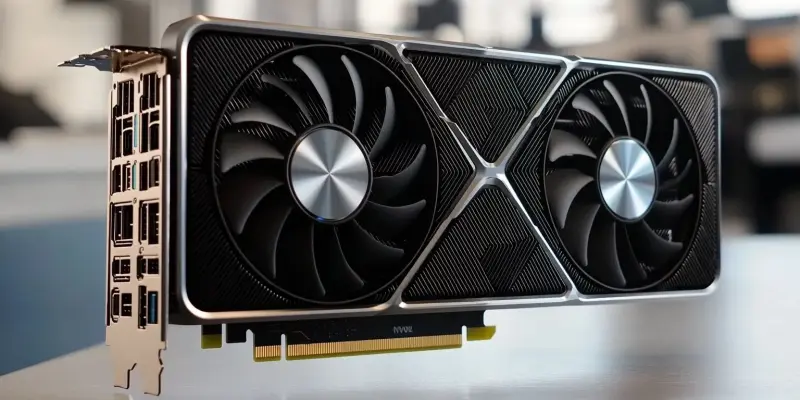
At CES 2025, Nvidia made waves by unveiling its new RTX 50-series GPUs, presenting a pricing strategy quite different from what the market was expecting based on the past. This bold move has sparked significant discussions within the tech community about Nvidia’s potential to dominate the GPU market, especially when compared to AMD’s upcoming RDNA 4 series.
Nvidia’s Pricing Strategy
Nvidia’s announcement at CES 2025 was significant, not only because of the new tech but also due to the pricing of the RTX 50-series GPUs. Unlike the previous RTX 4000 series, which faced criticism for steep prices, the new lineup is positioned more affordably. This change has been seen as a direct response to consumer feedback, aiming to make high-performance GPUs accessible to a broader audience.
Nvidia’s New Offerings
Among Nvidia’s new releases, the flagship RTX 5090 stands out, priced at $1,999, which is competitive for a top-tier GPU. Following closely, the RTX 5080 comes in at $999, offering a high-end option at a somewhat lower price point. The mid-range offerings, RTX 5070 and 5070 Ti, priced at $549 and $749 respectively, represent a considerable reduction from their predecessors. This strategic pricing may attract gamers and professionals who need robust performance without the hefty price tag.
Performance Promises
Nvidia has not only adjusted its pricing but has also made bold claims regarding performance improvements. The RTX 5070 and 5070 Ti are said to deliver significant enhancements, particularly when utilizing DLSS 4 technology. These improvements suggest that even mid-range options could rival high-end models from previous generations, like the RTX 4090, thereby offering substantial value for consumers who may have previously opted for higher-end models.
AMD’s Position
On the other side of the spectrum, AMD appears to be facing challenges with its RDNA 4 series. Known traditionally for their more affordable options, AMD now finds itself in a tight spot regarding pricing and release timelines for its new GPUs. With the RDNA 4 series expected to face delays until at least March 2025, and lacking aggressive budget options, AMD’s competitive edge seems to be slipping.
Market Dynamics
The competitive landscape is rapidly shifting with Nvidia’s new pricing strategy. By capturing significant market share before AMD’s new releases, Nvidia could significantly reduce AMD’s influence, especially if RDNA 4 GPUs don’t present a highly competitive pricing structure. This pre-release market capture could see Nvidia solidifying its place as the preferred choice for both high-end and budget-conscious consumers.
Budget Concerns
One notable aspect of AMD’s current strategy is the discontinuation of the budget-friendly RDNA 3 RX 7400 and 7300 models. This move leaves a gap in the market for affordable GPUs, a segment that Nvidia appears eager to fill with its newly priced RTX 50-series. This gap could lead consumers who previously favored AMD for cost-effective options to switch allegiances to Nvidia, further shifting the balance of power in the GPU market.
Overall Trends
At CES 2025, Nvidia captured considerable attention by introducing its new RTX 50-series GPUs, signaling a distinct shift in its pricing strategy, contrasting sharply with market expectations shaped by previous launches. Nvidia’s unexpected approach has since become a hot topic within the tech community, leading to spirited debates over the company’s potential to assert control over the GPU market landscape. This move is especially significant as it comes in the wake of AMD’s anticipated RDNA 4 series, which is poised to be a formidable competitor. The RTX 50-series GPUs not only promise enhanced performance but also come with features aimed at setting new industry standards. Analysts and enthusiasts alike are speculating on how Nvidia’s pricing and technological innovations will impact market dynamics, potentially sidelining AMD’s RDNA 4 series before it even hits shelves. The unveiling has set the tech world abuzz, with many questioning whether Nvidia’s strategies will solidify its dominance or merely spark a new round of competition in an ever-evolving industry.