

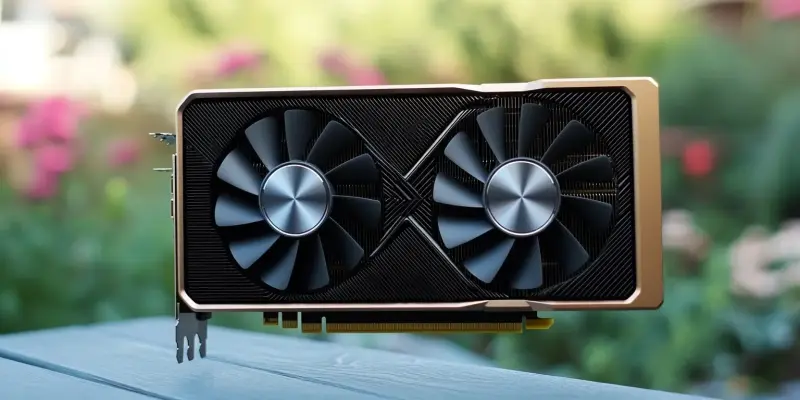
With the impending release of Nvidia’s RTX 5080, enthusiasts and professionals alike are keen to see if this next-generation graphics card can truly live up to the considerable hype. The key question on everyone’s mind is whether the reported 20% performance gain over the RTX 4080 will justify the steep $999 price tag. Synthetic benchmarks have been promising, yet real-world results often tell a more complex story. We aim to delve deeper into the performance improvements suggested by early Geekbench results while considering Nvidia’s historical pricing strategy and customer expectations for their next gaming powerhouse.
Performance Benchmarks and Preliminary Results
The early benchmark results for the RTX 5080 provide a mixed yet intriguing picture of the expected performance gains. Geared towards both gamers and professionals, the RTX 5080 showcases significant improvements but remains shy of delivering earth-shattering figures. In Vulkan tests, the RTX 5080 purportedly pulls ahead with a 20% boost, a considerable leap if validated in diverse applications. However, less enthusiasm is reserved for its OpenCL performance, where the upgrade is a mere 10%. Such disparities between different benchmarks underscore the importance of awaiting real-world gaming and productivity applications to test the RTX 5080’s mettle.
Despite Nvidia’s impressive track record in constructing high-performance GPUs, comparisons with existing models like the RTX 4090 reveal that the RTX 5080 still falls noticeably short. Especially in OpenCL benchmarks, the RTX 4090 manages to stay a solid 20% faster. This raises pertinent questions: Does the RTX 5080’s performance justify the investment, especially when previous iterations seem to hold their ground so well? As early results trickle in, potential buyers may find themselves weighing the 5080’s new capabilities against the still-potent power of its predecessors. With expectations being tempered, it remains crucial to remember that synthetic benchmarks are not the ultimate yardstick of a GPU’s prowess but offer just a preliminary glimpse.
Pricing Strategy and Consumer Expectations
Nvidia’s pricing strategy for the RTX 5080 offers a glimmer of hope for those looking to balance performance and cost. Launching at $999, the RTX 5080 is priced noticeably lower than the previous generation’s RTX 4080 which debuted at $1,199. While this price reduction is a welcome move, the expenditure remains daunting. At this tier, consumers are making a substantial investment, expecting major benefits both in gaming performance and future-proofing. Notably, the flagship RTX 5090 will command an even higher premium, and questions will inevitably arise about the value distinction between these high-end cards.
Another pivotal aspect of Nvidia’s strategy centers on product release timing. The RTX 5080 is slated for a January 30 launch alongside its more robust sibling, the RTX 5090. Many consumers may appreciate this synchronized release, as it allows for direct comparative assessments of price-to-performance ratios. The release of the RTX 5070 and its Ti variant in February will further complicate purchase decisions, as they will provide potentially more affordable options with different performance profiles. For Nvidia, balancing inventory to satisfy distinct market segments while avoiding shortages or inflated resale prices is critical to the reception of their new lineup.
Real-World Applications and Consumer Reception
With Nvidia’s RTX 5080 on the horizon, both enthusiasts and professionals are eager to discover if this upcoming graphics card can truly meet the significant excitement surrounding it. One prominent question is whether the claimed 20% performance boost over the RTX 4080 will justify its hefty $999 price. While synthetic benchmarks appear promising, real-world performance often provides a more nuanced picture. We plan to thoroughly explore the performance advancements indicated by early Geekbench results, while also taking into account Nvidia’s historical pricing strategies and the expectations set by their customer base for this new gaming powerhouse. Additionally, we will examine the key technological improvements and innovations that might contribute to these performance gains. Nvidia’s track record of pushing the envelope in terms of graphical performance sets a high bar for the RTX 5080. Consumers are naturally curious about the card’s real-world applications, especially for gaming and professional workloads, questioning if it will offer the value the price suggests.