

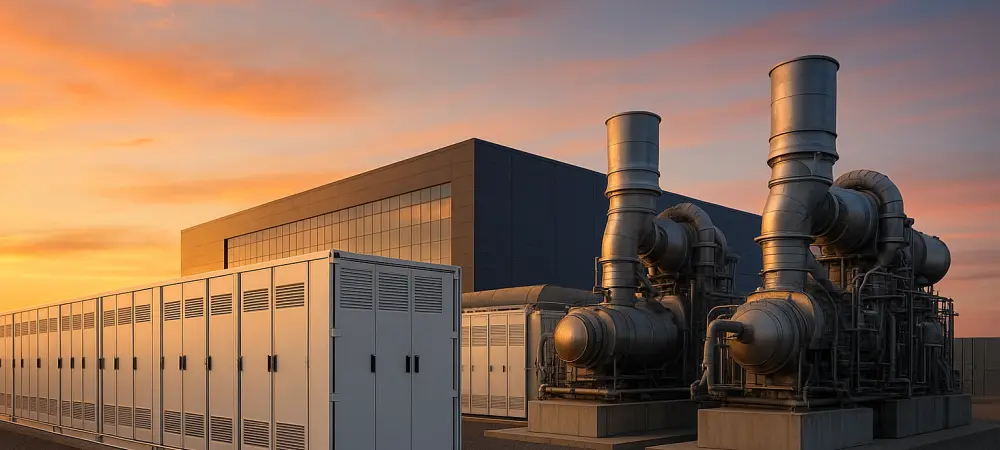
The seamless hum of a smartphone interface masks a brutal reality occurring behind the scenes in the industrial zones of the world, where the digital revolution is currently slamming into a brick wall made of unyielding copper and outdated electrical transformers. While the software layer of our civilization accelerates at an exponential rate, the physical infrastructure supporting it has remained tethered to a twentieth-century grid model. This tension has reached a breaking point, transforming the quest for power from a back-office utility concern into the single most significant strategic challenge for the global technology sector. As a result, the industry is entering a period of forced reinvention, where the only path forward involves a radical departure from traditional energy dependency.
The End of the “Plug and Play” Era in Data Infrastructure
The historical assumption that a data center developer could simply purchase a plot of land and expect a high-voltage connection to be waiting for them has officially crumbled. In 2026, electricity is no longer a guaranteed utility; it has become a scarce commodity that must be fought for, negotiated, and increasingly, produced on-site. In many of the most critical digital hubs, the administrative process of securing megawatts has devolved from a standard procedure into an expensive, multi-year odyssey. This shift is fundamentally altering the geography of the internet, as developers look away from traditional markets toward any region that can actually deliver the current necessary to keep the servers cool and the data flowing.
The friction between the speed of digital demand and the lethargy of physical power delivery is creating a new hierarchy among tech giants. Companies that once prioritized proximity to urban centers are now prioritizing proximity to viable energy sources, even if that means moving to remote locations. This era of grid scarcity is forcing a reimagination of the data center not as a passive consumer of electrons, but as an integrated component of the energy landscape. The “plug and play” model, which fueled the first few decades of the internet, has been replaced by a “build and generate” philosophy that prioritizes independence over convenience.
Understanding the Structural Power Bottleneck
The current power crisis is not merely a shortage of fuel, but a profound structural bottleneck caused by the unprecedented energy density of Artificial Intelligence. Modern AI clusters require vastly more power than the traditional cloud workloads of the past, concentrating massive electrical loads into smaller physical footprints. This explosive growth has collided with a utility infrastructure that was designed for a slow-moving world. Consequently, the timeline for securing a grid connection in primary markets now spans from 2026 to 2030 or beyond, a duration that is completely incompatible with the fast-paced development cycles of the silicon industry.
Beyond the sheer volume of energy required, legacy power networks are physically ill-equipped to handle the specific needs of modern GPU clusters. These networks were built for distributed residential and light industrial use, not the constant, high-intensity draw of liquid-cooled supercomputers. The mismatch between what the grid can provide and what the technology requires has rendered traditional development models obsolete. In this environment, the inability to access power has become the ultimate ceiling on technological progress, threatening to stall the very innovations that the data center industry is built to support.
The Rise of Energy Autonomy as a Strategic Pivot
Energy autonomy has emerged as the definitive solution for operators who refuse to let utility timelines dictate their business growth. By shifting from a passive consumer role to an active producer role, data centers are utilizing onsite generation to bypass the gridlock. Technologies such as high-efficiency gas engines and sophisticated microgrids allow facilities to come online in a fraction of the time required for a traditional utility connection. This transition toward self-sufficiency enables a facility to be operational within six to twenty-four months, effectively decoupling the digital construction timeline from the bureaucratic pace of the electrical utility.
This pivot toward autonomy is often misunderstood as a retreat from environmental responsibility, yet the reality is far more nuanced. Modern onsite power systems are being designed with a “transition-ready” architecture that prioritizes modularity and future-proofing. For example, a system might begin operation using natural gas to meet immediate needs but is engineered to incorporate hydrogen or battery storage as those technologies reach industrial scale. This approach proves that speed and sustainability are not mutually exclusive; rather, they are parts of a phased strategy that uses available tools today while building the infrastructure for a cleaner tomorrow.
Expert Perspectives on the “Structured Transition”
Industry leaders are increasingly warning against the “stranded asset trap,” where companies invest in rigid power hardware that cannot adapt to changing carbon regulations or fuel availability. The consensus among engineers is that the most valuable data centers will be those that offer maximum flexibility. A modular energy system allows an operator to swap out power components or change fuel sources without rebuilding the entire facility. This adaptability protects the massive capital investment required for these projects and ensures that the data center remains viable throughout its multi-decade lifespan regardless of shifts in the energy market.
Furthermore, the integration of onsite generation is transforming data centers into valuable assets for the communities that host them. Rather than being a drain on the local grid, an autonomous data center can provide stability through “peak shaving,” where the facility switches to its own power during times of high local demand. Some operators are even exploring models where excess heat and power are shared with nearby industrial or residential areas. This reciprocal relationship turns the data center into a resilient energy hub, providing a level of reliability and local benefit that a strained public utility simply cannot match.
Frameworks for Implementing Onsite Power Independence
Successfully navigating the move toward energy autonomy requires a disciplined, four-step approach to infrastructure. Step 1: Adopt Modular Power Systems. By using scalable generation units, operators can match their power capacity exactly to the growth of their server halls, avoiding the waste of over-provisioning. Step 2: Prioritize Fuel Flexibility. Investing in engines that can run on natural gas today but transition to Hydrotreated Vegetable Oil or hydrogen blends ensures long-term compliance with environmental mandates. This flexibility is the bridge that connects immediate power needs with the ultimate goal of carbon neutrality. Step 3: Integrate Hybrid Storage. Combining onsite generation with industrial battery systems allows a facility to manage sudden load spikes and smooth the transition between different power sources. Step 4: Establish a Reciprocal Grid Relationship. Designing systems to be bi-directional allows the data center to sell services back to the utility, creating a secondary revenue stream while supporting regional energy stability. These frameworks collectively move the industry away from the risk of grid dependency and toward a future where data centers are the masters of their own electrical destiny.
The industry eventually recognized that the old reliance on a central grid was no longer viable for the scale of operations demanded by the AI revolution. Stakeholders who transitioned toward energy independence discovered that they could finally dictate their own timelines while contributing to a more resilient regional energy ecosystem. This evolution marked a significant departure from the passive consumption models of the past, setting a new standard for infrastructure resilience. The move to onsite power proved to be the most effective way to align rapid technological expansion with the practical constraints of the physical world.