

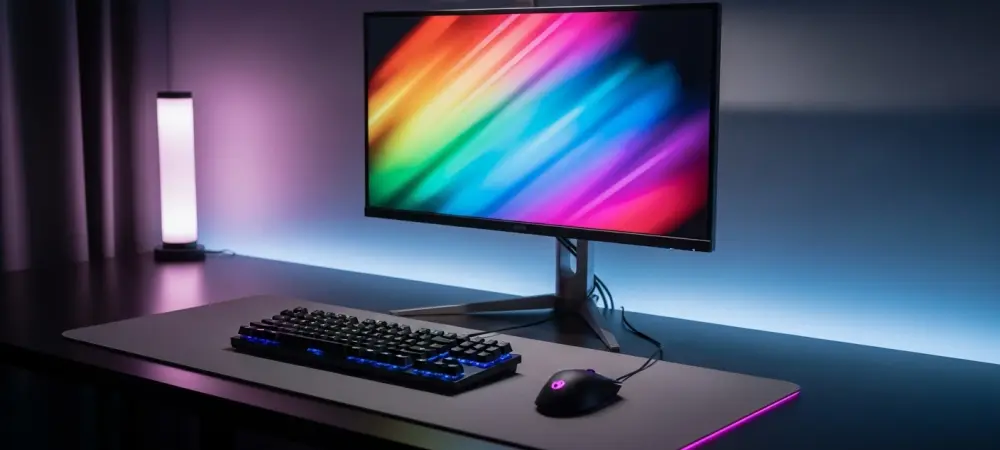
The dream of owning a display with perfect black levels and breathtaking color has long been gated behind a four-figure price tag that forced most enthusiasts to settle for aging LCD technology. For years, the gaming community viewed Quantum Dot OLED (QD-OLED) as the final frontier of visual fidelity, reserved only for those with deep pockets and high-end rigs. This luxury status defined the market, creating a sharp divide between professional-grade visual quality and the reality of the average consumer’s budget. The arrival of the Alienware AW2726DM at a startling $350 price point signals a fundamental shift in how premium hardware is distributed across the market. By slashing the entry cost of QD-OLED by more than half, Alienware is challenging the notion that elite performance must remain exclusive. This aggressive pricing strategy forces a critical question: is this a genuine democratization of high-end tech, or has the brand sacrificed too much utility to reach such a low number?
Is the OLED Revolution Finally Within Reach for Every Gamer?
Historically, the manufacturing complexities of organic light-emitting diodes meant that price drops happened in small, painful increments. Consumers often waited years for minor discounts, yet Alienware has bypassed the traditional slow-burn depreciation with a sudden, drastic market entry. The AW2726DM is not just another monitor; it is a strategic maneuver designed to capture a segment of the audience that previously viewed OLED as an unattainable fantasy.
This shift suggests that the era of “luxury-only” OLED is coming to an abrupt end. As manufacturing yields improve, Alienware is betting that volume sales will outweigh the thin margins of a budget-friendly premium panel. However, the true test lies in whether the target audience—competitive gamers and value seekers—is willing to accept the specific technical compromises required to make a $350 price tag feasible.
The Great Display Shift: Bringing Quantum Dots to the Mainstream
The transition from traditional IPS and TN panels to OLED represents the most significant leap in display technology since the move to high definition. Traditional panels rely on backlighting that often leads to “blooming” or greyish blacks, whereas QD-OLED offers self-emissive pixels. This results in a 1.5 million:1 contrast ratio that provides an unparalleled sense of depth, making virtual worlds appear more tangible and immersive than ever before.
Quantum Dot technology enhances this experience by providing a wider color gamut and more vibrant saturations than standard OLED. The industry-wide race to lower costs has now reached a boiling point, as manufacturers realize that the future of the desk-side setup depends on moving away from bulky backlight units. By integrating these vibrant colors into a more affordable chassis, the industry is effectively making the superior visual standard the new baseline for 2026.
Decoding the AW2726DM: Premium Tech at an Entry-Level Price
Under the hood, the AW2726DM delivers a 27-inch QHD resolution that strikes the ideal balance between pixel density and performance demand. Supporting a 10-bit color depth, the monitor ensures smooth gradients and a rich palette that satisfies both gamers and casual content creators. The real star, however, is the motion clarity; a 240Hz refresh rate paired with an astronomical 0.03 ms response time virtually eliminates motion blur, providing a tactical edge in fast-paced shooters.
Longevity often remains the primary concern for OLED buyers, and Alienware addresses this through a robust thermal and software suite. A graphite film heatsink works silently to dissipate heat, while AI-driven pixel management constantly monitors for static elements to prevent burn-in. These internal safeguards are housed in a signature Alienware aesthetic that includes a fully adjustable stand, ensuring that the hardware remains as ergonomic as it is technologically advanced.
The Cost of Affordability: Navigating Critical Hardware Compromises
Achieving this price point required a departure from the “everything-at-once” philosophy of flagship models. The most notable trade-off is the SDR brightness, which sits at a modest 200 nits. While this is sufficient for controlled lighting, it may struggle against the glare of a sunlit window or a bright office. This limitation identifies the monitor as a tool for “dark room” gaming rather than a versatile all-rounder for every environment.
Connectivity and synchronization also see specific constraints that buyers must navigate. While the unit supports AMD FreeSync Premium, it lacks official NVIDIA G-Sync certification, which might deter some GeForce users seeking a verified experience. Furthermore, the 240Hz peak is exclusive to the DisplayPort 1.4 connection. Users relying on HDMI will find themselves limited by lower bandwidth, making cable choice a critical factor in unlocking the full potential of the panel.
Is the AW2726DM Right for You? A Buyer’s Decision Framework
Determining the value of this monitor requires an honest assessment of a gamer’s physical environment and hardware capabilities. If the gaming station is located in a basement or a room with blackout curtains, the 200-nit brightness ceiling becomes a non-issue. For those who prioritize the instantaneous response of OLED over the sheer brilliance of a high-nit IPS panel, the trade-off favors the Alienware’s specialized performance.
Ultimately, this release redefined the “entry-level” category by introducing high-end contrast to a wider audience. Prospective buyers weighed the lack of official G-Sync against the massive savings, often concluding that the visual purity of QD-OLED outweighed the missing certifications. As the market moved toward more accessible high-fidelity gear, the industry looked toward even more efficient cooling methods and adaptive brightness algorithms to bridge the gap between affordability and peak luminance.