

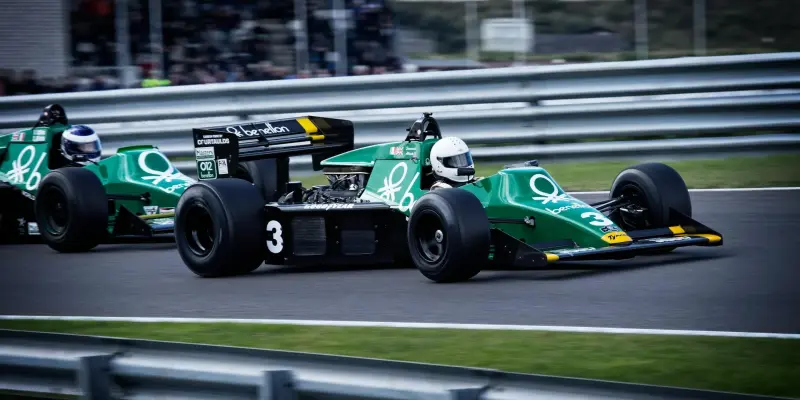
Racing Bulls, a top-tier Formula One team, is at the forefront of integrating artificial intelligence into its car design strategies to optimize both performance and operational efficiency. By collaborating with Neural Concept, a Swiss company renowned for its cutting-edge engineering design platform, Racing Bulls intends to harness the power of AI for more effective data-driven design processes and to accelerate decision-making. The central objective is to employ high-speed AI simulations capable of evaluating countless design variations within seconds, a stark contrast to conventional Computational Fluid Dynamics methods, which require several hours to achieve similar outcomes. This technological advancement allows for the testing of numerous scenarios that replicate real-world conditions, which might include fluctuating winds or ambient temperatures, always aiming to pinpoint designs that enhance track performance. The partnership’s ultimate ambition is to secure a competitive advantage, recognizing that milliseconds gained through AI-driven design precision could culminate in significant race day triumphs.
High-Speed AI Simulations: A New Frontier in Design
Redefining Design Through Rapid Simulations
The integration of AI into the design processes at Racing Bulls is transforming the way Formula One cars are developed. High-speed simulations have brought a new level of efficiency, offering the ability to review enormous amounts of data and design possibilities in a fraction of the time previously required. This revolutionary approach allows teams to experiment with a wide array of design changes and adapt to unforeseen variables. By using AI technologies, designers can run myriad tests simulating actual race conditions, such as temperature fluctuations and aerodynamic shifts due to changes in wind direction and speed. These tests are now completed in seconds, giving designers the capability to swiftly adjust and refine their strategies, ensuring vehicles are optimized to meet the demanding conditions of the track. The value of these advancements is largely reflected in their ability to significantly reduce the time traditionally consumed by testing and iteration. As AI continues to evolve in the racing industry, these technologies not only facilitate faster development cycles but also drastically expand the realm of what is possible in car design. This kind of rapid analysis, previously unthinkable with older computational methods, is leading to more innovative solutions and the discovery of unique design insights. Instead of relying solely on human intuition and experience, teams now lean on data-driven insights, creating a synergy between machine learning and human expertise to foster unprecedented levels of innovation and performance enhancement.
Impact on Aerodynamic Development
Aerodynamics has long been a cornerstone of Formula One design and innovation, where even the slightest modification can yield substantial improvements in performance. The partnership between Racing Bulls and Neural Concept has placed a renewed emphasis on optimizing aerodynamic features through the use of AI technologies. By conducting exhaustive simulations and generating detailed analyses, engineers can understand and predict airflow behavior with greater precision than ever before. This comprehensive understanding helps teams refine their designs, accounting for every subtlety and variation in aerodynamic performance, which is critical for success in the high-speed environment of Formula One racing. AI-driven design strategies allow for the compression of what would typically be weeks of manual design and testing into mere days. As a result, racing teams now operate in a more dynamic and flexible design space, enabling them to iterate and refine their designs continually. This agility is invaluable, given the highly competitive nature of Formula One, where the ability to respond swiftly to challenges or opportunities could make all the difference between victory and defeat. The ongoing shift toward AI technologies in aerodynamics underscores a broader trend in motorsports, where traditional design paradigms are increasingly being supplanted by AI-powered strategies that emphasize precision, speed, and innovation.
The Broader Trend Toward AI-Powered Design in Motorsport
Balancing Human Expertise with AI’s Analytical Capabilities
Neural Concept’s partnership with Racing Bulls is indicative of a larger movement within competitive motorsport to fully integrate AI into the design process. The collaboration reflects a shared belief that combining AI’s rapid data processing with human expertise results in superior design outcomes. In this context, AI is not a replacement for human ingenuity but rather a powerful tool that enhances designers’ ability to innovate by providing comprehensive datasets and predictive analytics. This dynamic partnership has been pivotal in reshaping design workflows, allowing for the exploration of new design angles that were previously inaccessible.
The adoption of AI in designing Formula One cars showcases how AI enhances traditional methods by incorporating advanced algorithms to make previously complex tasks manageable. This shift creates a collaborative environment where machine learning informs design strategies, empowering engineers and designers to focus on the creative aspects of their work without being bogged down by time-consuming computational tasks. By allowing AI to handle the procedural aspects, humans can utilize its insights to push the boundaries of what’s technologically possible in motorsport.
Future Implications and Industry Trends
The influence of AI extends beyond its current applications within Racing Bulls and is likely to have far-reaching consequences for the industry. As AI technologies become more sophisticated, their role in design processes across the motorsport landscape will likely grow. AI’s ability to rapidly analyze complex scenarios and predict outcomes aligns perfectly with Formula One’s need for continual innovation and excellence. This technology propels motorsport toward new frontiers, enabling teams to achieve unprecedented levels of precision and customization in their vehicle designs.
Industry experts predict that AI will increasingly be involved in strategic decision-making processes, further bridging the gap between data analysis and engineering design. As Neural Concept’s tools evolve, they present new opportunities for collaboration in various sectors within the automotive industry, broadening the potential applications of AI far beyond the racetrack. This growing trend reflects a shift toward an era where AI is a central component of competitive racing, ensuring that the teams which most effectively integrate these technologies will maintain their edge at the forefront of motorsport innovation.
Pioneering New Directions in Formula One Design
Racing Bulls, a leading Formula One team, is pioneering the integration of artificial intelligence into car design to enhance both performance and efficiency. By partnering with Neural Concept, a Swiss company acclaimed for its state-of-the-art engineering design platform, Racing Bulls aims to leverage AI to improve data-driven design processes and speed up decision-making. The primary goal is to utilize high-speed AI simulations that can evaluate innumerable design permutations in mere seconds, unlike traditional Computational Fluid Dynamics methods that take hours to yield comparable results. This technological breakthrough lets the team test a myriad of scenarios that mirror real-world conditions like changing winds or varying temperatures, continually seeking to identify designs that bolster track performance. The ultimate aim of this collaboration is to gain a competitive edge, understanding that achieving even a fraction of a second advantage through precise AI-driven design could lead to significant success on race day.