

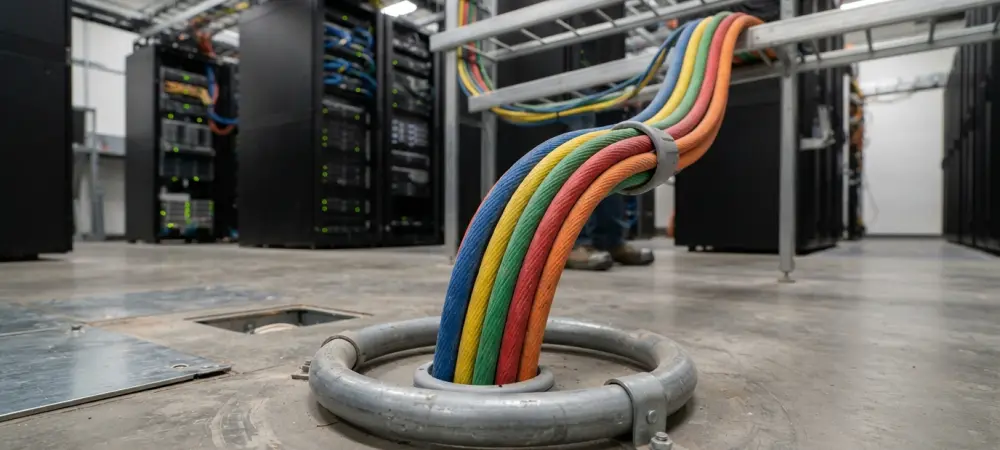
To prevent the waste of resources, the industry is moving toward a partnership-first mentality where multiple providers share the physical infrastructure layer. This shift represents a fundamental recognition that the digital transformation of the mid-2020s relies heavily on a robust, physical foundation that no single entity can effectively build alone. Although consumer attention often remains fixed on the speed of wireless interfaces and the deployment of 5G antennas, the technical reality is that every wireless signal must eventually pass through a complex web of fiber-optic cables. These cables form the essential architecture for small cells and backhaul services, supporting the massive data transfers that modern society has come to expect. As data consumption surges, the importance of this fiber backbone becomes increasingly evident, forcing a reevaluation of how networks are designed to handle the growing complexities of a hyper-connected global environment today. Infrastructure providers are no longer just laying cable; they are architecting the very veins of modern global communication.
Growing Demands in the Age of Zettabytes
The sheer magnitude of global data consumption has undergone a staggering transformation, ballooning from just two zettabytes in 2010 to an estimated 220 zettabytes in the current market environment. In earlier periods, this growth followed a relatively linear and predictable trajectory, which allowed network operators to scale their capacities incrementally to meet the steady rise of cloud computing and general internet traffic. However, the sudden emergence of high-intensity computing technologies has disrupted these traditional patterns, creating an urgent and immediate need for a more expansive fiber foundation that can withstand unprecedented volumes of traffic. This massive surge in demand is not merely a temporary peak but a sustained shift in how information is processed and shared across borders. Consequently, infrastructure providers must move beyond basic upgrades and instead focus on fundamental structural changes that can support the rapid acceleration of digital interactions and data-heavy enterprise applications worldwide. The primary driver of the ongoing infrastructure evolution is the rapid and pervasive integration of artificial intelligence across virtually every sector of the modern global economy. Recent research indicates that AI adoption rates have surged from 50% to 88% over just the last four years, marking a definitive step change in the technical requirements of modern networks. Unlike traditional data drivers that rely on steady uploads and downloads, AI amplifies existing traffic patterns by demanding a scale of connectivity that was previously unimaginable for standard cloud services. This shift is centered around the concept of compute, which refers to the immense processing power required to train large-scale language models and run sophisticated algorithms in real time. As organizations deploy more of these computing resources, the fiber capacity connecting these high-density processing centers must grow in tandem to facilitate the massive data transfers that are now required for these systems to function.
The Strategic Shift to Regional Data Hubs
Historically, the digital infrastructure of Europe was concentrated in specific centers of gravity known as FLAP-D, comprising London, Frankfurt, Paris, Amsterdam, and Dublin. While these cities remain essential for high-stakes sectors like financial services and media, they are no longer sufficient to manage the total volume of modern demand generated by widespread AI applications. Consequently, there is a clear trend toward regionalization, where data center supply is moving into emerging hubs such as Madrid and Milan to better distribute the load. This decentralization ensures that resources are closer to both the power sources and the end users, effectively minimizing latency for latency-sensitive AI applications. This geographic shift is not just a matter of preference but a strategic necessity as the core metropolitan markets reach their limits in terms of space and available power. By diversifying the location of data assets, the industry can create a more resilient and scalable network for the future. The location of new facilities is increasingly dictated by a logic where computing follows power rather than simple proximity to urban centers or existing office clusters. Physical and regulatory constraints, such as the availability of electrical grids, land costs, and the ease of obtaining building permits, are now the primary deciders for where the next generation of infrastructure is placed. This means that fiber routes are being redrawn to reach areas that were previously considered peripheral or purely industrial. London provides a clear example of this trend, with over 90% of recent capacity growth occurring in regional campuses such as Bedfordshire and Hertfordshire rather than within the city core. For network operators, this expansion creates a dual mission: they must maintain high-density networks in established metropolitan areas while simultaneously building long-haul routes to connect these peripheral clusters back to the central hubs of global communication and data exchange.
Why Industry Collaboration Is Now Essential
The financial reality of this necessary infrastructure expansion is significant, as large-scale programs now frequently require investments totaling hundreds of millions of dollars for single projects. To manage these substantial costs, the industry is moving toward a model of disciplined investment that seeks to avoid the waste of speculative building or the inefficiencies of redundant overbuilding. Instead, operators are focusing their capital on strategic routes where demand is already guaranteed by existing contracts or utilizing wholesale agreements to speed up their market entry. This shift away from speculation represents a maturation of the sector, where capital is deployed with surgical precision to maximize return on investment while minimizing environmental and economic waste. As the barrier to entry rises, the ability to identify high-value routes and secure long-term partnerships becomes the primary differentiator between successful operators and those who struggle to maintain their market share. Achieving the scale required for the AI revolution necessitates a partnership-first mentality among network providers that was once rare in this highly competitive industry. By collaborating on the physical infrastructure layer—the actual fiber and the trenches required to house it—operators can significantly reduce duplication and focus their competitive efforts where they matter most. This approach allows for a more sophisticated and interconnected landscape that can efficiently support the next generation of edge computing and digital innovation without draining corporate resources. Strategic partnerships allow companies to share the burden of massive capital expenditures while still maintaining their unique service offerings at the application layer. This collaborative model is particularly vital in regional markets where the cost of building from scratch would be prohibitive for any single company. Through these alliances, the industry builds a more robust digital backbone.
Strategic Maturation of the Fiber Ecosystem
A clear distinction has been drawn between the physical infrastructure layer and the specialized service layer within the telecommunications industry, allowing for more specialized and efficient business models. By treating the physical fiber as a shared utility or a collaborative foundation, companies focused their innovation on the software-defined aspects of the network and the specialized needs of their clients. This separation encouraged a more diverse ecosystem where multiple providers offered different types of value over the same physical connections. For instance, while one firm focused on high-frequency trading latency, another specialized in the massive data throughput required for generative AI training. This model not only optimized the use of physical resources but also fostered a more competitive environment for digital services. As the market continued to evolve, those who embraced this separation found themselves better positioned to adapt to technological requirements. The strategic shift toward a more collaborative and regionally distributed network architecture was defined by a transition in priorities where collective efficiency outweighed individual isolation. In recent periods, network operators recognized that the massive scale of artificial intelligence made the older model of proprietary, siloed infrastructure fundamentally unsustainable. To navigate this landscape, successful firms prioritized the construction of long-haul regional routes that bypassed traditional metropolitan bottlenecks, ensuring that data could flow freely to high-power compute clusters located outside city centers. They moved away from speculative building and instead focused on data-driven deployments where capacity was pre-committed by large-scale enterprise users. This evolution ensured that the digital economy remained resilient despite the rising costs of land and power. By focusing on the service layer for competition, providers were able to offer unique value while sharing the heavy lifting.