

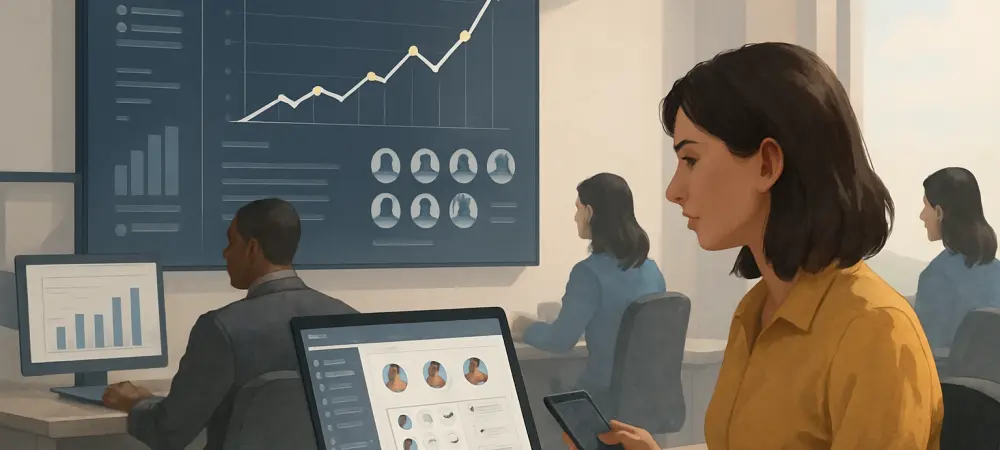
In today’s fast-paced corporate landscape, the chaos of managing multiple HR tech tools creates a labyrinth of inefficiencies for businesses, with mid- to large-sized companies juggling an average of over 16 disparate solutions for payroll, onboarding, and performance tracking, leading to digital clutter that frustrates employees and managers alike. This clutter also hampers organizational agility. Enter unified employee platforms—a transformative approach promising a single, seamless interface to streamline the entire employee lifecycle. These platforms are emerging as a beacon of order, cutting through the noise of fragmented systems. Their rise signals a pivotal shift in how companies address modern workforce demands, particularly in hybrid work environments where real-time access and intuitive design are paramount. This analysis delves into the decline of traditional HR suites, the ascent of unified platforms, their inherent benefits, adoption challenges, and the broader implications for the future of HR technology.
The Fall of Traditional HR Suites
Fragmentation and Broken Promises
The current HR tech ecosystem for many businesses resembles digital pandemonium, with mid- to large-sized organizations relying on more than 16 separate tools to manage various functions. This sprawl, intended to cover all HR needs, often results in a tangle of half-integrated systems and redundant data streams. The complexity undermines the very efficiency these tools were meant to provide, leaving HR teams overwhelmed by the sheer volume of platforms to navigate.
Traditional HR suites, once marketed as the ultimate solution to such fragmentation, have largely failed to deliver on their promises. Industry reports reveal that many of these suites, often assembled through acquisitions, struggle with seamless integration, leading to vendor lock-in and escalating IT costs. A significant portion of businesses report spending excessive budgets on maintenance rather than innovation, highlighting the disconnect between expectation and reality.
This patchwork nature of HR suites manifests in inconsistent user interfaces and outdated reporting capabilities. Far from offering a unified experience, these systems create internal silos, where data fails to flow freely between modules. As a result, organizations face delays in decision-making and a persistent struggle to adapt to evolving workforce needs, exposing the critical flaws in legacy architecture.
Real-World Struggles with Legacy Systems
Workflow inefficiencies plague companies tethered to traditional HR suites, with managers often forced to switch between multiple portals for routine tasks like approving time-off requests or conducting performance reviews. This constant toggling disrupts productivity and breeds frustration, as simple processes become unnecessarily cumbersome. The lack of cohesion in these systems turns everyday operations into a time-consuming ordeal.
Real-world examples underscore the pain points, with case studies showing employees grappling with limited mobile access and clunky interfaces that hinder basic functions like checking pay stubs or submitting leave requests. Such poor user experiences are not just inconveniences; they directly impact morale, as workers accustomed to consumer-grade apps find workplace tools woefully inadequate. Reports indicate that these frustrations contribute to higher turnover, as employees seek environments with more intuitive systems.
The absence of real-time data in legacy setups further compounds the issue, leaving HR leaders reliant on stale reports that fail to reflect current workforce dynamics. This lag hampers strategic planning and responsiveness, especially in hybrid settings where immediate insights are crucial. The disconnect between modern expectations and outdated technology reveals a clear need for a more agile, user-focused alternative.
The Emergence of Unified Employee Platforms
Defining the New Standard
Unified employee platforms represent a paradigm shift, offering cloud-native, API-first solutions that consolidate the employee lifecycle into a single, cohesive interface. Unlike traditional HR suites pieced together from disparate acquisitions, these platforms are built from the ground up for interoperability, ensuring smooth data exchange across functions like payroll, learning, and engagement. Their design prioritizes agility, catering to the demands of a dynamic workplace.
Industry trends point to a surge in adoption, with reports showing a growing number of businesses turning to these platforms to enhance employee experience and operational speed. The emphasis on real-time data, mobile-first accessibility, and AI-driven personalization sets them apart from legacy systems. These features align with the needs of a workforce that values immediacy and tailored interactions over rigid, one-size-fits-all tools.
Key differentiators include the ability to provide live dashboards and contextual guidance, empowering employees and managers alike with actionable insights at their fingertips. This approach not only simplifies HR processes but also fosters a proactive culture, where technology anticipates needs rather than merely reacting to them. As such, unified platforms are redefining the benchmark for HR tech in an era of rapid change.
Success Stories and Implementations
Several organizations have reaped tangible benefits from adopting unified platforms, with measurable outcomes like reduced onboarding times and elevated engagement scores. For instance, a global retail chain reported slashing new hire setup from weeks to days by leveraging a unified system that integrated pre-boarding tasks and training modules into one accessible hub. Such efficiency gains highlight the transformative potential of these tools.
Leading vendors in this space, known for their focus on interoperability and user-centric design, have driven innovation by enabling seamless connections with third-party apps. Their platforms allow companies to customize experiences without sacrificing consistency, a stark contrast to the rigid frameworks of traditional suites. This flexibility proves invaluable in hybrid work environments, where diverse needs must be met with precision.
Consider a scenario where a tech firm with distributed teams uses a unified platform to manage remote onboarding, performance feedback, and policy updates in real time. By centralizing these processes, the firm ensures consistency across geographies while empowering employees to engage with HR functions from any device. These practical applications demonstrate how unified platforms bridge gaps that legacy systems could never address.
Expert Perspectives on the Shift
Insights from HR and IT thought leaders underscore the obsolescence of traditional HR suites in a workplace defined by speed and data-driven decision-making. Many experts argue that the siloed nature of legacy systems stifles innovation, leaving companies ill-equipped to handle the complexities of hybrid models. The consensus points toward a pressing need for technology that unifies rather than fragments.
Allyson Skene, Vice President at Workday, has emphasized the strategic importance of unified platforms, noting their capacity to align HR with broader business goals through real-time insights and streamlined operations. Such perspectives highlight the competitive advantage gained by adopting systems that prioritize integration over isolated functionality. Experts agree that clinging to outdated tools risks long-term irrelevance in a talent-driven market.
However, challenges persist, as thought leaders also caution against fears of vendor lock-in and cultural resistance to change. Transitioning from familiar legacy systems often meets pushback from teams accustomed to established workflows. Despite these hurdles, the benefits of modernization—such as enhanced scalability and employee satisfaction—are deemed undeniable, urging leaders to navigate adoption with careful planning and stakeholder alignment.
Future Outlook for Unified Employee Platforms
Unified employee platforms hold the potential to reshape HR technology by delivering operational flexibility, cost efficiency, and superior employee experiences. Their ability to adapt to shifting business needs without extensive overhauls positions them as a cornerstone for organizations aiming to remain agile. As hybrid work solidifies its place, these platforms offer a framework to manage distributed teams with ease.
Emerging developments, such as deeper AI integration for predictive analytics and automation, promise to further elevate their impact across industries. From forecasting attrition risks to automating routine tasks, these advancements enable HR leaders to focus on strategic priorities rather than administrative burdens. The trajectory suggests a future where technology acts as a true partner in talent management.
Yet, challenges like data migration complexities and adoption barriers loom large for some organizations. Transitioning from entrenched systems requires meticulous planning to avoid disruptions, while cultural inertia can slow progress. Nevertheless, early adopters stand to gain a significant competitive edge, leveraging unified platforms to attract top talent and drive efficiency in an increasingly digital landscape.
Embracing the Unified Future
Looking back, the journey from fragmented HR suites to unified employee platforms marked a critical turning point for workforce management. The obsolescence of traditional systems became evident as they struggled to meet the demands of hybrid work and modern employee expectations. Unified platforms emerged as a robust solution, offering strategic advantages through seamless integration and real-time capabilities.
Reflecting on this shift, it became clear that staying ahead in a competitive landscape required embracing change rather than resisting it. The actionable path forward involved HR and IT leaders collaborating to audit existing systems, pinpoint inefficiencies, and prioritize user experience in their tech strategies. A phased approach to migration mitigated risks, ensuring smooth transitions to platforms built for today’s realities.
Ultimately, the focus shifted to long-term resilience, with organizations encouraged to partner with vendors who champion open architectures and scalability. By aligning technology with evolving workforce needs, businesses positioned themselves not just to adapt, but to thrive. The unified future, once a vision, turned into a tangible asset for those bold enough to invest in it.