

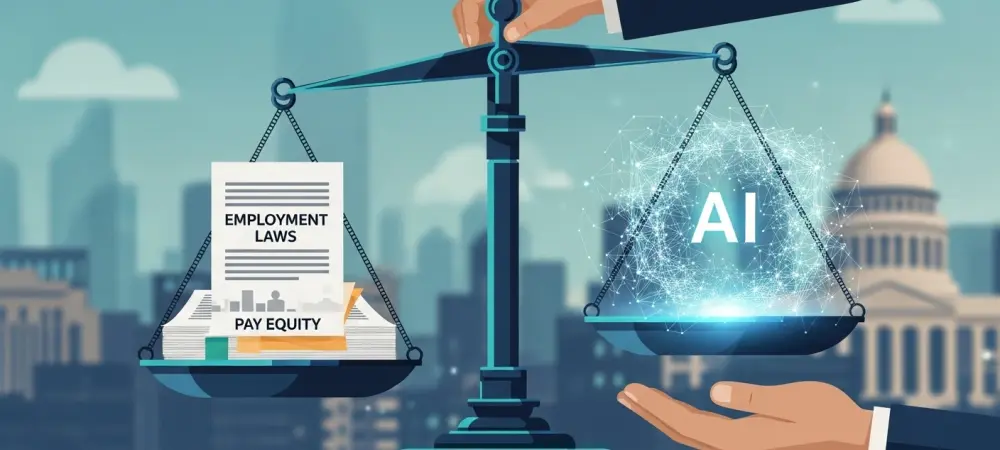
The rapid integration of algorithmic decision-making into the modern corporate framework has reached a point where a machine might determine a worker’s next raise or job stability before a human manager even reviews the file. As these technologies evolve from experimental tools into the backbone of human resources, state legislatures have shifted their focus toward establishing rigorous oversight. This transition marks a fundamental change in how labor rights are protected, moving from a standard of trust toward a mandate of transparency and accountability. By examining the current wave of mandates, organizations can better understand the legal pressures that are reshaping the digital workplace and the future of employee compensation.
The Shift Toward Algorithmic Oversight in the Modern Workplace
As businesses increasingly hand over the reins of recruitment, performance evaluation, and salary determination to sophisticated software, the legal landscape is undergoing a radical transformation. State legislatures are now stepping in to govern the “black box” of automated decision systems, moving away from a hands-off corporate approach toward a structured regulatory environment. This movement is driven by the realization that without intervention, the complexity of machine learning could obscure systemic biases that undermine decades of progress in labor law.
The intersection of machine learning and labor law has become a top priority for lawmakers aiming to protect worker rights and ensure pay equity in a digital-first economy. Many legal observers point out that the goal is not to stifle innovation, but rather to ensure that the drive for efficiency does not override civil protections. Consequently, the era of unmonitored algorithmic decision-making is coming to an end, replaced by a framework that demands clarity on how data influences a person’s livelihood.
Navigating the Patchwork of New State AI Mandates
The “Reasonable Care” Standard and the Push for Transparency
The regulatory wave is led by states like Colorado and Illinois, which are pioneering frameworks that force companies to treat AI as a high-risk corporate asset. Colorado’s Artificial Intelligence Act, for instance, introduces a “reasonable care” duty, requiring employers to actively prevent algorithmic bias before it results in a discriminatory paycheck or a missed promotion. These laws move beyond mere suggestions, mandating that businesses pull back the curtain on their software and provide clear, plain-language notifications to employees when an algorithm is influencing their financial future. In Illinois, the integration of AI into the human rights framework ensures that any tool used in employment decisions must be neutral. Legal experts suggest that this shift places the burden of proof on the employer to demonstrate that their chosen software does not inadvertently target protected classes. This transparency mandate is designed to eliminate the “secret” nature of historical wage-setting, ensuring that both job applicants and current staff are aware of the mechanical eyes watching their performance metrics.
Contrasting Legal Philosophies: Texas to California
While some states focus on strict accountability, others are carving out paths that offer more breathing room for innovation. Texas has taken a more employer-friendly stance, protecting companies from liability for unintentional “disparate impacts” as long as there was no documented intent to discriminate. This creates a distinct legal environment where the focus is on malicious use rather than the inherent flaws of the data itself, offering a contrast to the more rigid standards found in the Rocky Mountains or the Midwest.
Conversely, California is pushing the envelope with the “No Robo Bosses” movement, which seeks to ban AI-driven pay decisions unless they can be tied back to objective, human-verified performance data. These regional differences create a complex compliance map for national companies, who must decide whether to adopt the strictest state’s rules as their universal standard or manage a fragmented HR policy. Navigating these conflicting philosophies requires a nuanced understanding of how local political climates dictate the level of risk an employer can reasonably assume.
Beyond Generative AI: The Broad Reach of Automated Systems
A common misconception is that these laws only apply to high-profile tools like ChatGPT or specialized recruitment bots. In reality, state lawmakers are adopting expansive definitions that cover any software using predefined rules or data correlations to assist in human resources functions. This means that even legacy software used for tracking productivity or calculating bonuses now falls under the microscope. This shift is disrupting the industry by forcing a re-evaluation of every tool in the HR tech stack, challenging the assumption that “simple” algorithms are exempt from bias scrutiny.
The impact of this broad definition is profound, as it captures tools ranging from automated resume filters to predictive scheduling software. Industry analysts have observed that many systems previously considered “neutral” are being found to replicate the biases present in the data they were trained on. By expanding the scope of regulation, lawmakers are ensuring that no automated process remains exempt from the requirements of fairness and documentation, regardless of the complexity of the underlying code.
The Human-in-the-Loop Requirement and Speculative Futures
As we look toward 2027 and beyond, the emerging theme across all legislation is the preservation of human judgment. Many experts predict a future where fully autonomous HR systems are legally untenable, replaced by “human-in-the-loop” models where a person must sign off on any machine-generated pay adjustment or termination. This direction suggests that while AI will continue to process vast amounts of data, the legal responsibility—and the qualitative “gut check”—will remain firmly in human hands to mitigate the systemic risks of a purely math-driven workforce.
This shift toward human-centric oversight serves as a safeguard against the “black box” problem, where the reasons behind a specific decision are too complex for a machine to explain. By requiring a human signature on algorithmic outputs, states are ensuring that there is always a clear line of accountability in a court of law. This evolving standard implies that the most successful organizations will be those that use technology to inform, rather than replace, the nuanced judgment of experienced HR professionals.
Best Practices for Aligning Corporate Policy with Emerging Rules
To thrive in this new regulatory era, organizations must pivot from passive adoption to active governance of their AI tools. Success begins with a comprehensive inventory and audit of all algorithmic software to identify hidden biases before they trigger a state investigation or a class-action lawsuit. Implementing a robust AI Governance Policy—one that prioritizes transparency, rigorous data integrity, and frequent third-party impact assessments—is no longer optional; it is a strategic necessity. By keeping humans at the center of compensation decisions and maintaining clear documentation, employers can leverage the efficiency of AI without sacrificing legal defensibility.
The Future of Fair Pay in an Automated World
The transition toward state-regulated AI in employment marked a pivotal moment in labor history, signaling the end of unmonitored algorithmic decision-making. As transparency and accountability became the new baseline, the focus shifted from whether AI should be used to how it can be used ethically and legally. For businesses and workers alike, the evolution of these laws ensured that the drive for technological efficiency did not come at the cost of civil rights or fair compensation. Organizations that embraced these changes early avoided costly litigation and built a culture of trust and equity that defined the next generation of professional environments. Moving forward, the focus must shift to creating global data standards that prevent regional fragmentation from complicating the ethical deployment of these powerful tools.